





The emergence of private space companies such as Elon Musk’s SpaceX has brought a new dynamic to the space industry. Thanks to Musk, launch costs, which remained static for approximately forty years during the era of state-dominated space travel, have fallen by 80 percent. Musk’s innovative spacecraft is making things possible that, until recently, many people thought impossible. However, criticism is also growing.
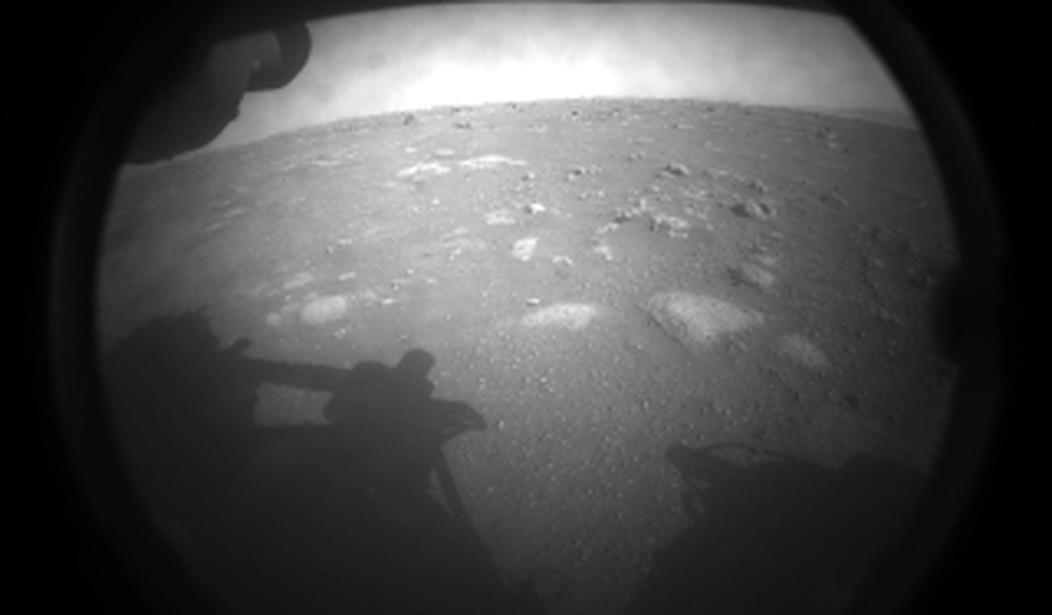
Musk argues that mankind essentially has a duty to colonize other planets because sooner or later an asteroid impact could lead to the extinction of our species. His objective is to colonize Mars, with the potential goal of transforming it into a second Earth through the process of “terraforming.”
Opponents of private space travel see this as a major threat and are advocating for strict bans and extensive government regulation. As always, the battle begins in the universities. In her book Astrotopia: The Dangerous Religion of the Corporate Space Race, the American religious studies scholar Mary-Jane Rubenstein criticizes any such plans, arguing that Mars belongs to the microbes – if there are even any on Mars. Since this is not certain, she defends the rights of rocks on Mars and criticizes a “Western antimineralism,” namely, “a tendency to value those rocks that have been removed, installed, carved, stacked, and shaped by human hands (and market forces) over those rocks that remain where and as geological (and ancestral) processes made them.”
Rubenstein and others argue that we should at least consider whether rocks do not have rights of their own, pointing to the historical first moon landing in 1969, where astronauts found it difficult to ram the American flag into the ground (they hit hard rock under the dust), and interpreting this as the moon trying to defend itself: “In fact, the Moon might even desire things. Considering the respiratory trouble it’s given our astronauts and the functional trouble it’s given their machines, the Moon might well be expressing a geologic desire that human beings remain on their home planet.”
A debate at a conference in Reno, Nevada, which was later published under the title “The Great Colonization Debate,” included the following statement from neuroscientist Lori Marino who rejected the idea of humans taking other animals with them to Mars as these creatures could not be consulted or give their consent for such a journey: “… if humans do go they should not bring other animals with them because the other species did not sign up for this!”
It would probably be best to dismiss such thoughts as nonsense, which they certainly are. In any case, they remind me of George Orwell, who once said: “One has to belong to the intelligentsia to believe things like that: no ordinary man could be such a fool.”
Unfortunately, however, established institutions react differently. They tend to try to “integrate” such critics. The harebrained notions of ideologues have now even found their way into official documents from institutions that advise NASA. A paper published by members of NASA’s Planetary Protection Office and others (“Absolute Prioritization of Planetary Protection, Safety, and Avoiding Imperialism in All Future Science Missions: A Policy Perspective”), calls for massive regulation of private space travel, which must, according to the authors, be placed under the primacy of “anti-imperialism.” Proponents of this anti-space exploration movement remain confident in their ability to thwart the proposed initiatives. They refer to an emerging “anticolonial spacewave.” A paper published by the Equity, Diversity, and Inclusion Working Group of the Planetary Science and Astrobiology Decadal Survey, which makes recommendations to NASA and other government agencies in the United States, read like an anti-capitalist and anti-colonialist manifesto: “It is critical that ethics and anticolonial practices are a central consideration of planetary protection. We must actively work to prevent capitalist extraction on other worlds.”
The basic tenor of the paper is that capitalism, driven by its relentless pursuit of profit, has destroyed the Earth and now wants to extend this destruction to other planets. Absurdly, the – false – assertion by past colonial powers that they conquered uninhabited land is now put on a par with the argument of the proponents of Mars colonization that there are no humans on the Red Planet.
Throughout history, entrepreneurs and engineers have often failed to effectively combat the influence of irrational and destructive ideologies because they were unwaveringly focused on their constructive and productive endeavors. Often, they made concessions to the ideologues in an attempt to appease them. In reality, this has only ever emboldened the proponents of irrationality. No idea is so absurd that it cannot gain traction and, sooner or later, become the dominant policy.
Rainer Zitelmann is author of “The Power of Capitalism” https://the-power-of-capitalism.com/
This article is based on a paper in “Economic Affairs” https://onlinelibrary.wiley.



Join the Conversation
VIP members get the ability to comment on articles.