





The contrast between North and South Korea could hardly be starker. According to the 2023 Index of Economic Freedom, the latter ranks as the 15th economically freest country in the world, ahead of the UK (28th) and the United States (25th). North Korea, by comparison, brings up the rear in 176th place.
Prior to its partition into a capitalist south and a communist north in 1948, Korea was one of the poorest countries in the world, on par with sub-Saharan Africa. In the wake of World War II, South Korea found itself in a difficult starting position with no financial aid coming from the U.S., while North Korea received considerable support from the Soviet Union and China.
South Korea was an agricultural country without any significant mineral deposits – almost all of the Korean peninsula’s reserves of natural resources, which include iron ore, gold, copper, lead, zinc, graphite, molybdenum, limestone and marble, are located in North Korea. South Korea’s population grew very quickly – from 16 million to 21 million between 1945 and 1947 alone – due to the influx of refugees from the communist North. Many people lived at or below subsistence level.
In July 1961, the Japanese government listed seven reasons why economic independence would be impossible for South Korea: over-population, lack of resources, lack of industrialization, massive military obligations, lack of political skills, lack of capital, and lack of administrative skills. South Korea’s failure to achieve any meaningful economic progress in the 1950s, immediately after the Korean War, initially appeared to confirm this view. At 79.00 US dollars per annum, South Korea had one of the lowest per-capita incomes in the world.
This only started changing in the early 1960s. Today, capitalist South Korea is the sixth-largest export nation worldwide, whose per-capita GDP of 33,393 US dollars puts it ahead of countries such as Spain (31,223 US dollars) and just behind Japan (35,385 US dollars). Samsung, Hyundai and LG are among the most successful and popular Korean brands.
North Korea's nominal gross national income in 2022 was estimated to be 1.43 million won (1,116 US dollars) per capita, equivalent to just 3.4 per cent of the South’s 42.49 million won.
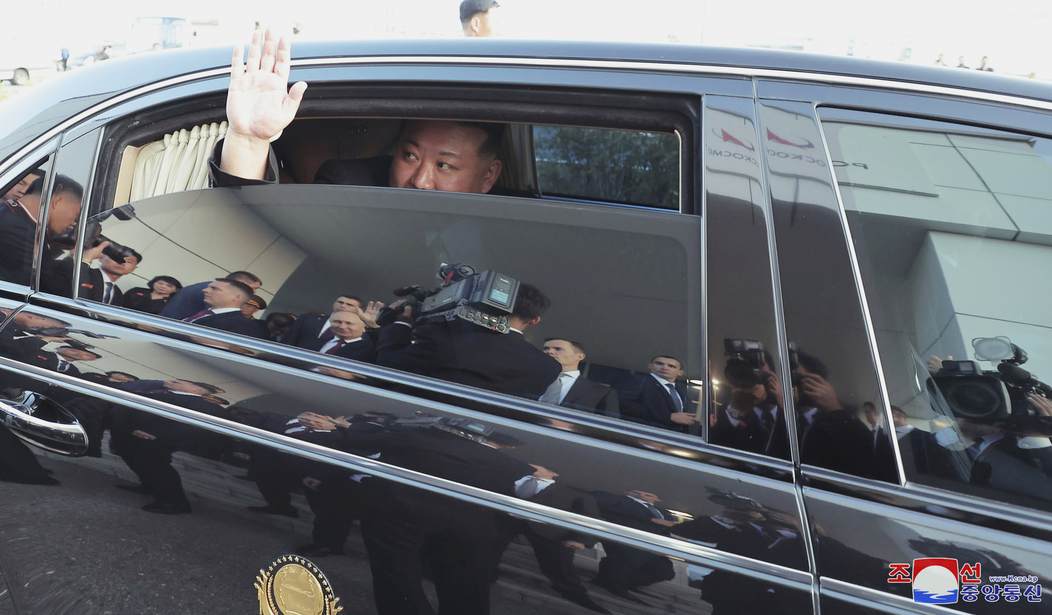
In the West, the North Korean leader is the object of fear or ridicule, while North Koreans are convinced that the entire world envies their Supreme Leaders. As the introduction to a biography of Kim Jong-Il has it: “His love is truly great; it cures the sick and brings forth new life, like the spring rain the sacred country drinks … All of this arouses admiration in the peoples of the world, causing them to envy us.”
The cult surrounding North Korea’s leaders is without precedent anywhere else in the world – even Stalin and Mao did not enjoy this level of devotion among their compatriots. The North Korean calendar counts time from the year of Kim Il-Sung’s birth in 1912. Any items Kim Il-Sung ever laid his hands or eyes on are worshipped as sacred relics, with a red plaque or an inscription in gold commemorating this momentous event and more often than not declaring the sacred site or item off limits for ordinary mortals.
That North Korea has such a low standard of living despite its exceptionally large reserves of mineral deposits is primarily due to the political leadership’s insistence on retaining a socialist economic system. North Korea takes great pride in having stayed true to its socialist principles, with only temporary and rather marginal attempts at reform, while China and other former socialist nations have been lured by the ‘temptations’ of capitalism.
Although North Korea’s agricultural sector employs around six times as many people as its South Korean counterpart, the country’s agricultural production barely meets demand – even in good years. When crops fail because of droughts or other natural disasters, food shortages and frequent famines are the result.
The worst of these famines occurred in 1996, when the combined effects of a mismanagement of resources, drought, and flooding left 200,000 North Koreans dead from starvation, according to official figures. The actual death toll is hard to verify – estimates by foreign agencies set the total at up to 3 million, or one in eight North Koreans. Last year, there was once again a severe famine in North Korea, experts believe that the supply situation in North Korea was the worst since the famine in the 1990s.
Rainer Zitelmann is a German historian, sociologist and multiple bestselling author, whose books include "The Power of Capitalism," “In Defence of Capitalism” and "Hitler's National Socialism". He published 28 books. His books have been translated into more than 30 languages around the world.


Join the Conversation
VIP members get the ability to comment on articles.