





PARIS -- It's all laid out in black and white in the Summary of the 2018 National Defense Strategy: "Inter-state strategic competition, not terrorism, is now the primary concern in U.S. national security."
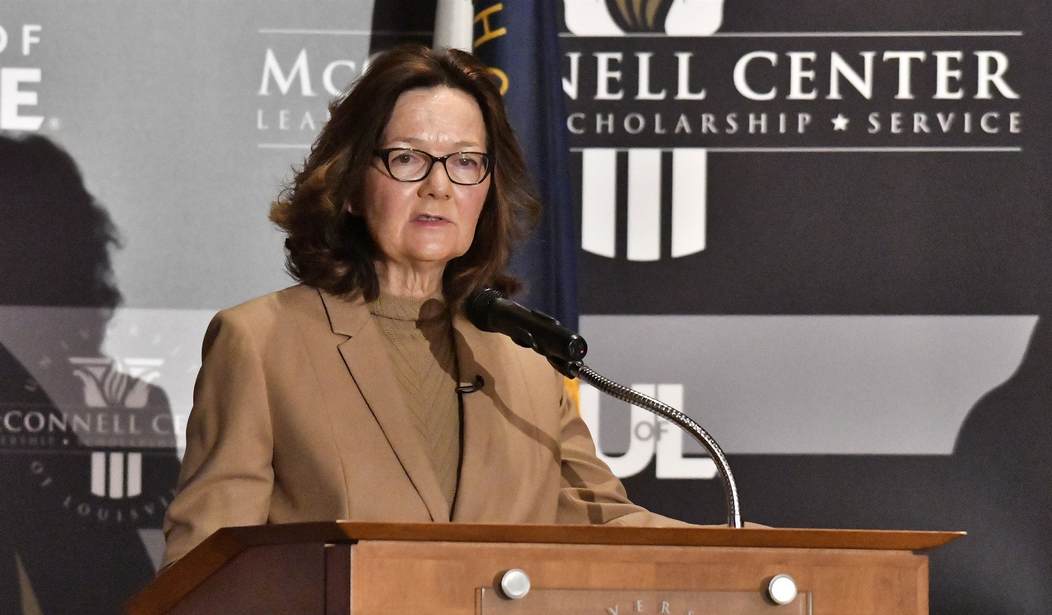
Last month, CIA Director Gina Haspel echoed that message while speaking at her alma mater, the University of Kentucky. Haspel called it a "strategic priority" to shift intelligence resources away from counterterrorism in order to focus on nation-state adversaries.
It's hard to recall a time since the end of the Cold War when the top threat to American interests hasn't been identified as either terrorism or cyberattacks. But now there's a greater recognition that America is after the same slice of the limited global pie as other nations.
Not that it wasn't always about that anyway. Terrorism has typically been the byproduct of mucking around in foreign countries in an attempt to gain an economic foothold or an advantage over another nation-state opponent.
America trained Taliban fighters in Afghanistan to mess with the Soviet Union in its own backyard. Now, Taliban warriors are successfully countering U.S. efforts to acquire Afghan natural resources.
The U.S. trained and mentored Iraqi forces after the 9/11 attacks. Now, these same Iraqis are part of the fighting in Syria and are working toward the goal of kicking America out of the Middle East.
More recently, the CIA trained and equipped Syrian opposition fighters with the idea that they would do America's bidding in overthrowing Syrian President Bashar al-Assad. Many of them became members of the Islamic State.
Terrorism is attributed to terrorists, but to whom are the terrorists attributed? Perhaps now America can stop contributing to the problem by training, mentoring and equipping foreign fighters, focusing instead on forging business deals.
Someone in the Trump administration deserves credit for deciding to stop playing taxpayers for fools. The nation-state protection racket is intended to line the pockets of defense-industry players while downloading all the costs of armed conflict onto the average citizen. How many patriots have lost their lives in foreign battles that have resulted in little more than a change from one foreign leader to another who better serves the interests of those who pushed for the war in the first place?
Why do some people in Washington believe that capitalism needs war as an entree? U.S. President Donald Trump is a supporter of the free market, and it's refreshing to finally see a president practice the capitalist doctrine that America has long preached.
The next step that Trump will have to take toward a truly free global market may prove to be even more of a challenge, however. The U.S. foreign-policy establishment has a long history of favoring certain nation-states that have managed to buy off American interests.
Why, for example, has China failed to buy the Trump administration's political goodwill despite holding a massive amount of U.S. debt bonds? China simply doesn't have the same history of buying off Beltway players to do its bidding. Saudi Arabia, the United Arab Emirates and Israel have long been mucking around in the Middle East and trying to drag America into regional conflicts for their own selfish reasons.
Instead of telling these countries to deal with their own backyard problems, which have nothing to do with the interests of the average American, the world's foremost superpower is prostrating itself in front of these Middle Eastern money states. And for what? If Saudi Arabia is such a great ally, why can't it convince its little brother, Pakistan, to get a better handle on its Taliban proxies?
What have these countries done for America lately to have so much control over U.S. foreign policy? In her recent speech, Haspel singled out Iran for "propping up the government on Syrian President Bashar al-Assad, to expand its influence in Baghdad and to back the Houthis in Yemen." Why aren't Saudi Arabia and its allies mentioned in the same breath for their opposing roles in the exact same theaters of war?
It's one thing to finally cut through the militaristic nonsense in favor of a more directly commercial footing - an epiphany that is an achievement unto itself. However, if America really wants to bring free-market capitalism and a level playing field for fair trade to the rest of the world, it needs to implement policies that ditch nation-state cronyism.
Join the Conversation
VIP members get the ability to comment on articles.