





This year, lawmakers have unleashed a barrage of proposals aimed at Big Tech. Their latest attempt is perhaps the most bizarre: Since they’re unhappy with the state of digital markets, they're trying to rewrite American antitrust laws to look more like Europe’s.
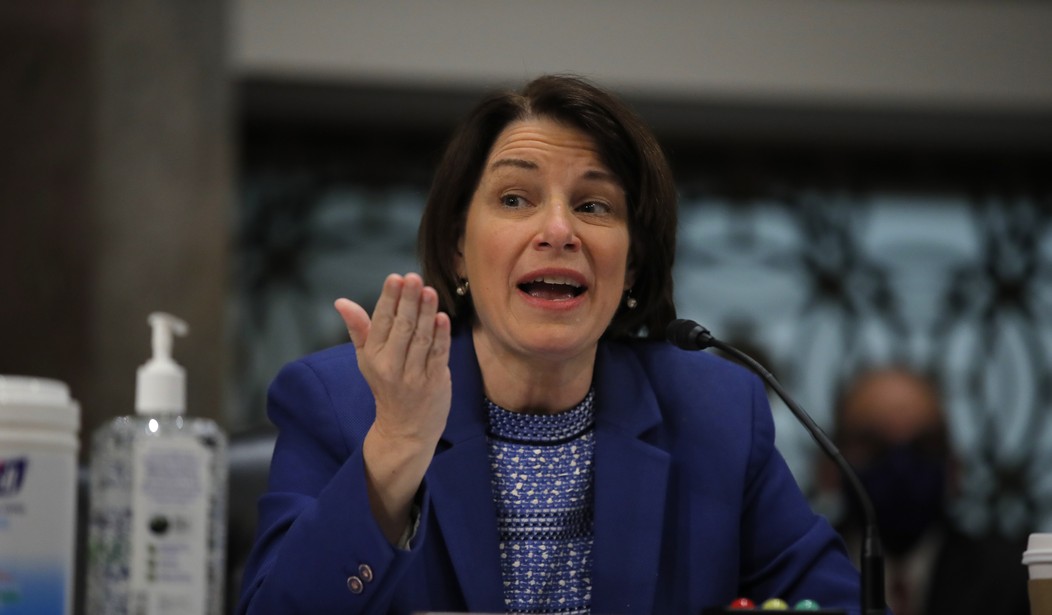
Last month, Senators Amy Klobuchar and Chuck Grassley unveiled the American Innovation and Choice Online Act, which dictates how technology companies can present information on their own platforms. Contrary to its name, the bill would negatively impact innovation and choice in digital markets, while simultaneously bringing antitrust law, and the American economy, closer to the EU’s competitor-focused model.
Adopting the EU’s antitrust model would stifle innovation, expand the decision-making authority of unelected regulators, and distort the laws that have enriched the American economy for decades. In the rush to take on Big Tech, legislators are turning consumers, and the free market, into collateral damage.
The bills’ sponsors allege that America’s largest technology companies, such as Amazon and Google, are giving preferential treatment to their own products and services to the detriment of other businesses. While that may be true, it’s of no consequence to antitrust law. In fact, in the context of digital platforms and marketplaces, “self-preferencing” is actually beneficial for consumers and is, as a result, lawful under the prevailing consumer welfare standard.
For example, Amazon’s “AmazonBasics'' products serve as a lower cost alternative to name brand items, akin to generic goods at supermarkets. Google integrates its map and shopping features into its search engine, which helps users quickly locate the information they need. Such innovations have propelled these American companies to household names with global recognition and popularity.
But the bill isn’t focused on consumer interests. Since self-preferencing has created a more integrated and affordable experience for users, Klobuchar and her co-sponsors are twisting the narrative to make their case. By their logic, it doesn’t matter that consumers see better prices and features. Competition, they argue, ought to be measured by the welfare of competitors — not consumers — and this necessitates government intervention.
The proposed legislation would allow regulators to reconfigure a handful of tech platforms and their offerings to protect small and inefficient competitors. That’s why executives at Yelp, Roku, and DuckDuckGo have shown support for the bill. After all, it would enable them to capture a greater share of the market, bereft of superior products or services.
This approach bears strong resemblance to the EU’s “abuse of dominance” standard, which aims to proactively protect competitors from a dominant business that “abuses” its market power. It gives small players a leg up, while telling successful companies how to run their businesses and interact with their competitors.
Lawmakers are taking a page from the EU’s playbook: Senator Klobuchar wants to prevent “dominant digital platforms...from abusing their market power.” To that end, the bill empowers regulators to look at the benign practice of self-preferencing and condemn it for possible rather than actual harm. And by shifting the focus to competitors, who will naturally be impacted by business rivalry, the bill’s sponsors have rewritten the rules so that they will always find misconduct.
If these reform efforts succeed, lawmakers will have created a powerful antitrust regime that outlaws pro-competitive, beneficial conduct but is insulated from scrutiny. Just like the European Commission, which holds significant discretionary power and, according to legal expert Geoffrey Manne, “enjoys remarkable — even implausible — success in defending its decisions.”
The European model differs starkly from US antitrust policy, but proposals like Senator Klobuchar’s narrow the distinction between the two bodies of law. It attempts to refocus American antitrust laws on competitors and give regulators more power and autonomy. The FTC is already taking pointers from Brussels, and now legislators are as well.
What was once settled law rooted in economics is now a political game, where lawmakers and bureaucrats arbitrarily hand out favors to some and punishments for others. The United States has the world’s most robust ecosystem for business and technology. But if we allow politicians to intercede in the market, that won’t last for long.
Rachel Chiu is a contributor and Technology Fellow for Young Voices. Her work has been featured in USA Today, The Hill, The National Review, RealClearMarkets, City A.M., and elsewhere. Follow her on Twitter @rachelhchiu.



Join the Conversation
VIP members get the ability to comment on articles.