





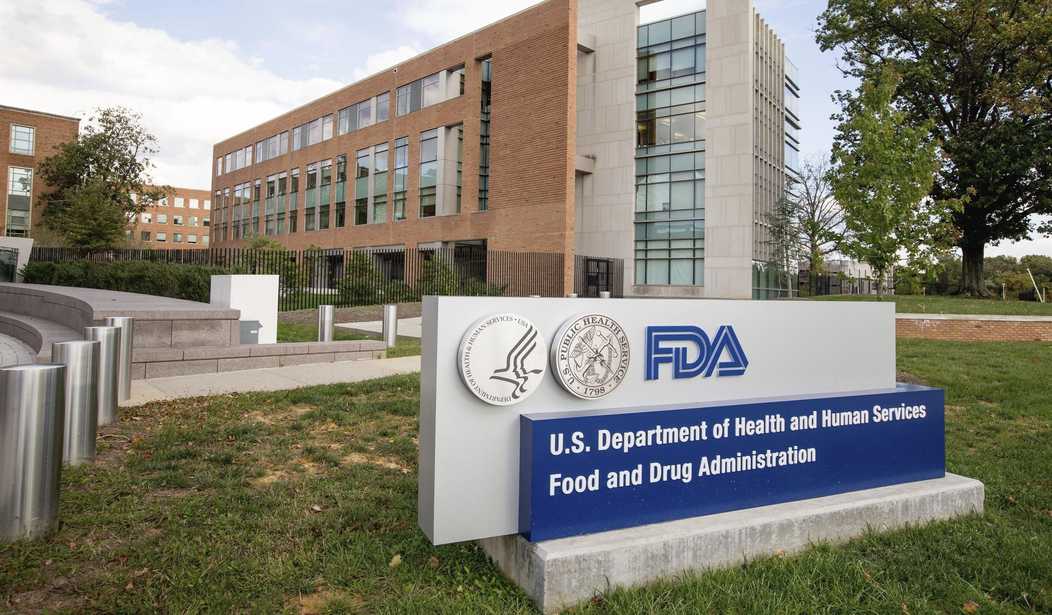
The U.S. Senate Special Committee on Aging conducted a hearing on February 26 to investigate why the FDA is holding up the approval of desperately needed new drugs for those with rare diseases. Many of the people suffering with these ailments are children with short life expectancies. Those with Duchenne Muscular Dystrophy (DMD), which is progressive muscular deterioration, end up in a wheelchair at about age 11-12, and die in their 20s.
Angelina Olivera, the mother of a 14-year-old son who has DMD, who also watched her brothers die at ages 20 and 22 of the disease, told me there is only one promising new treatment for DMD but the FDA won't approve it for her son Ryu. A study was conducted on 125 patients using Elevidys from Sarepta Therapeutics and revealed promising results. The gene therapy slowed disease progression by 70-73 percent compared to untreated children. The one-time treatment was approved and has been given to more than 1,200 individuals in clinical trials or those prescribed treatment.
Their son has staggering medical costs, including a $30,000 power wheelchair and steroid medications that average $30,000 per month. The Muscular Dystrophy Association used to cover the costs that insurance did not pick up, but recently stopped the reimbursements, stating that the money would be going to research instead. Olivera said this is unfair since they're not allowed to receive the benefit of the research.
Dr. Jeremy D. Schmahmann, director of the Massachusetts General Hospital Ataxia Center, testified that patients with ALS are being denied a promising treatment by the FDA, troriluzole. Troriluzole is a more advanced version of riluzole, which has been used to treat ALS for 30 years. He said a study found that "troriluzole slowed the disease by 50-70 percent."
However, the FDA is about to end the trial, leaving the patients with no more treatment, and it has not been approved for anyone else. Instead, the FDA is insisting on another trial that will take several years. "During such a trial, patients will worsen and die from their disease," Schmahmann said. He summarized, "The FDA as currently functioning is opaque, unpredictable, inequitable, and inconsistent in its approach to drug evaluation and approval."
Bradley Campbell, President and CEO of Amicus Therapeutics, told the committee, "Research supported by the U.S. National Institutes of Health (NIH) estimates 95 percent of the 10,000-plus known rare diseases still lack effective, FDA-approved treatments. That means roughly 9,500 rare diseases lack treatment today." He said the current pace of FDA approval means that "developing treatments for half of all known rare diseases (~5,000 conditions) would take approximately 161 years."
Campbell offered several solutions, and urged Congress to pass the Biomanufacturing Excellence Act of 2025 (H.R. 6089 and S. 3188), which will "advance manufacturing methods to ensure innovative products can move rapidly from clinical to commercial scale."
Cara O'Neill, Chief Science Officer & Co-Founder of Cure Sanfilippo Foundation and the mother of a 16-year-old daughter with Sanfilippo Syndrome, told the committee how she watched a young girl die of the disease, which is a form of childhood dementia. However, her own daughter was able to receive treatment during a trial and is thriving. Unfortunately, the FDA has not approved any treatments for Sanfilippo.
O'Neill included several pages of heartwrenching statements from parents who are watching their children slowly die from the disease. Jessica Haywood published an article recently about the tragic deterioration of her niece since she hasn't been allowed to receive the treatment. Haywood said under the current FDA leadership, "82 percent of applications for rare neurodegenerative diseases have received denials."
Annie Kennedy, Chief Mission Officer for the EveryLife Foundation for Rare Diseases, told the committee, "We have individuals in this room who have very limited life expectancies, and if we don't address what's happening in rare disease with that same sense of urgency, they would not be here with us if we were to convene this hearing another year from now."
Olivera said it's not just about her son, it's about saving future generations from short, traumatic lives. She doesn't want them and their families to go through what she and her family have, watching their loved ones die young. Olivera and her husband are full-time caregivers of their son. She urges people to contact President Donald Trump and the FDA to fix this travesty. Trump signed the Right to Try Act in 2018, which allows those with life-threatening diseases or conditions to access experimental drugs that have completed at least Phase 1 clinical trials but have not yet received full FDA approval.
There is bipartisan support to speed up this process; Sen. Kirsten Gillibrand (D-NY) sounded as concerned as the Republican members of the committee.
Maybe U.S. Secretary of Health and Human Services Robert F. Kennedy Jr., who has pushed for faster drug approvals in areas like rare diseases, can apply some pressure. He could replace FDA leaders and overrule or influence advisory committee recommendations and center-level decisions. Sen. Ron Johnson (R-WI) proposed a Right to Try 2.0 earlier this year, which would build on his original 2018 law to address rapid scientific advancements, speeding up approval of treatments for rare diseases that don't fit traditional large-scale FDA trials.
Why are the bureaucrats at the FDA so timid? People die from taking risky legal substances like alcohol all the time, and we don't restrict alcohol. Why not let someone who is going to die young in a few years take a chance?
Correction: A previous version of this column stated that a "study was conducted on 1,200 patients using Elevidys from Sarepta Therapeutics." The correct number of patients was 125. Rather, "the one-time treatment was approved and has been given to more than 1,200 individuals in clinical trials or those prescribed treatment."
Clarification: Edits were made to clarify that the two patients who died during the trial treatment were non-ambulatory and provide more detail on the risk of liver injury from AAV-delivered gene therapies.
Editor’s Note: Do you enjoy Townhall’s conservative reporting that takes on the radical Left and woke media? Support our work so that we can continue to bring you the truth.
Join Townhall VIP and use promo code FIGHT to receive 60% off your membership.



Join the Conversation
VIP members get the ability to comment on articles.