





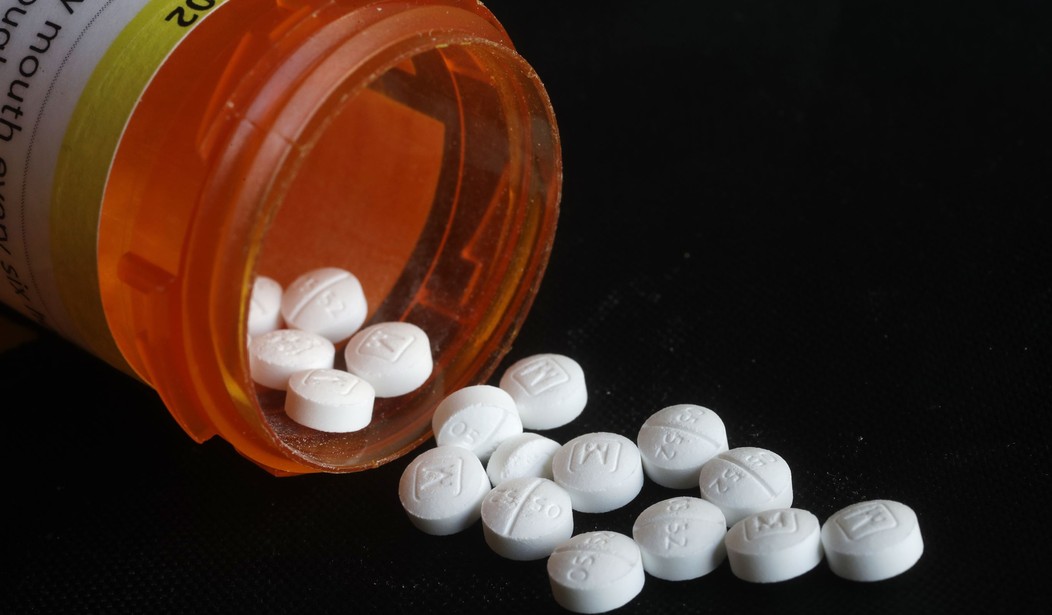
The government has been cracking down on the misuse of opioids, but the restrictions have gone too far, hurting ordinary Americans who need them. Approximately one quarter of the nation’s population suffers from pain. The latest assault, causing problems for those suffering, which includes many elderly people, is the Biden DOJ’s lawsuits against the pharmacies CVS and Walgreens for prescribing them.
This has resulted in repeatedly denying those in pain the prescriptions their doctors wrote, forcing them to try to convince pharmacists who know nothing about their conditions that they’re not criminals, but patients in need of relief.
The DOJ launched its nationwide case against CVS about a year ago. Today, we’re no closer to a resolution. The lawsuit alleged that CVS “knowingly filled prescriptions for controlled substances,” a dramatic headline that masks something much simpler, instead portraying it as far more dangerous. What the DOJ really believes is that pharmacists should second-guess doctors, interrogate patients and override the medical judgment of licensed doctors who have actually examined the people they’re treating.
CVS responded in its defense that standards for rejecting prescriptions are “vague, undefined, and ever-changing standards of practice,” that all filled scripts were from government-licensed prescribers for FDA-approved drugs and that they've led industry efforts against misuse, such as by blocking over 1,250 suspicious prescribers.
The DEA published a policy statement in the Federal Register in 2006 admitting that “one cannot provide an exhaustive and foolproof list of ‘dos and don’ts’ when it comes to prescribing controlled substances for pain or any other medical purpose.” Notably, federal law does not “impose a specific quantitative minimum or maximum limit on the amount of medication that may be prescribed on a single prescription, or the duration of treatment intended with the prescribed controlled substance.”
Walgreens gave up trying to fight and settled with the government earlier this year. However, it responded in a statement after the lawsuit was filed, “We are asking the court to clarify the responsibilities of pharmacies and pharmacists and to protect against the government’s attempt to enforce arbitrary ‘rules’ that do not appear in any law or regulation and never went through any official rulemaking process. We will not stand by and allow the government to put our pharmacists in a no-win situation, trying to comply with ‘rules’ that simply do not exist.
CVS has set up numerous safeguards to prevent fraud, such as voluntarily blocking the dispensing of controlled substances for doctors whose prescribing patterns have raised concern, and developing cutting-edge algorithms to identify forged prescriptions. Their systems provide safety alerts for certain opioid prescriptions, such as those written for particularly high dosages. Pharmacists have access to state prescription drug monitoring databases and are trained on appropriate opioid dispensing multiple times each year.
However, “Our past efforts to work with the DEA to improve this situation have been routinely and flatly rebuked by bureaucrats that have no interest in disrupting the status quo,” CVS said.
Pharmacists are not detectives. They are not DEA agents. Their role in the healthcare system is to dispense medications that doctors determine are medically necessary after evaluating their patients.
For over a decade, the government has shifted blame for addiction onto others instead of those misusing drugs and the suppliers. Instead of focusing on illegal fentanyl streaming across the southern border — the real driver of today’s overdose crisis — federal prosecutors go after pharmacies filling legitimate prescriptions written by real doctors treating real pain.
Only about 1 percent of fentanyl-involved deaths are estimated as due to pharmaceutical fentanyl.
Recent figures from the CDC reveal that there were 105,000 drug overdose deaths in 2023, with about 80,000 due to opioids.
We’ve seen where this leads. Overly aggressive opioid crackdowns don’t save lives. They push desperate patients into agony, disability and even suicide. Many people, abandoned by the medical system, turn to the streets, where counterfeit pills laced with fentanyl are killing Americans at record levels. Pain patients are not the source of the overdose epidemic, yet they are the ones paying the steepest price.
By suing CVS and Walgreens, the DOJ sends a chilling message to every pharmacy in America: If you fill opioid prescriptions, you could be the next target. Pharmacies are already responding by refusing to fill legitimate prescriptions, red-flagging ordinary patients and imposing blanket restrictions that override doctors’ decisions.
This is not justice. It is what happens when bureaucrats believe they understand medicine better than doctors who treat patients face-to-face.
Most Americans would be shocked to learn how restricted opioid access has become. The pendulum has swung so far that cancer patients, seniors recovering from major surgery and people with chronic pain that makes daily life excruciating are being denied the medication they need.
CDC data show opioid prescriptions dispensed in the U.S. fell from 46.8 per 100 people in 2019 to 37.5 in 2023 — a dramatic drop in just a few years. Meanwhile, research suggests clinicians might now be under-prescribing opioids even for severe conditions like chronic cancer pain due to fear of lawsuits.
Yet politicians continue congratulating themselves for “fighting the opioid crisis,” even as overdose deaths climb, driven not by prescriptions, but by fentanyl manufactured in Mexico and China.
The DOJ’s lawsuit won’t stop addiction. It won’t slow fentanyl trafficking. It won’t save a single life. But it will make doctors more fearful and pharmacists more unwilling to fill prescriptions, abandoning legitimate pain patients who depend on the healthcare system for survival.
If the DOJ truly wants to protect Americans, it should stop punishing pharmacies for filling lawful prescriptions and start focusing on the real source of overdose deaths. Doctors and patients should be making medical decisions, not prosecutors.
Until that changes, the casualties of this misguided crusade won’t be narcotics traffickers, but law- abiding Americans, trapped in a war on the wrong drugs. The truth is simple: addiction and chronic pain are two entirely different issues, and Washington’s refusal to distinguish between them has caused tremendous suffering.
Editor’s Note: Do you enjoy Townhall’s conservative reporting that takes on the radical left and woke media? Support our work so that we can continue to bring you the truth.
Join Townhall VIP and use the promo code FIGHT to get 60% off your VIP membership!


Join the Conversation
VIP members get the ability to comment on articles.