

Today is a disjointed Father’s Day.
For as long as our family can remember, Father’s Day meant worshiping together. Sitting together. Singing together. Going to lunch together. Enjoying the simple blessing of being in the same place at the same time.
Today, we’ll be in two different places.
I’ll be where I normally am—serving our church family through three services as part of the worship team.
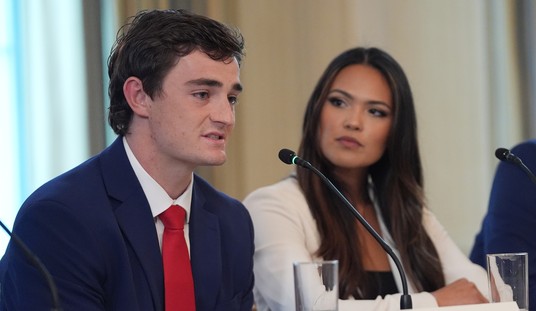
My bride and the rest of the family will be somewhere else entirely, watching our son be commissioned for a summer of Christian camp ministry. A role he’s dreamed about for years. A role he’s prayed for. A role he’s worked toward.
It’s a good thing.
A wonderful thing.
A God thing.
But leave it to my wife to ask the questions everyone else is thinking.
“Who schedules a commissioning service on Father’s Day?”
And then, after looking directly at me:
“They couldn’t find anybody else?”
To be honest, she has a point.
Only a few weeks ago, I spent multiple columns celebrating mothers. I wrote about their influence, their sacrifices, and the irreplaceable role they play in building families and shaping civilization.
Do I believe fathers are any less important?
Not remotely.
In fact, Father’s Day lands differently for me altogether.
Mother’s Day fills me with gratitude.
Father’s Day fills me with reflection.
And if I’m being completely honest, it still carries a wound.
Because every father I’ve ever had eventually left.
My biological father.
My adoptive father.
My father-in-law.
Different men.
Different stories.
Different failures.
But all arriving at remarkably similar destinations.
At some point, each one found something they wanted more than their children and grandchildren.
Sometimes those choices were openly sinful.
Other times, they were simply selfish.
But the result was the same.
An empty chair.
An unanswered phone.
A birthday missed.
A holiday altered.
A grandchild wondering why.
For years, I tried to make sense of it.
When you’re young, you assume it must somehow be your fault.
When you’re older, you know better, but that doesn’t make it hurt less.
And when you become a parent yourself, the confusion actually deepens.
Because suddenly you’re looking at your own children and realizing you would crawl across broken glass for them.
You’d move heaven and earth for them.
You’d gladly surrender comfort, convenience, sleep, money, hobbies, and ambitions for them.
And that’s when the question gets harder.
Not easier.
You stop asking, “Why did they leave?”
And start asking, “How could they?”
My wife and I have both lived that reality.
And as our children have gotten older, they’ve started asking questions.
Hard questions.
Questions that deserve answers.
Questions we’ve tried our best to answer with grace.
“Why doesn’t Grandpa come around?”
“Did we do something wrong?”
“Doesn’t he love us?”
You can explain circumstances.
You can explain history.
You can explain brokenness.
But there is no explanation that satisfies a child who simply wanted a grandfather.
That’s what makes abandonment so cruel.
The people left behind continue carrying the weight long after the person who left has moved on.
The older I’ve become, the more convinced I am that father wounds cut differently because fathers occupy a unique place in how children understand God.
When a father abandons his family, he tells a lie.
Maybe unintentionally.
Maybe carelessly.
But the lie gets told all the same.
The lie is this: “Fathers leave.”
And if earthly fathers leave, children naturally begin wondering whether their Heavenly Father might do the same.
I’ve spent years studying why so many boys and young men seem adrift.
Lonely.
Angry.
Aimless.
Hopeless.
I even wrote an entire book exploring the crisis facing modern men.
And after all the statistics, studies, interviews, and conversations, I keep arriving at the same conclusion.
Fatherlessness is one of the great unspoken tragedies of modern America.
We’re trying to medicate wounds that need fathers.
We’re trying to program solutions that require presence.
We’re trying to build institutions to replace relationships.
And it isn’t working.
Because boys need fathers.
Not superheroes.
Not celebrities.
Not influencers.
Not perfect men.
They need fathers who stay.
Fathers who show up.
Fathers who keep showing up.
Fathers who make their children feel chosen every single day.
I know some men exactly like that.
Men who coach the games.
Attend the recitals.
Pray with their families.
Lead their homes.
Keep their promises.
Love their wives.
Work hard.
Repent when they’re wrong.
Stay when leaving would be easier.
Those men will never trend on social media.
But they’re quietly saving America.
One child at a time.
As I stand on a platform this morning, leading worship while my son is commissioned into a ministry opportunity he’s dreamed about for years, I’ll be grateful.
Grateful for God’s faithfulness.
Grateful for my bride.
Grateful for my children.
Grateful for the handful of men God placed in my path when fathers disappeared.
But I’ll also be praying.
Praying for sons.
Praying for fathers.
Praying for healing.
Praying for courage.
Praying that America produces more men who understand that being a father isn’t primarily about biology.
It’s about presence.
It’s about sacrifice.
It’s about staying.
Because the older I get, the more convinced I become that every child eventually asks one question of the men entrusted with loving them: “Were we worth staying for?”
A good father answers that question long before it’s ever spoken.
Not with words.
With his life.
And for a nation desperately searching for hope, stability, and healing, perhaps there is no greater gift a man can give than to make sure the people he loves never have to wonder where he went.