

Three different high-profile people have pulled me aside over the last several days. All three conversations were off the record. All three involved people whose names you would know instantly. And all three were worked up about Donald Trump's apparent agreement with Iran.
One called it appeasement. Another called it surrender. A third said Trump was giving away America's leverage for free.
I listened to all of them. I asked questions. I let them make their case. And when each conversation ended, I walked away thinking exactly the same thing: These people are nuts.
I don't say that lightly. These are accomplished people. Smart people. Influential people.
But on this issue? Nuts.
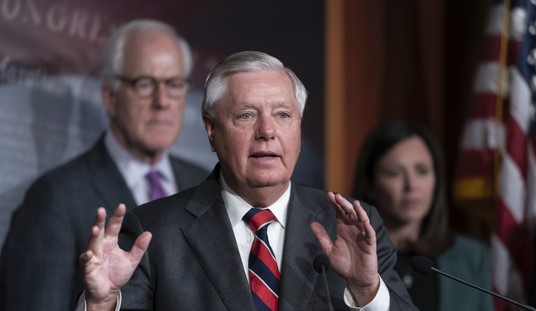
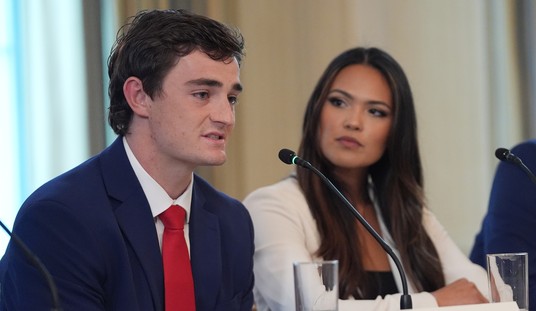
In fact, the more I thought about what they were saying, the more off balance I became.
What has me off balance is how otherwise intelligent people can miss something this obvious. These are not stupid people. They're successful. They're respected. They've spent years around politics, diplomacy, and foreign policy. Yet somehow they've convinced themselves that leverage should never actually be used. That's like spending years sharpening an axe and then refusing to swing it because you might dull the blade.
It's crazy.
One of them spent nearly 10 minutes explaining how Trump was giving away all of America's leverage. I kept waiting for him to explain what exactly he thought leverage was for.
To frame it? To put it in a trophy case? To admire it from a distance? The entire purpose of leverage is to use it. That's what makes this criticism so bizarre.
Iran didn't wake up one morning and decide to negotiate because the ayatollah had a change of heart.
Iran came to the table because of pressure. Because of sanctions. Because of military realities. Because its options became increasingly limited.
In other words, because leverage worked.
The leverage wasn't lost. The leverage was applied. And that's the part Trump's critics seem incapable of understanding. Or perhaps unwilling to understand.
The criticism we're hearing centers on sanctions relief, frozen assets, and allowing Iran to sell oil again. And I understand why those headlines make people nervous.
They should.
Iran is not our friend. Iran sponsors terrorism. Iran's rulers chant "Death to America" when they're feeling particularly honest.
No one should be naive about who we're dealing with. But that's precisely why I'm puzzled by the people attacking Trump.
What exactly is their alternative? I've listened carefully, and I still can't tell.
More pressure? Okay.
For what purpose?
More sanctions? Fine.
Then tell me what winning looks like.
More confrontation? Then what? Keep squeezing forever? Keep escalating forever?
At some point, you've got to tell me where you're trying to go. Because from where I'm sitting, a lot of Trump's critics sound like people who have become emotionally attached to the pressure itself.
As though sanctions are the objective. As though leverage is the destination. As though squeezing Iran forever is somehow a foreign policy strategy.
It isn't.
You can dislike this deal. You can question parts of it. You can worry about whether Iran will live up to its commitments. Those are legitimate concerns.
But eventually, you've got to answer the question: what outcome are you trying to achieve?
And this is where I think Matt Continetti made one of the smartest observations I've heard. He argued this isn't really a nuclear deal. It's a hostage deal. The hostage is the Strait of Hormuz. Now, suddenly, the entire discussion starts making more sense.
The immediate issue facing the world isn't whether Iran becomes Sweden. The immediate issue is whether one of the most important shipping lanes on earth remains vulnerable to disruption, conflict, and economic chaos.
A prolonged crisis in the Strait of Hormuz affects energy prices, inflation, supply chains, markets, and ultimately American families. Trump understands that.
Apparently, some of his critics don't. Or maybe they've forgotten. That's possible, too.
A lot of these same people have been wrong about nearly every major Middle East question of my adult life.
They were wrong about Iraq. Wrong about Afghanistan. Wrong about nation building. Wrong about Obama's approach to Iran. Wrong about what strength actually looks like.
Yet somehow, they always return to explain why this time everyone should definitely listen. Forgive me if I'm not rushing to sign up.
By the way, where was all this outrage when Obama was cutting his deal with Tehran? Where were the emergency warnings then? Where were the lectures about empowering Iran? Funny how those standards seem to change depending on who's sitting in the Oval Office.
And here's the part that really gets me.
Trump's critics talk as though he has no record. As though we're evaluating a complete unknown.
The Abraham Accords happened under Trump. ISIS lost its territorial caliphate under Trump. Iran's economy was squeezed under Trump. American deterrence improved under Trump.
Those aren't theories. Those are results. Which is why I'm inclined to trust Trump's instincts more than the instincts of the people who have spent the last 25 years explaining why failure should be considered success.
Will this agreement solve every problem? Of course not.
Iran remains dangerous. The regime remains dangerous.
No document signed in Switzerland is going to change that. But that's not the standard.
The standard is whether America is better off. Whether gas prices stay under control. Whether American families avoid getting hammered at the pump. Whether the risk of a wider war is reduced. Whether American interests are advanced. And whether we can accomplish those things without another generation of American families sacrificing their sons and daughters in the sands of the Middle East.
That's the question. Not whether Iran receives something.
Every negotiation involves both sides receiving something. The real question is whether America receives more.
Looking at this agreement, that's exactly what Trump appears to be pursuing. Which brings me back to those three conversations.
Three smart people. Three influential people. Three people convinced Trump has lost his mind. Maybe.
But after listening to all three of them, I'm pretty sure they're looking in the wrong direction.
Because from where I sit, the people who seem to have lost their minds are the ones attacking Trump for using the leverage they spent years demanding America create.