

As negotiations between Washington and Tehran stagger forward amid mutual suspicion and escalating tensions, a fundamental question hangs over the future of Iran's ruling clerical regime. Are the mullahs once again deploying their familiar strategy of delay and deception while pursuing military and nuclear ambitions behind closed doors, or have they finally reached the point where economic collapse leaves them with no room for maneuver?
Recent comments by Mohammad Bagher Ghalibaf, Iran's chief negotiator and Speaker of the Majlis (parliament), offer a revealing glimpse into the regime's mindset. His warning that the United States cannot be trusted and his insistence that Tehran will approve no agreement unless the "rights of the Iranian people" are fully secured reflect a leadership still clinging to defiance despite overwhelming evidence that the Islamic Republic faces its gravest crisis since the 1979 revolution that brought it to power.
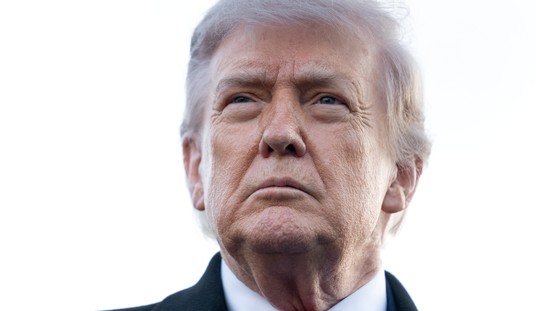
Reports that President Donald Trump has returned a tougher framework for consideration have widened the gulf between the two sides. The White House seeks ironclad guarantees that Iran will never acquire nuclear weapons and demands the reopening of the Strait of Hormuz, a vital artery for global energy supplies. Tehran, meanwhile, continues to advance new conditions, propose amendments and seek concessions, including the release of billions of dollars in frozen assets. For seasoned observers of the Iranian regime, this pattern is painfully familiar.
For more than two decades, Tehran perfected the art of diplomatic procrastination. Successive rounds of negotiations with Western governments produced endless meetings, technical discussions, revised drafts, and procedural obstacles. While diplomats debated wording and timelines, Iranian scientists enriched uranium, expanded centrifuge networks and advanced missile programs. Delay became a strategic weapon. Today there are compelling reasons to suspect the regime remains committed to the same approach.
Yet the circumstances confronting Iran in 2026 differ dramatically from previous crises. The clerical establishment enters these negotiations weakened, isolated, and economically shattered. The devastating military campaign launched earlier this year by the United States and Israel eliminated the then-Supreme Leader Ayatollah Ali Khamenei and much of Tehran's senior military leadership and inflicted severe damage on strategic infrastructure. Oil exports have collapsed. Maritime restrictions have crippled trade. Inflation continues its relentless assault on ordinary families.
The economic indicators emerging from inside Iran are catastrophic. Iranian economists now forecast economic contraction approaching 10 percent. Experts speaking at policy forums in Tehran warn that more than 40 million Iranians could soon fall beneath the absolute poverty line. The labor market has effectively ceased functioning. Job creation has all but disappeared. Millions of working families remain trapped in poverty despite full-time employment.
Behind these statistics lies a humanitarian tragedy of staggering proportions. In provinces such as Sistan and Baluchestan, Khuzestan, Kerman and Ilam, food insecurity has become a daily reality. Parents struggle to provide basic meals. Malnutrition among children is rising. Essential staples increasingly lie beyond the reach of ordinary households. What once seemed unimaginable in a nation blessed with immense oil and gas wealth has become commonplace. Families are now surviving on bread and tea while state resources continue flowing into military programs and regional proxy networks.
The regime's own institutions increasingly acknowledge the danger. Coinciding with World Hunger Day, state-affiliated media published unusually candid warnings of a looming "poverty explosion." Even more telling are reports that Iran's Ministry of Intelligence has issued internal alerts concerning the risk of widespread social unrest driven by hyperinflation, shortages, and economic despair. The authorities understand the explosive potential of hunger. Iran's rulers survived previous waves of protests through repression, arrests, and executions. Yet history demonstrates that regimes confronting both economic collapse and political illegitimacy eventually encounter a tipping point where fear loses its effectiveness. Hungry citizens become increasingly difficult to intimidate.
Adding to the pressure, Iranian university students have sustained protests on campuses across the country. Their demonstrations represent a deeper challenge than isolated economic grievances. Student movements traditionally serve as an early warning system for broader political upheaval. They reflect growing frustration among younger generations who see little future under a system defined by corruption, censorship, and economic failure.
Against this backdrop, Trump's tougher negotiating position appears increasingly significant. The central strategic debate now confronting Western policymakers concerns whether additional concessions would stabilize the regime or merely prolong its survival. Advocates of compromise argue that sanctions relief and renewed oil exports could reduce regional tensions, restore stability to energy markets, and avert further military confrontation. They warn that excessive pressure could provoke desperate actions by Tehran, including renewed attacks on shipping or acceleration of nuclear activities.
Others reach a very different conclusion. They argue that sanctions relief would provide the regime with a financial lifeline precisely when internal pressures are reaching unprecedented levels. Billions of dollars released into Tehran's hands would almost certainly strengthen the Revolutionary Guard (IRGC), finance domestic repression, and revive military programs rather than alleviate public suffering. Iran's leadership has repeatedly demonstrated that preserving its ideological project takes precedence over improving living standards.
The evidence supporting this view is substantial. Decades of oil revenue and sanctions relief following previous agreements failed to deliver meaningful prosperity for ordinary Iranians. Instead, vast resources disappeared into corruption, foreign interventions, and security apparatuses designed to suppress dissent. This reality presents President Trump with a difficult but crucial decision. If Tehran genuinely seeks a peaceful settlement, abandoning nuclear ambitions and ending efforts to dominate the Strait of Hormuz, an agreement remains possible. Such a settlement would require unprecedented transparency, rigorous verification, and enforceable guarantees. However, if current negotiations merely serve as cover for renewed rearmament and nuclear advancement, further concessions would represent an historic mistake.
The clerical regime stands closer to the brink than at any point in its 47-year history. Economic collapse, social unrest, student activism, factional infighting, and international isolation have combined to create an existential crisis. Every signal emerging from inside Iran suggests a leadership increasingly fearful of its own people. The mullahs may believe they can once again outmaneuver the West through delay, deception, and tactical concessions. Such calculations amount to playing with fire. The flames of economic misery, political repression, and public anger are spreading rapidly across Iran. This time, the fire may consume the regime itself.
Struan Stevenson was a member of the European Parliament representing Scotland (1999-2014), president of the Parliament's Delegation for Relations with Iraq (2009-14), and chairman of the Friends of a Free Iran Intergroup (2004-14). He is an author and international lecturer on the Middle East.