

Andrew Breitbart coined the maxim, “politics is downstream from culture.” The politics of Black voters in recent years is a great example of this principle. For years, I have written about the slow erosion of Black support of liberal politics, most evident in recent election cycles. From high-profile Black entertainers and athletes to Black residents challenging illegal immigration policies in Democratic strongholds, Blacks have increasingly been leaving the Democratic Party and coming home to the party of abolition—or at least staying independent.
Now, the Supreme Court’s recent decision invalidating racially gerrymandered districts is the final log breaking through the seeping Democratic dam that trapped Black support for generations.
For decades, Black entertainers loved Donald Trump. In the 1980s and 90s, Trump had a “rap sheet” as an icon. From Ice-T to Scarface, rappers namedrop Donald Trump as an aspirational figure, “stacking paper” like him or gaining enough success to boast about partying with him. Even prominent liberal Black political elites loved Trump. Jesse Jackson touted Trump’s commitment to black enterprise development. Al Sharpton would “ask for favors” over their 25- year relationship, according to President Trump.
Admiration turned to virulent disdain after Trump entered politics as a Republican in 2015.
Now, high-profile entertainers are increasingly no longer hiding their independent and even MAGA viewpoints, whether motivated by values, appreciation for criminal justice efforts, or for business reasons. Amber Rose spoke at the 2024 RNC convention. Snoop Dogg, Nelly, Waka Flocka Flame, Kodak Black, and many more have either explicitly shared their support or indirectly telegraphed support for the America First agenda. Recently, Nick Cannon, “Masked Singer” TV show host and former husband of Mariah Carey, made waves for saying he supports Trump and espoused conservative views. More importantly, he admitted to Amber Rose, “the Democrats are the party of the KKK. People don’t know that the Republicans are the party that freed the slaves.”
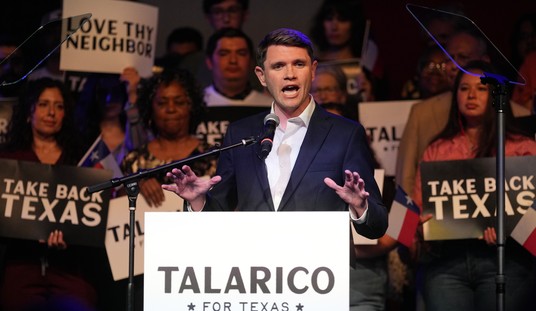
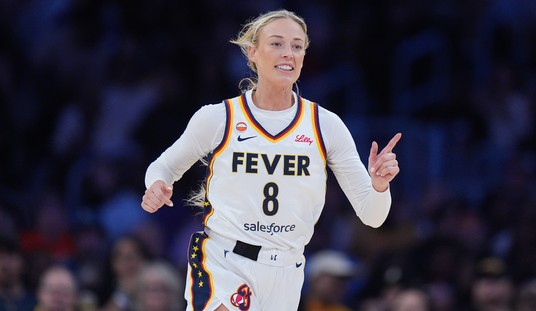
In late 2025, Nicki Minaj, the best-selling female rapper of all time, shocked the world. She spoke at a Turning Point USA event, revealing her conservative values and admiration for President Trump. Weeks later, she appeared at a White House rollout event for Trump Accounts. Despite the pearl-clutching, it’s been impossible to cancel one of the top pop artists in the world.
Celebrities aren’t the only ones moving to embrace Trump and MAGA. The Black electorate is shifting based primarily on policies. Donald Trump won 15 percent of Black voters in 2024, according to Pew Research’s validated voter survey, an increase from the eight percent he won in 2020. He drew his strongest support from men, winning the highest share of Black men for a Republican presidential candidate in 50 years.
Appealing to Blacks purely on historical alliances or racial emotional appeals is passe and increasingly ineffective. Although Blacks overwhelmingly vote Democratic out of blind allegiance, younger Blacks are no longer viewing politics from what their parents, friends or pastors are telling them. Blacks increasingly want their votes to be competitive, not taken for granted.
The Supreme Court’s decision in Louisiana v. Callais reaffirmed the principle that the Constitution does not permit racial classifications and citizens must be treated as individuals, not as members of racial groups. This terrifies Black elected officials whose power was drawn from racially gerrymandered districts. Section 2 of the Voting Rights Act (VRA) provided the legal basis for majority-minority districts, in which a racial or language minority constitutes the majority of the population.
By limiting the application of Section 2 of the VRA, states are able to redraw districts to eliminate race-based voter clustering. Congressional Black Caucus Chair Yvette Clarke, D-N.Y., claimed that as many as 19 caucus members could lose their seats if states draw new maps in the wake of the Supreme Court's Callais ruling.
That is a dismal assessment of her colleagues’ electability and records. It’s high time for Black electeds to deliver on promises for all of their constituents, regardless of skin color. They should have nothing to worry about if they can point to a track record of success that appeals to white and other non-Black voters as well as Black voters.
The reshaping of culture and politics is good for equality and freedom of thought. As it grows increasingly more acceptable to identify as conservative, Republican, MAGA, or a Trump supporter, Blacks will worry less about losing friends and family, business deals, or supporters.
Black voters are finally up for grabs. Whether they migrate back to the party of Lincoln and freedom, stay and force Democrat leaders to actually deliver better results, or move to the independent lane, Black voters are poised to be sought-after rather than taken for granted.