

I was talking to a neighbor in the elevator of our building the other day. In Israel these days, there’s a shorthand in our speech and mannerisms that are just understood and can be discerned quickly, in under five floors. Talking about life and our families, and the living between the ceasefires, she said, “It will never really change, so appreciate the quiet now.”
The message was clear and sound. In 78 years, we have always been attacked by one enemy or another. Today, many of them have long-range rockets, missiles and drones, the detection of which en route to do damage can send millions of people to their bomb shelters in an instant. Living through 40 days of such attacks from Iran and Hezbollah most recently, the ceasefires currently in existence are both needed and unnerving. “Appreciate the quiet now,” is sound wisdom since we cannot change the broader reality that it may and very likely will end at a moment's notice. We just don’t know when.
I have not spoken to anyone I know in recent weeks who does not want quiet. Peace? That’s elusive. Years ago, I wished a very secular relative a peaceful new year. She responded that we should not pray for things that cannot happen. This month, I connected with another relative who lives in northern Israel, where attacks from Hezbollah are still a threat. I have been concerned about her and her overall safety, but she’s used to it. She wrote, “Do you really believe that there will ever be peace with our neighbors? I don't.”
As my neighbor said, “It will never really change.”
We all want the elusive, maybe impossible peace, but we will settle for quiet. Yet we are also aware that the war is not over and what needs to happen is that it should be finished with an actual victory, not just pushing the terrorists back, or kicking the can down the road so that my grandsons are not dealing with the same problems when they are in the army and become parents and grandparents.
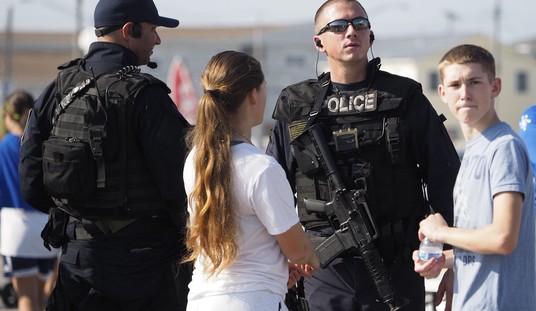

Living between the ceasefires, a friend shared, comes with “anticipation anxiety,” classified as worry about a future event, something scheduled, such as a new job, or a potential threat, such as the loss of a loved one, or in our case, war.
The anxiety enters our lives and is displayed with mundane things like business meetings being canceled, or being unable to fly out of the country due to the limited number of airlines currently available. The flip side is flying out, but being able to get back home. One friend with a flight this coming week asked, “I can’t afford to get stuck there. Would you cancel?”
These are things that we can overcome and deal with. Less mundane, however, it’s been normal for parents to put their kids to sleep in their mamad, bomb shelter/safe room. It’s spared parents from worrying about waking up at 3 a.m. to the sound of a siren and scooping up all their sleeping children into the mamad. It’s also a comfort for the children to sleep there, yet unavoidably something that will create trauma and anxiety down the road, even into adulthood.
A friend told me recently that she and her husband just moved out of their mamad back to sleep in their own bed, just in time for the next round, I thought. But she noted introspectively, “That's really nothing compared to friends who were trying to schedule a bar mitzvah and a wedding with relatives traveling from abroad.”
Traveling for celebrations can be stressful, not knowing from one day to the next if things will flare up and prevent people from arriving. Our neighbors are having a wedding this week and several sets of friends and family from both sides are coming in. Of course, not having them at the wedding is an anxiety, but it also means the possibility of the venue being restricted to just 50 guests, if not canceled entirely. We have offered our balcony with a beautiful view of Jerusalem, just in case.
More mundane but very practical is that in the Jewish ketubah – wedding contract – the location of the wedding is noted, leaving many to leave out the location until the last minute, just in case. You can’t have a legal document saying that the wedding took place in one location if it didn’t. It’s an extra stress where people have their ketubah commissioned and designed as a piece of art and it needs to be done before the wedding.
Noises are triggering. In my own home, yesterday, there was the unusual sound of drones overhead for some time, today, for 20-30 minutes, the roar of planes. Booms that sound like explosions can be imitated by the sound of a gust of wind and a loose window.
I found my heart racing in sync with the roaring of the planes overhead today, on edge. Waiting to see what it meant. I began thinking of life through the prism of a real math word problem: If a squadron of Israeli F15s, F16s, and F35s take off from Israel flying at Mach 1.6 (1,200 mph) with estimated targets 1200 miles away, in how much time will there be an Iranian retaliatory attack and do I have time to finish my coffee/take a shower/run to the grocery store for staples?
It would at least be a comfort if there were an app that told us, even after the fact, where the planes were heading and what the outcome of the thunderous roaring that we are hearing. Maybe like Uber, but rather than telling us how long it is for our ride to arrive, to tell us when it reaches its destination, so to speak.
I asked another friend, Staci, how she was coping with life between the ceasefires. I liked her response the most. “I think the most remarkable thing about living between the ceasefires has been Israel's willingness to pay with blood and treasure for the hope of a better tomorrow for us, and for the Iranian and Lebanese people who want peace.”
It’s a sentiment I have heard often: we’re prepared to absorb more threats and even loss if we can see ourselves – and the Iranians and Lebanese, among others – free from living under the heel of the evil terrorists that afflict us all. Perhaps that’s the message: that despite it all, we remain hopeful and forward-thinking, unlike our enemies, who just want to see us annihilated.