

This week, nearly 500 leading Americans will gather to do something both simple and profound: read the Bible aloud—from beginning to end.
No skipping the “begats.”
No glossing over Leviticus.
No ignoring Creation, the Virgin Birth, the Resurrection, or Christ’s promised return.
Every word. Publicly read. In full view—and within earshot—of the American people.
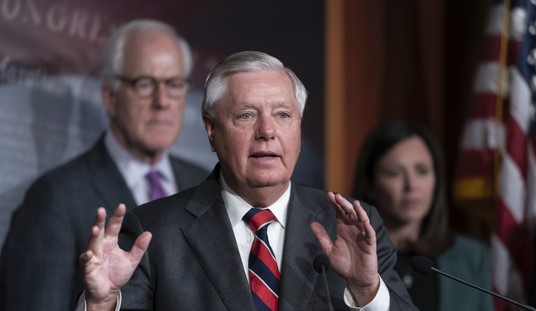
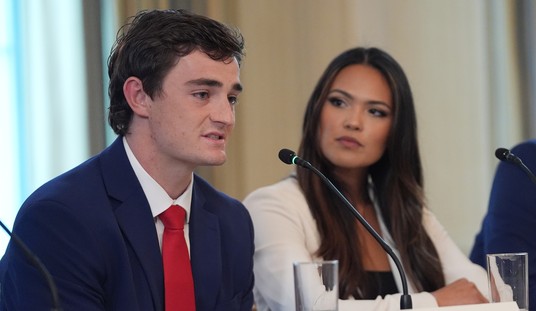
Participants will include voices from government, media, business, and culture. And yes, perhaps even a few who disagree with what they are reading.
How will we ever cope?
The truth is, public readings of Scripture are not new. They are, in fact, ancient.
In the Book of Nehemiah, the people of Israel gathered as Ezra the scribe stood before them and read the Law aloud—from morning until midday. The people listened attentively, standing in reverence, rediscovering not just words, but identity. In the early church, the Apostle Paul instructed that his letters be read publicly among the congregations. For centuries, before printing presses and personal copies, Scripture was something heard together, absorbed collectively, and lived out communally.
Even in early America, public readings of the Bible were commonplace. From colonial town squares to the halls of Congress, Scripture was not hidden away—it was foundational. Presidents from Washington to Lincoln referenced it openly. Schools taught it. Communities gathered around it.
But in recent decades, we have largely abandoned that practice.
And in doing so, we’ve lost something far more significant than tradition.
We’ve lost the larger story.
We’ve forgotten the greater good it calls us to. The deeper meaning it offers. The ultimate hope it provides.
Now, some will object to this week’s reading. They’ll say it’s inappropriate—especially if public officials or even a sitting president participates. They’ll argue that faith should be private, that Scripture should remain tucked away, safely out of the public square.
Hogwash.
No one raised similar objections when Scripture was quoted—often out of context—for political purposes in past administrations. Selective outrage is not a principle; it’s a preference.
The reality is simple: all Americans, regardless of belief, can benefit from being reminded of timeless truth.
And no book—or more accurately, no collection of books—has ever contained more of it.
Within its pages are the earliest records of human history, the poetry of suffering and redemption, the wisdom of Proverbs, the moral clarity of the prophets, and the life- altering message of the Gospel. It addresses the human condition with an honesty that modern culture often avoids, and it offers a hope that no political platform can replicate.
More than that, the Bible is deeply woven into the very fabric of this nation.
The concept of human dignity—central to the American experiment—flows directly from the biblical understanding of the imago Dei: that every person is made in the image of God. From that truth came the moral arguments for abolition. From it came the defense of life. From it comes the ongoing call to protect the innocent and pursue justice.
These are not incidental ideas. They are foundational.
To separate America from the influence of Scripture is not to move forward—it is to forget who we are.
That’s why this week matters.
Not because it will solve every problem overnight. Not because every listener will suddenly agree with every word. But because, in a time of confusion, division, and historical amnesia, it points us back to something enduring.
Something steady.
Something true.
I am personally humbled to be among those participating in this reading. My portion doesn’t come until next Saturday, but I hope Americans won’t wait until then to tune in. Salem Radio and Great American TV will be providing coverage, and the entire reading will be available to listen to online.
For a nation approaching its 250th year, this moment feels particularly fitting.
Because the challenges we face today will not be solved by erasing our past or rewriting our story. They will not be solved by the latest political trend or ideological experiment.
They will be addressed, in part, by remembering who we are—and why we exist in the first place.
America does not need less truth. It needs more of it.
And this week, in the simple yet profound act of reading Scripture aloud, we are reminded of the God who made us, the truth that sustains us, and the hope that calls us forward.
That can never be a bad thing.