

No president in American history ever dared to cut taxes by $5 trillion – not, that is, until Donald J. Trump took the oath of office for the second time. Less than six months after launching his second term, President Trump signed into law the Working Families Tax Cut, also known as the One Big Beautiful Bill Act. In doing so, he made history.
And now, as Tax Day on April 15 approaches, people all over the country are filling out their taxes and seeing for themselves just how significant the enactment of that legislation was last summer.
Not unexpectedly, Politico’s editors addressed the political ramifications of one element of President Trump’s massive tax cut package, headlining their piece, “Trump’s overtime tax break is a hit. Democrats aren’t sure what to do about it,” and then opening their assessment with, “President Donald Trump’s new tax deduction for overtime looks like a hit this filing season, and that’s shaping up to be a big challenge for Democrats.”
Of course, President Trump’s overtime tax break is a hit. Why wouldn’t it be? The new deduction allows couples to deduct up to $25,000 per year. Almost 20 million taxpayers, representing about 23 percent of the returns filed so far, have already claimed the deduction, according to U.S. Treasury data.
That’s not the only new deduction, either. So far, says Treasury, about 17 percent of taxpayers have taken advantage of a new $6,000-per-person deduction for seniors. And there are other new tax cuts as well, including a tax deduction of up to $10,000 on interest paid on car loans for the purchase of American-made vehicles.

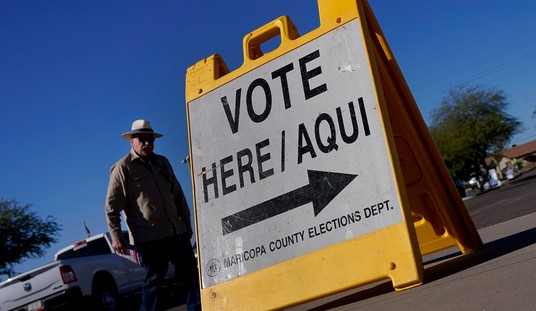
Those are some of the “new” tax cuts, the cuts that became law last year because Trump campaigned on them as a candidate for president in 2024.
There were also “old” tax cuts that were made permanent last year, too – the tax cuts from President Trump’s first major tax cut legislation, from his first term in office, the 2017 Tax Cuts and Jobs Act (TCJA). Those 2017 tax cuts were not designed to help specific groups of workers, as were several of the tax cuts candidate Trump campaigned on in 2024; those 2017 tax cuts were broad-based, designed to help all taxpayers across the board.
Those 2017 tax cuts on individuals – major rate reductions, a near doubling of the standard deduction, and an increased exemption amount for the alternative minimum tax, among others – were already in place, but were scheduled to expire at the end of 2025. Expiration of those tax cuts would have created the largest tax increase in history, an outcome President Trump and the Republican Congress worked hard to prevent.
Democrats, by contrast, all voted against the Working Families Tax Cut. In doing so, Democrats in the House and Senate all voted to keep in place what would have been the largest tax increase in history. The campaign ads virtually write themselves.
Back to the Working Families Tax Cut. Enactment of the tax cut bill last year did not merely extend the 2017 tax cuts; enactment of the tax cut bill last year made those 2017 individual tax cuts permanent.
Consequently, in one fell swoop, President Trump enacted the largest tax cut in history, even as he and Republicans in Congress prevented what would have been the largest tax hike in history – a tax-cut twofer of enormous significance.
Making the 2017 tax cuts permanent was a big deal. Through rate reduction, tax bracket expansion, limiting itemized deductions, and other means, taxes on individuals were lowered significantly, but because of the rules related to the procedure used to enact the tax cuts, they could only be enacted for a limited duration, expiring at the end of 2025.
Combined with the corporate tax cuts in the Tax Cuts and Jobs Act, the individual tax cuts worked as intended to spur economic growth. The economy outperformed its pre-TCJA projections, moving from 1.7 percent to 2.7 percent growth.
So the tax cuts worked to leave more money in the hands of businesses and individuals and grow the economy, which created new and better-paying jobs. And we have President Trump’s leadership to thank for that.
It’s not often we have much to be thankful for on April 15. This year, though, we have reason for celebration, because we all benefit from the fact that President Trump is the biggest tax cutter in American history.
Jenny Beth Martin is Chairman of Tea Party Patriots Action.