

The United States Supreme Court is finally ruling on an issue (Watson v RNC) that should have been decided long ago: the dissonant practice of accepting ballots after the Election Day deadline.
This case could indeed shift the 2026 midterms in Republicans’ favor, since Democrats often win by broad and unjustified election expansion, which opens the door to cheating, stuffing, and undoing the vote.
More election cases are coming before the United States Supreme Court, and the conservative majority looks more inclined to bring the much-needed order and common sense back to our elections.
Why would the RNC sue Mississippi, of all places? It’s a ruby red state, after all, where even Elvis Presley’s Democratic cousin could not get elected Governor.
This decision was a masterstroke. Democratic states have mostly expanded this corrupt effort, allowing ballots to be counted long after the Election Day deadline. If a Republican organization went after a Democratic state, the proponents of these “grace period” laws could have argued that the RNC is targeting election reforms they don’t like in states where they can’t win. Instead of arguing the merits of the case, the RNC would have wasted time and resources explaining to federal courts that their interest is in the fairness of the vote as opposed to the pursuit of partisan assistance or advantage.

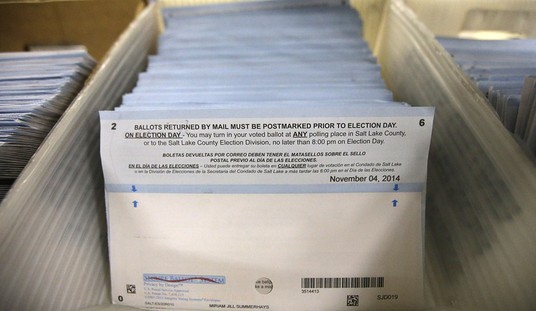
For the record, the RNC deserves more credit than they are receiving for fighting off election fraud machinations and seeking to restore election integrity in our voting practices. They jumped ahead of the problems, potential, and actually, long before Election Day in 2024, warding off a repeat of the failures and questions that dominated the 2020 election results.
How do we want the court to rule in Watson? What should this first set of election reforms look like?
Justice Samuel Alito could not have summed it up better:
“We have lots of phrases that involve two words, the last of which, the second of which is ‘day,’ Labor Day, Memorial Day, George Washington's birthday, Independence Day, birthday and Election Day, and they're all particular days. So if we start with that, if I have nothing more to look at than the phrase ‘Election Day,’ I think this is the day in which everything is going to take place, or almost everything.”
It’s Election Day—not a week, month, or season. Everyone understands that simple phrase in connection with many other holidays and commemorative events. Sure, some of us turn our birthday into a week of avoiding work and spoiling ourselves with fun and frolic. Some families extend their Christmas festivities for the entire week, all the way into New Year’s Day.
But with election day, power and the course of governments hang in the balance. Voters deserve a sense of finality, whether their preferred candidate or cause wins or loses. We have to finish the work in order for the voice of the people to be heard.
Yes, it’s time to end the folly of mass vote-counting long after Election Day. Mississippi most likely allowed the five-day grace period as a holdover from the old days when the Democratic machine dominated the Magnolia State.
Today, the worst offender when it comes to late tallying is my home state of California. Everyone receives a ballot in the mail, whether they want to vote or not. They can drop off their ballot in any number of voting centers across the state. Yes, across the state—a massive contrast to 25 years ago, when you had to vote in the county where you lived, and obtaining a provisional ballot was very difficult. I still remember trying to vote in Election 2000, and the voting both at the UC Irvine campus (in Orange County) told me that I had to find a voting station in Los Angeles County. Those were the days!
Currently, Californians wait over a month before the ballots are tallied for statewide and local elections. It’s outrageous! Election integrity activists monitored the vote count in Orange County, where a number of Congressional seats slipped into Democratic hands as the Election Day(s) turned into weeks. We watched a Northern Los Angeles County seat slip into Democratic control, as well.
These elections need to get wrapped up, and in a timely fashion.
But we should not settle for timely election results alone.
The vote is all about registering the view of a citizen. If it were possible and practical, every voter would have the opportunity to cast their vote in person, declaring their views and values in the election. The ballot exists as a means of transfer and should not be viewed as the end in itself of our election process.
How do we restore confidence in our elections? How do we ensure that those who have the right to vote, who want to vote, get to vote?
- Absentee voting must be restricted. Only those physically incapacitated or those removed from the country or jurisdiction should use absentee ballots. Furthermore, if the individual cannot vote in person, they should go to the County Clerk or Registrar of Voters' office, request the ballot in person, and show their ID to prove their identity. For those who cannot visit the registrar, they can provide a proxy to pick up the ballot, including a notarized statement of identity and support.
- Early voting should be eliminated. Citizenship should include the virtue of patience. Besides, many weak candidates depend on early voting by making quick pleas and social media campaigns to hype themselves up. Many elections are getting decided by this permanent absentee process, and all too often those same candidates flame out under pressure or during debates. By then, the votes have been cast, and the electorate cannot retract or change their vote.
- If we take away early voting, how do we deal with the long lines and the obstacles to a rapid voting process? I have no problem with turning Election Day into a holiday. Let’s make it easier for working people to retain basic compensation, but at least have an opportunity at any time during the day to cast a ballot.
- Of course, the SAVE Act reforms should become standard operating procedure for all elections around the country. Citizens must provide documentation that adheres to uniform standards in order to register to vote, i.e., prove their citizenship. They should register in person (not by computer) in order to vote. States should have a basic system in place to remove inactive voters (whether due to death or relocation. Above all, a strict voter ID requirement should be the norm for all elections. Some states have ID, but it does not have to have the citizen’s photo. What is this?! Other states allow citizens to claim that they are who they say they are, then sign an affidavit. We shouldn’t tolerate such flimsy assurances. Also, elected officials who do not comply with the election integrity reforms should face fines or go to jail, and American citizens should have the power to sue government entities that don’t comply with these laws.
Election reforms start with simple rules and clear deadlines: One day for Election Day, a chain of custody, and rigorous safeguards should be the norm.