

Once again, the Iranian regime has perfected its oldest and most cynical diplomatic trick: delay, distract, and deceive. The reported visit of Ali Larijani, adviser to Supreme Leader Ayatollah Ali Khamenei, to Oman this week, coming hot on the heels of so-called "indirect" nuclear talks with Washington in Muscat, should set alarm bells ringing in every serious policymaker's office. This is not diplomacy. It is political theatre, designed to sap Western resolve while the mullahs buy time.
We have seen this movie before, and it always ends the same way. For more than two decades, Tehran has used negotiations not as a path to compromise, but as a shield behind which it advances its nuclear program, expands its missile arsenal, entrenches its regional proxies, and tightens repression at home. "Talks about talks" are the regime's favorite holding pattern. They create the illusion of engagement, defuse immediate pressure, and divide Western capitals, while nothing of substance changes on the ground.
The current moment is especially dangerous because it combines Western hesitation with Iranian desperation. The clerical regime is weaker than it has been since the 1979 revolution hijacked by the mullahs. The nationwide uprising, erupting again in late 2025 and early 2026, has exposed the depth of popular rage against a system sustained only by fear. Thousands of protesters have reportedly been killed, including hundreds of women and children, some as young as 3. Tens of thousands more have been detained. The Islamic Revolutionary Guard Corps (IRGC) has once again shown itself not as a military force, but as a domestic occupation army.
That reality was powerfully underscored last Saturday in Berlin. Under freezing winter skies, an estimated 100,000 Iranian exiles and international supporters gathered at the Brandenburg Gate in one of the largest demonstrations of the Iranian diaspora in decades. Their message was unmistakable and uncompromising: No Shah, no mullahs. Rejecting both the theocratic dictatorship and any nostalgic return to monarchy, the crowd voiced a demand for a democratic republic rooted in popular sovereignty. This was not a fringe protest. It was a mass expression of a people who have lost all faith in imposed rulers, whether crowned or turbaned.
It is precisely at such moments of internal crisis and external exposure that Tehran turns outward, seeking negotiations abroad to survive at home. The visit by Larijani is not a goodwill gesture. It is a calculated signal that Iran wants process, not progress. Oman, long a discreet intermediary, offers the perfect venue for ambiguity and delay. By agreeing to exploratory contacts without clear objectives or deadlines, Washington risks repeating the fatal mistake of past administrations, confusing dialogue with leverage.
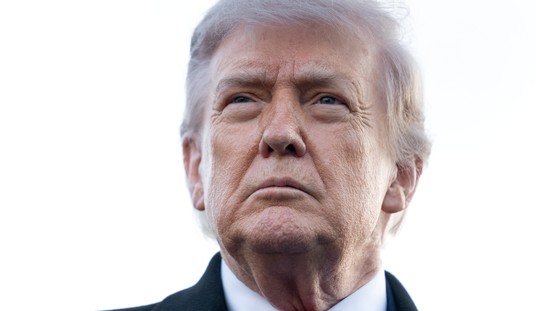
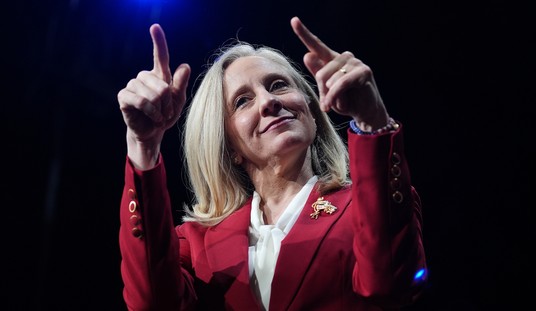
U.S. officials now openly admit they have not defined the "end state" of policy toward Iran. That admission alone should worry America's allies. Strategy without an end state is not strategy at all; it is drift. Tehran understands drift. It thrives on it. Meanwhile, the regime continues to set out its own red lines; no end to uranium enrichment, no dismantling of missile technology, no halt to funding and arming proxies such as Hezbollah, Hamas, and the Houthis, and certainly no discussion of its systematic repression of the Iranian people. In short, Iran demands sanctions relief and security guarantees in exchange for… nothing. This is not negotiation. It is extortion.
Some in Washington still cling to the illusion that military deployments are merely "typical" force-protection measures, separate from diplomacy. Tehran does not see it that way. Every aircraft carrier, every readiness exercise, every carefully worded threat is folded by the regime into its narrative of resistance and victimhood, used to justify further crackdowns at home and aggression abroad. At the same time, Iranian commanders openly boast of their ability to strike U.S. bases and carriers, calculating that Western leaders lack the political will to respond decisively. The danger is not that America will act too quickly. The danger is that it will wait too long. The Trump administration's own mixed messaging, alternating between threats of military action and declarations of a preference for talks, has created precisely the ambiguity Tehran exploits best. Iranian leaders are betting that Washington fears escalation more than Tehran fears collapse. Every day of talks without substance reinforces that belief.
Europe, for its part, is finally beginning to shed its illusions. The EU's designation of the IRGC as a terrorist organization, though largely symbolic, reflects a growing recognition that this is not a normal state with which one can conduct business as usual. Making a deal with Iran is making a deal with the IRGC, now classified as a terrorist entity by most of the world. It is a terrorist state that survives through violence, both internal and external. Tehran's furious response to the designation only underscores the point. But symbolism without follow-through changes nothing.
What should Washington do? First, it must abandon open-ended dialogue. Any talks must be conditioned on clear, non-negotiable benchmarks: the complete dismantling of uranium enrichment, verifiable limits on missile development, an end to support for armed proxies, and accountability for mass killings of protesters. Without these conditions, talks are worse than useless; they are dangerous. Second, America must stop pretending that the regime's internal repression is a separate issue. The same system that shoots teenagers in the streets of Tehran is the system that exports terror across the Middle East. There is no "moderate" faction waiting to be empowered by patience and goodwill. Finally, Washington must recognise what the Iranian people, from Tehran's streets to Berlin's Brandenburg Gate, already know: this regime cannot be reformed. It can only be replaced. Supporting the Iranian people's right to resist tyranny, politically, economically, and diplomatically, is not warmongering. It is moral clarity.
Ali Larijani's trip to Oman is not a step toward peace. It is a stalling tactic by a regime running out of time. America should not be fooled again. History will not be kind to those who mistook endless negotiations for wisdom while the mullahs tightened their grip and raced toward the bomb. The choice is stark. Decisive pressure now, or a far more dangerous confrontation later. Washington must choose wisely, and quickly.
Struan Stevenson was president of the European Parliament's Delegation for Relations with Iraq (2009-14) and chairman of the Friends of a Free Iran Intergroup (2004-14), the Coordinator of the Campaign for Iran Change (CiC). He was a member of the European Parliament (MEP) representing Scotland (1999-2014). He is an author and international lecturer on the Middle East.