

Democrats appear to have settled on a dual strategy heading into the 2028 election: Sow doubt within the military ranks, and present a slate of candidates who project moderation.
The first prong centers on an emerging talking point -- one that suggests members of the armed forces should question whether orders coming from the Trump administration are legal. Figures such as Sens. Mark Kelly and Elissa Slotkin have warned servicemembers that following an "illegal order" could lead to punishment, yet they have offered no clear definition of what constitutes such an order.
The result is a manufactured Catch-22: Follow orders now and risk a future Democrat administration declaring them retroactively unlawful, exposing personnel to court-martial. The ambiguity itself becomes a destabilizing tool.
This, the argument goes, forms the core of the Democrats' "chaos strategy": cultivating mistrust around the chain of command.
The second prong is more traditional politics -- positioning an entire bench of Democratic hopefuls as pragmatic centrists. In the wake of President Donald Trump's second-term victory, the question was whether the party would move further toward the Zohran Mamdani wing of the Left or tack back toward the middle. Early signs suggest the latter.
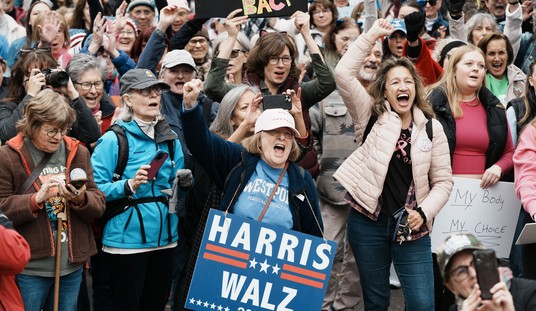
Topics that once dominated Democratic rhetoric -- transgender issues, DEI, "equity" -- have faded from prominence. Even on immigration, the party has distanced itself from earlier calls to disband Immigration and Customs Enforcement or defund the police. Now Democrats argue that Trump is mostly right about the southern border while accusing him of overreach in prosecuting nonviolent migrants.
The shift toward moderation is visible again in the controversy surrounding Secretary of War Pete Hegseth. A report in The Washington Post claimed the White House, through Hegseth, had ordered the killing of narco-traffickers who were already disabled and floating in the water -- an action that would violate the Geneva Conventions, which prohibit harming combatants who are out of combat.
The White House responded with a statement from press secretary Karoline Leavitt: "President Trump and Secretary Hegseth have made it clear that presidentially designated narco-terrorist groups are subject to lethal targeting in accordance with the laws of war. With respect to the strikes in question on Sept. 2, Secretary Hegseth authorized Admiral (Frank) Bradley to conduct these kinetic strikes. Admiral Bradley worked well within his authority and the law, directing the engagement to ensure the boat was destroyed and the threat to the United States of America was eliminated."
A subsequent New York Times report appeared to back off the original claim, suggesting Hegseth had not issued a blanket kill order for incapacitated individuals.
The sequence looked engineered: thinly sourced allegations, followed by clarifications, all feeding a narrative that the Trump administration is reckless -- and that only a sober, seasoned Democrat, perhaps someone like Kelly, can restore order.
The broader suggestion is that Democrats understand the electoral limits of their most progressive positions. They may champion them privately, but they are unlikely to run on them. Instead, they will wait until they regain power before turning the taps fully back on.
Ben Shapiro is a graduate of UCLA and Harvard Law School, host of "The Ben Shapiro Show," and co-founder of Daily Wire+. He is a three-time New York Times bestselling author. To find out more about Ben Shapiro and read features by other Creators Syndicate writers and cartoonists, visit the Creators Syndicate website at www.creators.com. COPYRIGHT 2025 CREATORS.COM