

The ongoing debate over international trade policies has brought renewed attention to how the European Union’s practices impact American workers, industries, and innovation. President Donald Trump has made it a cornerstone of his administration to reform these policies and address the imbalances that have negatively affected Americans for decades.
For many years, Americans have witnessed the closure of factories and the migration of jobs overseas. This trend has been largely attributed to the effects of globalization and trade agreements that have disproportionately benefited foreign countries at the expense of the United States. Despite widespread criticism, Washington leaders previously ignored these concerns, paving the way for President Trump’s rise, fueled by the frustrations of millions of Americans who felt left behind.
While manufacturing losses to China often dominate headlines, the European Union has also taken advantage of the United States for years. President Trump has highlighted that the EU, in some respects, poses even greater challenges than China. In May, an executive order exposed how European countries compel American patients to shoulder a disproportionate share of global research and development costs for pharmaceuticals, keeping drug prices artificially low.
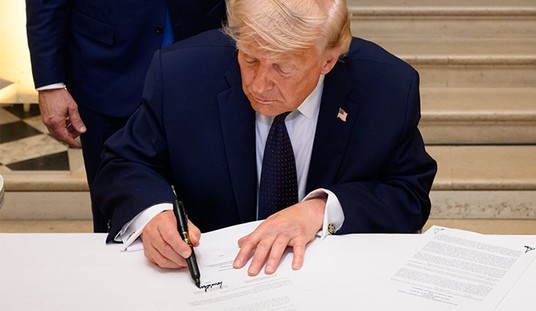
The EU employs both tariff and non-tariff barriers to restrict American cars and agricultural products, which have contributed to a substantial trade deficit—estimated at nearly $250 billion in 2024. In response, President Trump signed a landmark agreement with the EU in July aimed at creating a more equitable trading relationship.
Despite these efforts, the EU is quietly considering changes that threaten to worsen current challenges. Proposed reforms would weaken intellectual property rights, including expanding the Bolar exemption to pharmaceutical patent rights, while simultaneously considering rolling back key regulatory data protections. These changes would undermine international obligations to respect patents and enable European, Chinese, and Indian companies to prepare and seek to commercialize generic versions of medicines while American patents remain in effect.

Such policies force American companies to bear the risks and costs of innovation, with American taxpayers ultimately subsidizing much of the world’s pharmaceutical research through higher drug prices. Meanwhile, Europe and other nations benefit from these innovations without paying their fair share, perpetuating a pattern of “freeloading” that President Trump has repeatedly criticized.
European price controls result in Americans paying up to three times more for brand-name drugs than those in other developed countries. As a physician and former Member of Congress, I have witnessed firsthand how these high costs burden families, making them choose between essential medications and other necessities. During my tenure as Chair of the GOP Doctors Caucus, I worked alongside other Republican physicians in Congress to address these issues for patients.
Effectively, American taxpayers subsidize the socialist healthcare systems of European countries, whose governments are unable to fully fund these programs themselves.
President Trump has taken significant steps to tackle this issue, including negotiating most-favored nation agreements with pharmaceutical companies. Recently, his administration reached a historic agreement with the United Kingdom to pay more for innovative medicines and commit to fair pharmaceutical trade—demonstrating that true partners can act responsibly. However, the EU continues to move in the opposite direction.
On the heels of a successful agreement with the United Kingdom, trade negotiations with the European Union advance to a critical stage. It is imperative for the United States to ensure that Europe is held responsible for its proposed changes to intellectual property regulations via Bolar expansion and data protection rollbacks. The sense of urgency is heightened by the fact that European regulators are scheduled to convene in Brussels next week to formalize these reforms. This development signals that the period during which the United States can meaningfully influence the outcome is rapidly narrowing.
Limiting patent exceptions, as required by international law, is essential to maintaining a fair, innovation-driven global system and ensuring that Americans do not bear an undue burden of global research and development.
We must support the scientists, researchers, and companies who invest in and pioneer new discoveries. Allowing foreign governments to undermine the value of their work through regulatory loopholes is unacceptable. At a time when China seeks to dominate global biomanufacturing, weakening Western intellectual property protections is not only shortsighted—it is dangerous.
Dr. Brad Wenstrup represented Ohio’s 2nd Congressional District for 12 years and served as the Co-Chair of the GOP Doctors Caucus. He also served on the Ways and Means Committee and the House Permanent Select Committee on Intelligence.