





Editor's Note: This column was co-authored by Robert Popovian and Wayne Winegarden.
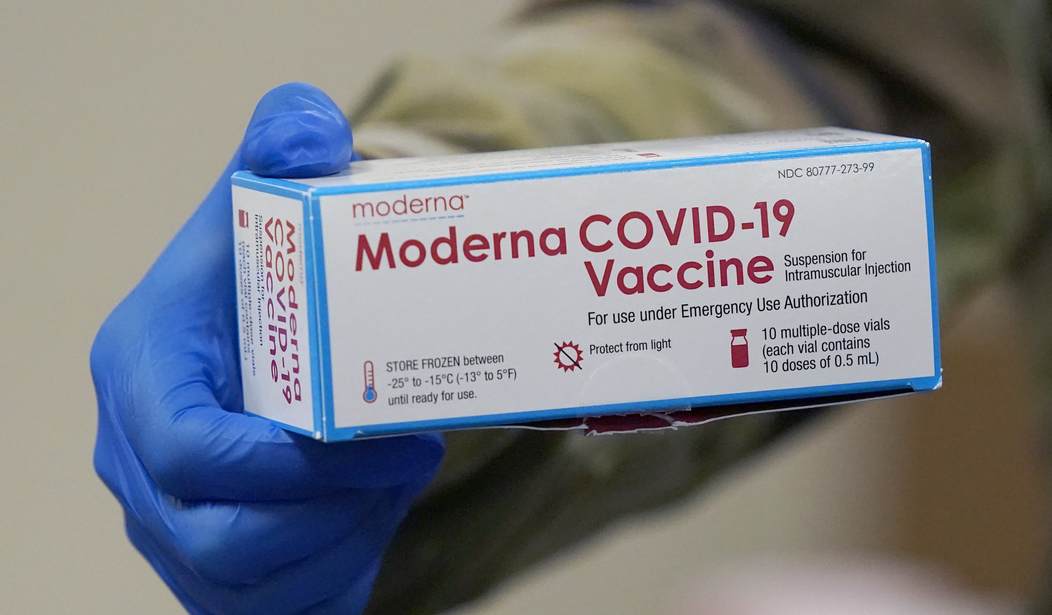
It all sounds so simple: to hasten the end of the pandemic globally, suspend intellectual property protections on Covid-19 vaccines to allow swift production of low-cost copies the world over. The Biden administration has bought into exactly that strategy at the World Trade Organization.
But some simple ideas are also simplistic, and this one is dangerously so. Waiving patent rights for Covid-19 vaccines will actually slow their availability in the developing world, thereby prolonging the pandemic.
The production of these breakthrough Covid-19 vaccines requires sophisticated processes, procedures, staff training, material, and manufacturing. Under typical patent-protected arrangements for new global production facilities, patent-holders voluntarily license their product information to qualified third party-manufacturers. The patent-owners work closely with the licensees to stand up facilities that meet rigorous technological specifications and standards for safety. Even under ideal conditions, it can take a year or longer to build out this infrastructure the right way.
The WTO waiver blows up this careful process by allowing pretty much anyone to go into the business of producing Covid-19 vaccines. Suddenly, it's the wild west out there, with legitimate producers trying to compete with aggressive cost and corner-cutters, to say nothing of the outright fraud that has long driven the lucrative counterfeit drug trade. All the research demonstrating the safety and efficacy of the Covid-19 vaccines goes out the window under such conditions.
Nor is such a process going to produce faster results. Historically, under compulsory rather than voluntary licensing arrangements, it has taken even legitimate generic manufacturers years to receive the formulas, work out logistical challenges, and scale up production. In one case of compulsory licensing, it took over four years to bring a generic AIDS drug to Rwanda.
The World Health Organization regularly publishes a list of "essential" medications, the vast majority of which patent protections have long expired. Any generic manufacturer can therefore set itself up producing them. Yet the WHO reports that availability of these medicines in many parts of the developing world remains spotty, at best. The quality of many of these essential medicines is also questionable.
Yet none of the drugs on the WHO list are in the same universe of complexity as the Covid-19 vaccines. The patent system is not the problem here.
But, some ask, why should private companies enjoy the property rights to innovation driven by government funding? This question likewise misses the mark. In a study of 478 drugs less than 10 percent had a public-sector patent associated with it.
While providing no gain, compulsory licensing promises lots of pain. Shunting aside patent and intellectual property rights sends a dangerous signal to innovative biopharmaceutical companies and their investors. Biopharmaceutical research is risky. It costs almost $3 billion, on average, to bring a single medicine to pharmacy shelves.
Biotech investors take these risks because of strong patent protection like those in the United States. Scientists in America now develop over half of all new drugs worldwide.
It's important to understand the current advocacy for a "temporary" IP waiver. A small but vocal and influential public health policy cohort believes that IP protections are the most significant cause of global healthcare disparities. Their philosophies repeat and reinforce many misconceptions about the problem of improving global access to medicines.
The reality is that, in order to save the world, we must all work together as partners. A free-market healthcare paradigm for drug development, although far from perfect, works. A well-appointed armamentarium of Covid-19 diagnostic tools, therapeutics, and vaccines – all invented in under one year, speaks to the power of today's innovation ecosystem. That ecosystem is built on IP protections.
Right now, under voluntary licensing, global production capacity for Covid vaccines and treatments is expanding and accelerating. A move to nullify IP will not result in a single resident of the developing world getting vaccinated one minute sooner.
Peter J. Pitts, a former associate commissioner of the FDA, is president of the Center for Medicine in the Public Interest. Robert Popovian is the chief science policy officer of the Global Healthy Living Foundation and a senior health policy fellow at the Progressive Policy Institute. Wayne Winegarden, Ph.D., directs the Center for Medical Economics and Innovation at the Pacific Research Institute.

Join the Conversation
VIP members get the ability to comment on articles.