





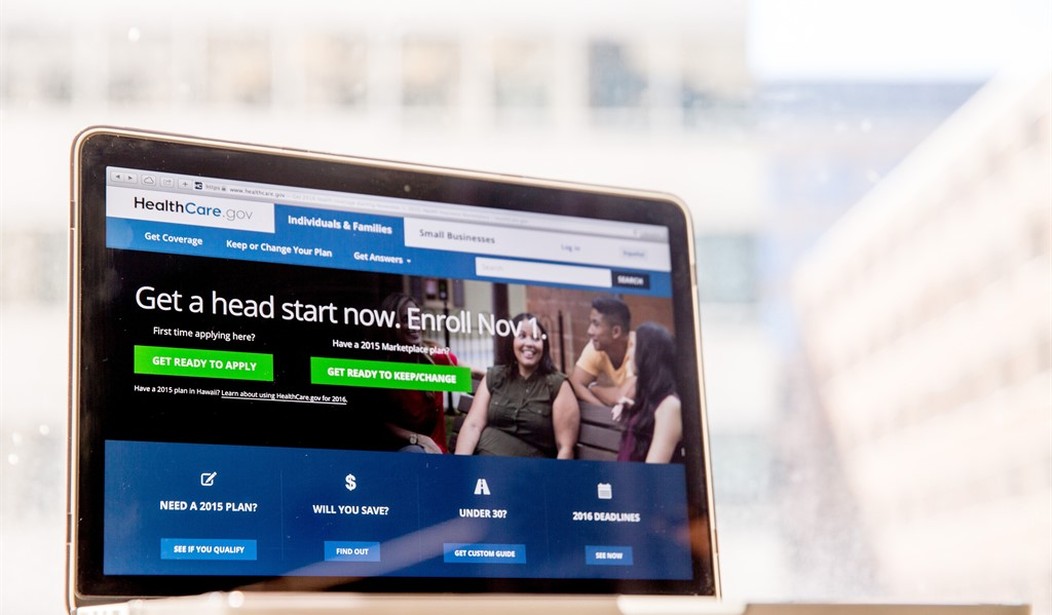
Obamacare is becoming a nightmare. Health insurance premiums will jump an average of 22 percent in 2017, and federal spending to assist moderate income families is spinning out of control.
For Democrats, the answers are simple—raise taxes on the wealthy to further subsidize a failing system—or force a single payer system—which can dictate prices to service providers and compel their participation—onto reluctant Americans.
For conservative Republicans, the issue is more vexing. Merely repealing the law is not enough, because that would hardly return America to a free market.
Even before the Affordable Care Act, federal and state governments were paying nearly half of the nation’s health care bills.
At one extreme, Medicare and Medicaid reimbursement rates for doctors are tightly controlled and too low to sustain their practices. Many limit the number of patients they take from these programs, and the elderly and poor often face difficulty finding a primary care physician.
Well off retirees can join concierge services, which charge high annual fees for access to primary care doctors, while the less affluent are left to scramble.
At the other extreme, the legislation establishing Medicare prescription coverage does not permit the government to negotiate prices. Pharmaceutical companies can set whatever prices they like knowing the elderly will simply send the bill to Uncle Sam.
Concierge services have generalized from the elderly to the entire adult care marketplace and created a two-tier system of access to physicians, while Medicare reimbursements are setting drug prices arbitrarily high for everyone.
The basic premise of the ACA was to enroll nearly every working age American in large employer-sponsored insurance or policies sold on government run websites to create competition that would lower costs, but it has not worked out.
At HealthCare.gov, families often pay $500, $1000 or more a month for policies imposing high deductibles and co-pays and with quite limited provider networks. Many have lost access to family doctors, encountered limited out-of-state-coverage when they travel and are generally excluded from using higher cost providers where they live.
The latter can be life threatening. As of the end of 2015, for example, none of the policies offered access to New York included the Memorial Sloan Kettering Cancer Center.
Problems are particularly acute in areas where the number of specialists are limited, and hospitals and group practices are monopolized enough to resist negotiating much on price with insurance companies.
Insurance companies are taking big losses, resulting in the large premium increases noted above—or leaving the website markets across the country. At least 650 of counties nationwide will have only one company offering policies next year.
Many folks won’t feel the full brunt of rate increases, as the federal government is obligated to subsidize premiums for low and middle income families, but the Congressional Budget Office estimates the ACA will cost $8.9 trillion over ten years.
We simply cannot go back to what existed before. Private plans lost in the upheaval cannot be easily reestablished. Simple electoral calculus requires that millions of Americans now receiving subsidies continue to receive assistance purchasing health insurance. However, Americans should not be coerced into buying substandard policies at a government store, and costs must be lowered.
The German system of private insurance, like Obamacare, requires virtually everyone to have coverage, but costs are more tightly controlled. For example, regulators price new drugs according to how much they improve treatment over existing medicines.
Such government interference in pricing is an anathema to conservative Republicans like Paul Ryan, but the incongruity of Medicare paying whatever prices drug companies choose to set is wholly unrealistic.
In the end, if the Republicans want to avoid a single payer system that subjects most Americans to a choice between moribund and arbitrary service akin to that offered by the Post Office and IRS, then they will have to explore with the new president regulating prices inside a private marketplace.
Effective leaders work with the world as they find it, not as they think it should be.



Join the Conversation
VIP members get the ability to comment on articles.