





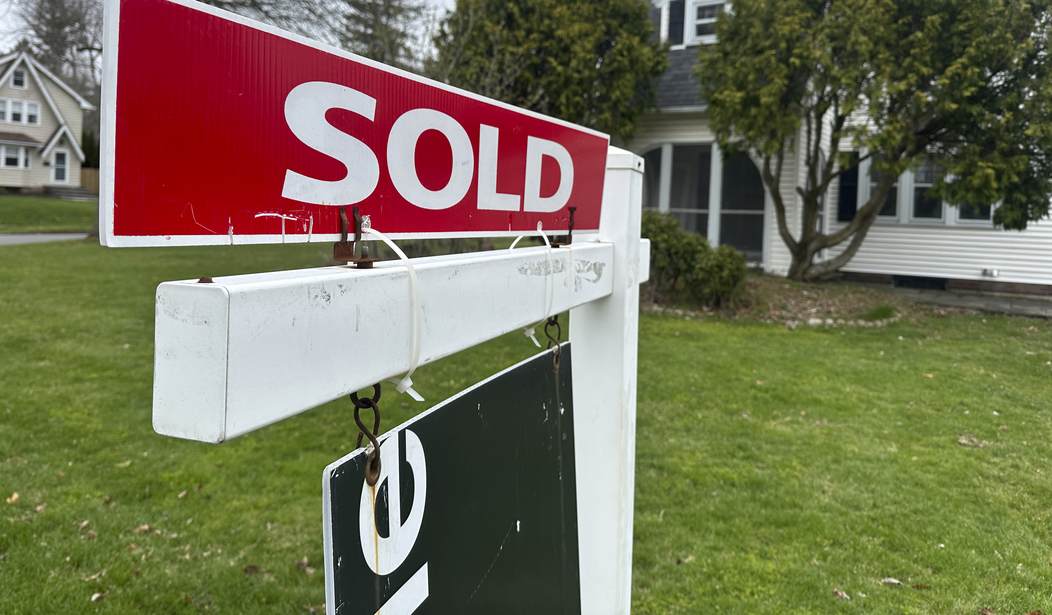
There clearly is a homeownership crisis in America today. Poll after poll shows that young Americans are worried about the possibility of purchasing an affordable, new home. In addition, the tax code contains a dated provision that punishes sellers. There is an easy solution to this problem.
The statistics show that homeownership is a challenge today. The New York Post on January 21, 2026, reported that "less than 30% of Americans who planned to purchase a home last year actually went through with it, according to NerdWallet's annual home buying survey." The Cato Institute conducted a poll that found "87% of Americans Worry about the Cost of Housing; 69% Worry Their Kids and Grandkids Won't be Able to Buy a Home." The housing affordability crisis is real, and people are paying attention.
The U.S. economy is doing well in some respects, but the inflation President Donald J. Trump inherited from President Joe Biden, resulting from the COVID-19 disruptions, persists despite efforts to rein it in. Prospective home buyers see home prices skyrocket, and mortgage rates rise. Homeowners who want to sell get bad news that they will be hit with a capital gains tax liability bill from the IRS that rises to 20 percent for higher earners. This puts a barricade created by the federal government between the seller and the buyer. This is bad tax policy.
The Left pushes for the government to regulate home prices, impose rent controls on existing apartments, and expand tax dollars poured into the building of new homes. This is a solution that will make the problem worse in the long term. Conservatives see government policies obstructing the free market, which can be changed or abolished to help solve the problem. Either way, the government is going to do something as we get closer to the midterm elections, and the hope is that the government decides to make the smart move by changing the tax code.
A rational change would be to update or abolish the capital gains taxes imposed on home sellers to get more homes on the market for sale. Ryan Ellis identified the problem in a piece for National Review where he explained, "under current law, homeowners may exclude only $250,000 in capital gains if single, or $500,000 if married, when selling a primary residence." He argues that these are limits created in 1997 during the Clinton Administration, which were never adjusted for inflation. Decades later, these limits have not been adjusted and expose homeowners to a big tax bill if they decide to sell.
The government is slow to update laws, and it is bad economic policy to not index these tax rates for inflation. Inflation hit 7 percent in 2021 and 6.5 percent in 2022. That inflation never went away, yet tax law never changed any of the laws to adjust for homeowners who wanted to sell in the last few decades. Even with lower inflation averaging about 3 percent the past two years, the inflation from years past is still haunting us.
In a Congress with little bipartisan agreement on anything, there is agreement that tax law needs to be modified to stop punishing homeowners who purchased their homes with after-tax dollars. Reps. Jimmy Panetta (D-CA) and Mike Kelly (R-PA) introduced the More Homes on the Market Act on February 13, 2025. In the Senate, Sens. John Cornyn (R-TX) and Michael Bennet (D-CO) on December 3, 2025, introduced a companion version. Both these bills seek to hike the cap from $250,000 to $500,000 for individual owners and $500,000 to $1 million for joint filers. This change would lower the double taxation of capital gains imposed on home sellers.
With midterm elections on the horizon and both parties having low approval rates, it might make sense to pass bipartisan legislation that addresses the housing affordability crisis. It would be a mistake to engage in big government solutions that increase regulations (that currently also need to be reformed) and throw borrowed money at the problem.
Because our national debt hovers around $38 trillion, with almost $2 trillion in new debt every year, it makes sense to step away from politicians' urge to spend money they don't have and embrace a conservative approach – allowing Americans to keep more of their hard-earned cash to buy a new home.
Editor’s Note: Do you enjoy Townhall’s conservative reporting and opinion? Support our work by joining Townhall VIP! Use the promo code POTUS47 to get 74% off your VIP membership!



Join the Conversation
VIP members get the ability to comment on articles.