





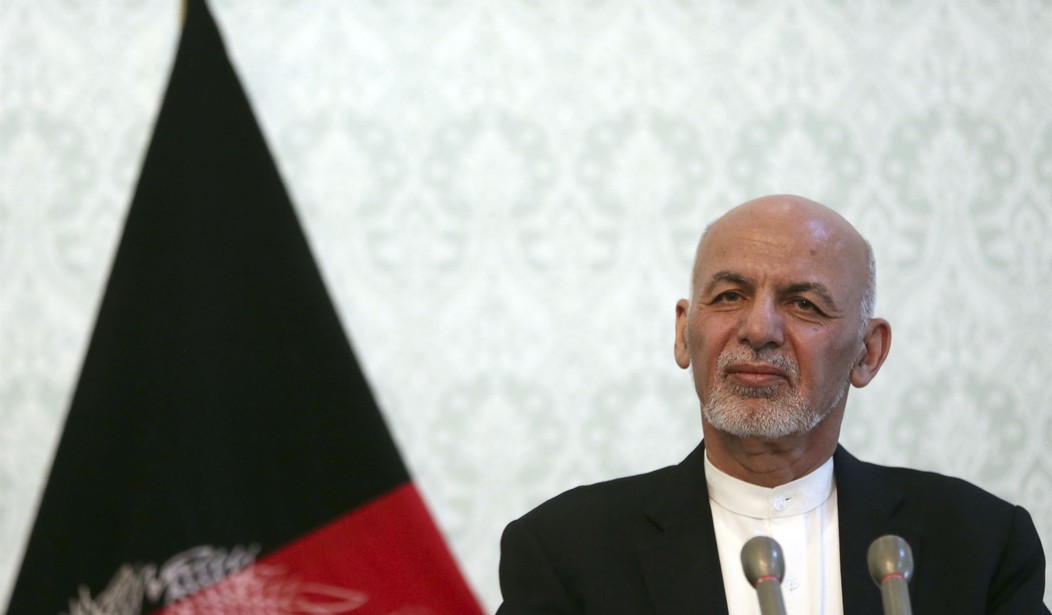
Former U.S. Ambassador to Afghanistan Ryan Crocker sums up in a single word the recently announced framework of an agreement between the United States of America and the Taliban: Surrender.
“This current process bears an unfortunate resemblance to the Paris peace talks during the Vietnam War,” writes Crocker in a Washington Post op-ed. “Then, as now, it was clear that by going to the table we were surrendering; we were just negotiating the terms of our surrender. The Taliban will offer any number of commitments, knowing that when we are gone and the Taliban is back, we will have no means of enforcing any of them.”
He’s not wrong.
The “framework” is simple enough: the Taliban promises not to allow terrorists to launch attacks from Afghanistan and U.S. troops leave.
It may seem strange that, after successfully toppling the Taliban government, a savage regime that mistreated the population and gave safe-haven to Al-Qaeda to launch its 911 attacks against us, we would now, nearly two decades later, be anxious to cut a deal with that same Taliban, accepting their good word and even trying to bring them into a power-sharing role in the rickety government.
Anything to get the heck out of Kabul and back to the good ol’ USA?
It is a recognition, clearly, that the Afghan government is not only currently unsustainable, but unsustainable for the foreseeable future. Since he took office in late 2014, 45,000 members of Afghan President Ashraf Ghani’s security forces have been killed. All while the most recent reports show the government losing its grip on nearly half the country.
“There is virtually no possibility of a military victory over the Taliban,” The New York Times editorialized on New Year’s Day, “and little chance of leaving behind a self-sustaining democracy — facts that Washington’s policy community has mostly been unable to accept.”
Nation-building has failed, is failing and will continue to fail in the future. Why else negotiate with the opposition?
There is an alternative, we are told: Keep a significant contingent of U.S. troops in Afghanistan...forever. Or until we have fashioned a brand new westernized-Afghanistan that is no possible threat to us.
Yep, forever.
“Winning may not be an available option,” contends a new RAND report, “but losing . . . would be a blow to American credibility, the weakening of deterrence and the value of U.S. reassurance elsewhere, an increased terrorist threat emanating from the Afghan region, and the distinct possibility of a necessary return there under worse conditions.”
Some of those reasons are the same misguided rationales for staying so long in Vietnam. Some are newly misguided.
Who wishes we were still fighting in Vietnam? Didn’t we “win” the Cold War less than 15 years after the fall of Saigon?
Instead of negotiating with the Taliban, let’s get it straight in our own collective national head that we cannot be a country militarily occupying other countries until they become “redeemed.” This is especially true when we realize they will never reach that exalted status.
We cannot do it to those who volunteer to be a soldier for us. Let occupation force participant get zero help wanted listings; our kids can go into another line of work.
We cannot remake Afghan culture and society through military force followed by money and experts, just as we could not make South Vietnam into a nation able to repel the North.
And we cannot fight everybody’s battles for them.
Or can we?
“As long as they aren’t taking many casualties,” argues Washington Post columnist Max Boot, “the public isn’t opposed to their deployment.”
Boot identified past cases in history in which wars and occupations lasted for a century or three, one being the 100-year British excursion into Afghanistan and Pakistan. He added that “U.S. troops are volunteers.” How that is supposed to factor into one’s moral compass per their possible future death or maiming, was left unspecified.
We had a good reason to go to war in Afghanistan. But having set up a new government and assisted it for nearly two decades, we now lack a good reason to stay.
Bring our troops home...with care.


Join the Conversation
VIP members get the ability to comment on articles.