





China, Iran, North Korea and ISIS won’t pause their AI race. The US would be crazy to do so.
A recent Friends of the Earth email wailed that Urgent Action is needed to prevent massive data centers from destroying communities, the environment and property values, while tech billionaires get even richer!
Other opponents say artificial intelligence (AI) and data centers (DCs) gobble up rivers of water and terawatts of electricity, sprawl across landscapes, raise electricity prices, and help Big Brother spy on us. Similar assertions echo across the political spectrum and country.
It’s impossible to address all these complex issues in one article, but here’s a start.
First, how big data centers are and what their workloads and demands are depends on what they do. Older, conventional DCs manage purchases and other business applications. Streaming services handle vastly more data per second, especially during evenings and weekends.
Search engines need power to “crawl” through web pages and other sources to build indexes and answer questions at breakneck speed. AI requests require infinitely more computer power (for training, inferences, analyses, predictions and summaries) – and thus still more computers, electricity and cooling systems: hyperscales, hyperspeeds, hyper resource demands.
We must address these needs and solve the conflicts because we increasingly need AI and DCs.
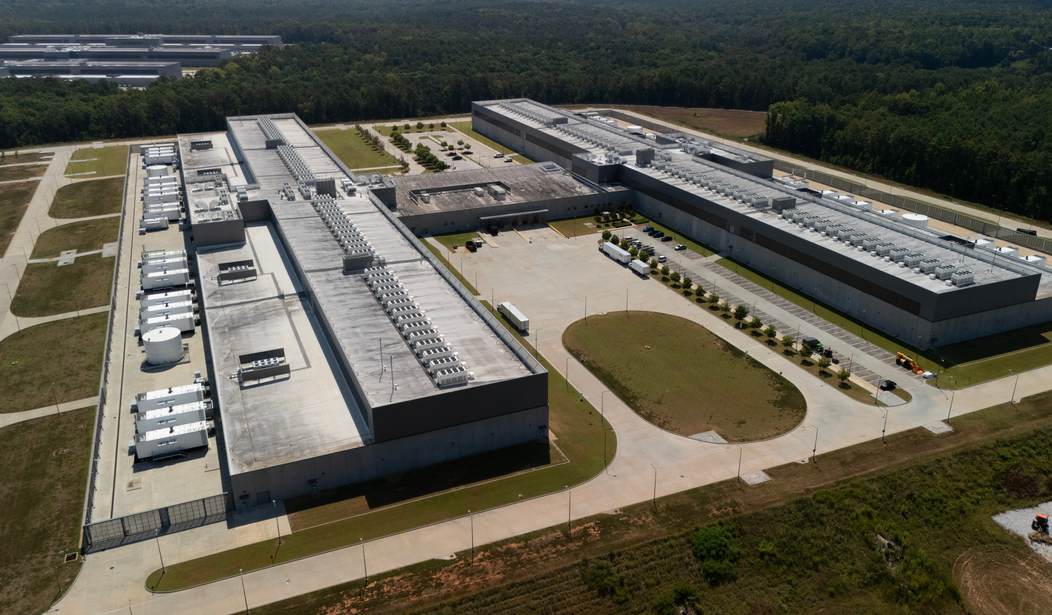
A data center is simply a building or warehouse filled with computers that generate heat as they meet countless growing needs across nearly every segment of modern society. That heat must dissipate somewhere, to prevent those computers from overheating, crashing or even catching fire.
Older DCs used constant flowing water and cooling towers or evaporative systems – as did their coal, gas or nuclear electricity sources. The U.S. produced more natural gas in 2025 than Russia and Iran combined. Modern AI and other computer chips are cooled by water and chemical liquids running in closed loops, akin to radiators in cars; thus much less water. Some DCs are water-free.
The coolants are recharged on a regular basis, which means disposing, cleaning and reprocessing aged coolant – much as gasoline stations, cities, mines and factories do with wastewater laden with myriad chemicals and particulates – and refilling the systems. We’ve learned how to do it properly.
It’s also important to note that DC water use is tiny compared to water for agriculture, lawns, golf courses and municipalities. Almonds, corn and cotton alone require enormous quantities.
Land use is another exaggerated bogeyman. Large buildings and warehouses filled with AI or other computers use the same amounts of land as other buildings and warehouses – possibly with some additional space/acreage for cooling systems, but less for deliveries, shipments and employee parking.
Moreover, data center land can be abandoned industrial sites, reclaimed mining sites and various other unused areas. It doesn’t have to be prime or nearby real estate. Every situation is unique.
Compare DC needs with the truly massive amounts of land required for industrial wind turbine installations and industrial solar panel installations: thousands or even tens of thousands of acres of what could otherwise be agricultural, recreational, scenic or wildlife land. Plus thousands more acres for towering hundreds-of-miles-long transmission lines from those installations to distant urban and data centers.
Plus still more acreage for backup coal or gas generation plants. Or acreage near urban, suburban or rural homes and businesses for expensive, fire-prone grid-scale battery storage systems.
And yet Massachusetts Governor Maura Healey insists that fake-clean (and weather-dependent, unreliable, expensive, raw-materials-hungry) wind and solar electricity must power AI DCs.
Noise can be an issue, though not much more than what’s associated with air conditioning and other cooling systems for apartment buildings, warehouses, conventional data centers and other buildings. (We certainly aren't going to ban AC in the U.S., the way they have in Europe.)
Loudoun County, Virginia boasts America’s densest data center cluster. Nearly half of its tax revenue comes from DCs – so county residents pay around $6,000 less in annual property taxes than they otherwise would. The commonwealth has the most DCs in the United States: 670+ out of 4,700+ in August 2026.
Rising electricity demand can and should be met by building reliable coal, gas and nuclear generators, contemporaneously or ahead of time, perhaps by requiring DCs to share in construction and costs … and restricting litigation and other permitting delays.
US data centers used 176 terawatt-hours of electricity in 2023, less than five percent of total US consumption.
The main reason electricity costs are rising in some states is “green” energy – which requires far longer transmission lines, more rapid and frequent replacement, and every MW backed up by duplicative but reliable generators. Moreover, data center power demands are a tiny fraction of what we’d need for the all-electric society sought by China-funded, climate-obsessed, no-fossil-fuels, eco-imperialist activists.
The bottom line? America needs artificial intelligence and data centers. You need them. The world needs them. Our future will be bleak and dangerous without them.
We can certainly do without AI-powered surveillance cameras and license plate readers. But the risks of not having AI and DCs far outweigh their likely harm. As explained here, we can, do and must resolve any conflicts and problems that arise.
Sen. Bernie Sanders (I-VT) wants America to pause or ban its “mad dash” for artificial intelligence. Is he still on his Communist Russia honeymoon? Becoming senile? Or just being a front man for 43 Senate Democrats who’ve declared war on data centers?
AI will terminate many jobs, as did previous revolutionary technologies. But it will also create, preserve, protect and redefine numerous jobs: constructing and operating data centers, safeguarding US jobs that would otherwise be exported to countries that do advance and deploy AI, enhancing research, manufacturing and other industries, leaving more time for leisure, thus creating more leisure-time jobs.
Cancer, pharmaceutical and other medical research, defining metal and mineral deposits, creating more productive and sustainable resource extraction methods, devising better ways to integrate unpredictable wind and solar electricity into grids, spurring greater productivity in agriculture, industry and other arenas … and much, much more. But we must also recognize the pitfalls.
As with explosives and ubiquitous internet connectivity, evildoers will certainly exploit artificial intelligence. China, Russia, Iran, North Korea, ISIS and Nigerian scam artists already use AI and are not about to pause their AI race, or honor any treaty they might agree to. The US would be crazy to pause.
Iran’s mullahs already use AI in propaganda – and the Persian people may be using AI against them. AI itself will not destroy humanity – but death-loving Islamic fundamentalists could certainly try.
Hackers are already breaking into America’s water and electrical systems. Internet backdoors in Chinese-made wind turbines, solar panels, transformers and converters provide easy access to repair those systems – but also to modify, disable or commandeer key settings and systems, or shut down electrical grids.
We increasingly need AI and data centers to combat our enemies, foreign and domestic. National, local, corporate, hospital, banking and homeowner defense systems need good-guy AI to combat bad-guy AI.
If America lags behind competitors and enemies, it will lose, big time. We cannot let that happen.
Paul Driessen is senior policy advisor for the Committee For A Constructive Tomorrow (www.CFACT.org) and author of books, reports and articles on energy, environmental, climate and human rights issues.
Editor’s Note: Do you enjoy Townhall’s conservative reporting that takes on the radical Left and woke media? Support our work so that we can continue to bring you the truth.
Join Townhall VIP and use promo code FIGHT to receive 60% off your membership.



Join the Conversation
VIP members get the ability to comment on articles.