





The Bronfman family built the Seagram Company into the fabulously successful Canadian real estate, beverage and entertainment conglomerate. After selling Seagram to Vivendi in 2000, it deepened its commitment to Birthright Israel and other Jewish philanthropies.
Like his father, Stephen Bronfman has long been active in Liberal Party of Canada politics. He recently launched the Jewish Climate Trust, published the Jewish Guide to Climate Philanthropy and explained why he believes “climate action is the next great Jewish responsibility.”
He believes climate change is the “defining challenge of our generation,” the “next great Jewish responsibility,” and presents his guide as a summary of “climate risks” facing humanity and planet – and a “clear, strategic roadmap” to help donors decide where and how to help end the “crisis.”
Mr. Bronfman wants to “align what we say we value” with “where we allocate resources.” Unfortunately, it won’t be just his family’s resources and those of other donors he recruits. Millions of other Canadians and billions of people worldwide could be compelled to bear the trillions of dollars in costs and lost personal freedoms and living standards that any quest for “net zero” carbon dioxide/greenhouse gas emissions will unavoidably bring.
My interest in climate change began during college geology studies of plate tectonics and Pleistocene glaciers. It intensified with the UN’s 1992 Earth Summit and subsequent efforts to attribute modern climate and weather changes to human causes, especially fossil fuel use and agricultural practices.
A limestone slab on my desk comes from the Niagara Formation, recalling the Silurian Period 430 million years ago, when coral reefs covered what later became my childhood home in Wisconsin. Striations on its surface are from the last of several mile-high glaciers that scraped and crushed much of North America, Europe and Asia between warm interglacial periods.
The Pleistocene glacier pulled so much water out of the oceans that the seas have risen 400 feet since that Ice Age began to thaw 12,000 years ago.
Those were real climate changes, far more significant than the one to two degrees of warming Earth has experienced since the end of the Little Ice Age, around 1850, just as the Modern Industrial Age began.
That coincidence makes it easier (but incorrect) to attribute local, regional and global temperature increases, extreme weather events, droughts and sea level rise – not to complex and powerful natural forces that have driven climate and weather fluctuations throughout history – but to fossil fuels that still provide 80 percent of all US and global energy and 100 percent of our petrochemical feedstocks.
Mr. Bronfman and I share a belief in fundamental Jewish moral principles. Tikkun Olam, the command to care for, protect and repair the world for this and future generations. Prohibitions on wasting food, water, energy and other resources, or needlessly destroying goods or habitats, and thus sustainability as a guiding precept.
Our obligation is to do good, advance science, share knowledge and contribute to human flourishing. The proposition that we are not obligated to complete the task, but neither are we free to abandon it.
However, I disagree with many statements he presents as facts – and with the strategies he offers as solutions to climate and weather challenges that are neither unprecedented nor cataclysmic.
Too many scientists disagree with his “key findings” to suggest there is a “scientific consensus.” Furthermore, science operates by testing and confirming falsifying hypotheses – not by consensus. “If it’s consensus, it isn’t science. If it’s science, it isn’t consensus.”
Were Mr. Bronfman to meet with scientists and other experts who speak and publish regularly from a “climate realism” perspective online, in peer-reviewed journals and at climate conferences, he would discover evidence and analyses far different from what he is used to hearing.
To cite just a few examples:
“Human influence” has not warmed the world at rates “unprecedented in the last 2,000 years.” The Roman (280 BC/BCE to 400 AD/CE and Medieval (950-1350) Warm Periods were warmer than today. The Little Ice Age (1350-1850) brought glaciers, crop failures and famine to Europe and other regions.
Post-LIA temperatures are now rising minimally due to human activities and primarily from solar and other natural forces, including deep-sea volcanoes and vents that warm ocean waters.
Neither hurricanes nor tornadoes are increasing in frequency or intensity. Seas are rising at only eight to nine inches per century, though land subsidence can make it seem greater.
The Paris Climate Agreement's “goal” of limiting post-LIA/Industrial Era warming below 2.0 Celsius is arbitrary and unattainable. Natural forces will continue to dominate. Developing countries will continue using oil, gas and coal for decades to come, to lift their people out of squalor, disease and premature death, because wind and solar power cannot power modern civilization.
Moreover, China and India now emit far more carbon dioxide than Canada, the United States, Israel and Europe combined. Even if those latter four countries achieved a “net zero” balance between emissions and absorption – at devastating cost to their economies, jobs and living standards – it would make no difference globally.
Moreover, rising CO2 levels from power plants, factories, furnaces and vehicles are helping crops and other plants to grow faster, better and with less water, turning arid areas green. Combined with modern agricultural practices, they are bringing record crop yields to multiple countries.
Oil, natural gas and coal remain essential for direct energy and electricity utilized worldwide. They underpin fuel and fertilizer for farming to improve food security, stronger homes and early warnings for weather and other dangers, and provide life-saving clothing and warmth amid frigid weather. Global deaths from cold weather have plummeted since 1900; cold weather kills 20 times more people than hot, and air conditioning dramatically reduces heat-related deaths.
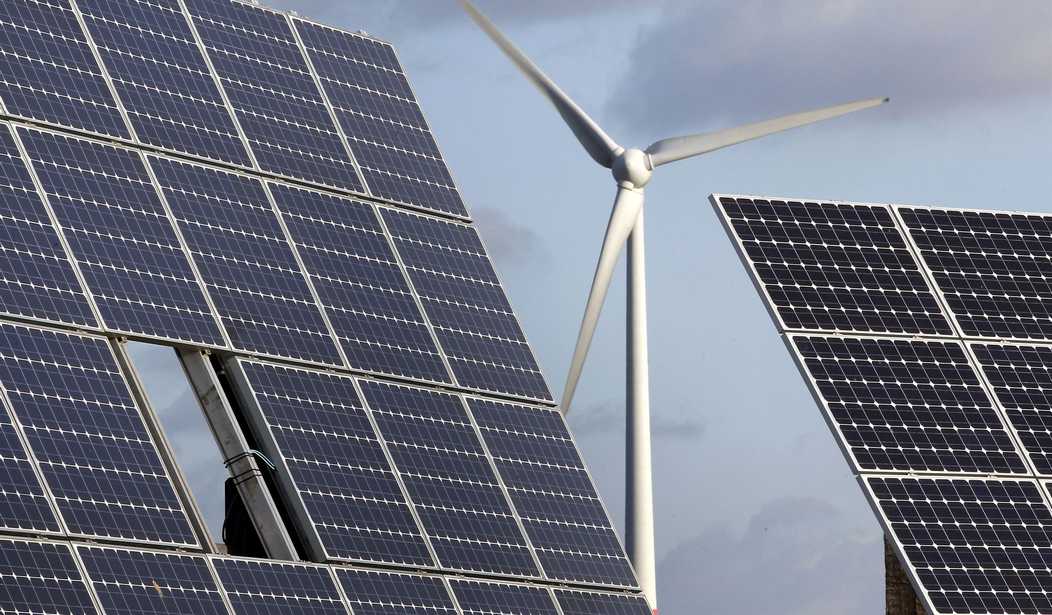
The biggest threat to biodiversity is not climate change, but wind and solar power and the unprecedented levels of mining required to build these installations and backup batteries and power plants. Indiana’s Mammoth Solar Project will blanket nearly 20 square miles of cropland and wildlife habitat, and New Mexico’s SunZia Wind Project will sprawl across 935 square miles (equal to roughly half of the land mass of Delaware).
Wind turbine blades slaughter countless eagles, hawks, other birds and bats. Whatever numbers wind and solar promoters might present about megawatts generated or homes powered by these installations must be cut by 60-75 percent to get the portion of each year they will actually generate electricity.
That’s why every MW must be duplicated with coal or gas generators … or grid-scale batteries that have a nasty habit of becoming raging chemical infernos that are almost impossible to extinguish.
Wind and solar energy are simply not clean, renewable, sustainable or affordable.
We need to apply the Hippocratic Oath to our climate and energy policies. First, do no harm.
Get the diagnosis and prescription correct. Don’t implement harmful solutions to exaggerated problems that we can adapt to much more easily than our far less technologically advanced forebears.
[editor's note: This op-ed has been edited since publication to note that the Mammoth Solar Project is placed on cropland, not desert]
Paul Driessen is senior policy advisor for the Committee For A Constructive Tomorrow (www.CFACT.org) and author of books, reports, and articles on energy, environmental, climate, and human rights issues.
Editor’s Note: Do you enjoy Townhall’s conservative reporting that takes on the radical Left and woke media? Support our work so that we can continue to bring you the truth.
Join Townhall VIP and use promo code FIGHT to receive 60% off your membership.


Join the Conversation
VIP members get the ability to comment on articles.