





US mostly dodged disaster this time. But what if Net Zero mandates aren’t adjusted or ended?
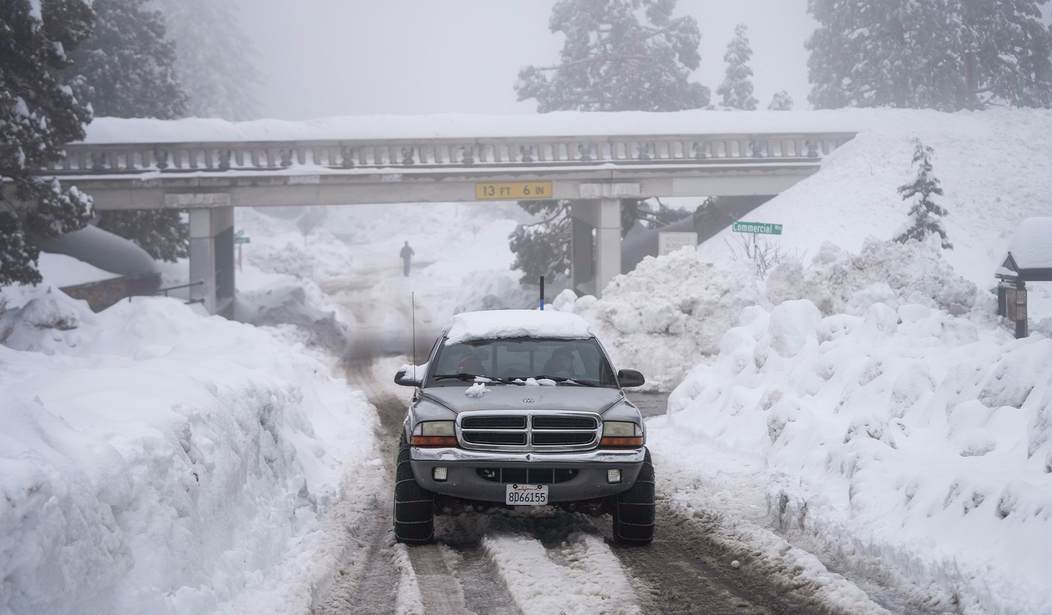
Winter Storm Fern (January 23-27) dumped heavy snow and ice on more than 240 million Americans across 40 states and 2,300 miles, beginning in Arizona and wrapping up in Maine.
Scores died, including 20 in New York City, where Mayor Zohran Mamdani refused to close homeless camps or compel “unhoused residents” to move indoors, instead letting them rely on the “warmth of collectivism.”
Roads and highways were impassable, 11 states declared emergencies, 30 airports closed for a day or more, and many cities recorded 10-24 inches of snow.
The New York Times asked, “What’s up with this big freeze? Some scientists see climate change link.” Two years earlier, its headline warned, “Weirdly warm winter has climate fingerprints all over it, study says.” Fossil fuel fearmongering clearly never ends.
Mid-20s degree temperatures in Florida clobbered citrus groves and froze iguanas. The reptiles fell from trees, providing “tastes-like-chicken” meat for sumptuous stews, curries, gumbos and soups, and helping conservation officials to cull the rampant invasive species.
There were no widespread blackouts from power failures, though there were close calls. Texas gas lines were weatherproofed after Winter Storm Uri (February 2021) and other jurisdictions had kept coal and gas generators operational, instead of opting to rely on wind and solar that were virtually useless during Fern’s mostly windless and sunless onslaught.
However, ice on trees and power lines caused prolonged power outages that left millions of homes and businesses without electricity or heat. Two weeks later, thousands still had no electricity.
In Memphis, a friend got her power back quickly, because her home is near shops, groceries and restaurants. But nearby areas were still without power a week after Fern, despite the local utility deploying 1,800 lineworkers. Several homes caught fire moments after their power was restored, perhaps because they lacked surge suppressors or their old or inadequate electrical systems couldn’t cope.
Stories were similar all across Fern’s impact area. But the United States dodged a potentially huge bullet.
Modern early-warning, communication, building, electricity and other technologies have made our lives far safer than in the past. But big winter storms across the Southwest, Midwest, East Coast or even much of the Lower 48 States still strike frequently and recall deadly historic events like these.
The School Children’s Blizzard (January 1888) sent temperatures from 35 degrees to –20 degrees and lower within hours, dropped several feet of snow, and killed 500 people, mostly in Nebraska and most of them children.
The Great White Hurricane (March 1888) buried New York City and much of the East Coast under mountains of snow, killed over 400 people and became the impetus for NYC’s subway.
The real question: Will we learn lessons from Fern and heed warnings about the US grid and too-heavy reliance on wind, solar, battery and related (heavily Chinese) technologies in time for the next Big One?
Energy researchers Isaac Orr and Mitch Rolling provide lessons and helpful charts, links and readers’ comments.
- The Midcontinent Independent System Operator’s territory had an extremely close call when hourly nameplate capacity factors for its wind turbines plunged from over 60 percent before Fern to 7 percent a day later, well below MISO’s expected 29 percent winter capacity value, and didn’t return to 60 percent for two more days.
- US Department of Energy emergency orders kept three big Indiana and Michigan coal-fired generators operating (using coal stored onsite). Otherwise, the situation would have been dire in those states.
- New England has been forcing or subsidizing heat pump installations and has built a $1.6-billion transmission line to bring electricity from New York and Quebec. During Fern, natural gas prices skyrocketed, coal power had been eradicated, reliable nuclear did its part, wind was minimal and solar was MIA. Much-hated oil became the foremost electricity generator – because extreme and sustained cold air across Québec forced the Canadians to suspend power delivery to New England!
- That raises an even bigger question. What happens if large numbers of states go Net Zero, mandate heat pumps or electric home and water heating? If they’re all relying on nearly nonexistent “renewable” energy? Or if they’re dependent on sources like Quebec and a “Clean Energy Connect” transmission line? And they’re caught in a blizzard proportionate to Fern or other historic storms? As Orr and Rolling asked: Where do you turn when you run out of other people’s energy?
- The huge PJM Interconnection (wherein I reside) perhaps had Lady Luck on its side, because comparatively mild temperatures across the region kept demand low enough to forestall emergency alerts and load shedding (deliberate, planned interruption or rolling blackouts), and it hasn’t gone hog wild on “renewables.” However, its own gas winterization efforts also paid off.
- The Electric Reliability Council of Texas (ERCOT) may have weatherized its natural gas transmission system, but higher than predicted temperatures and thus lower than expected peak power demand may have saved the region, because its enormous wind and solar fleet was simply not up to the task.
Why ERCOT – covering oil and natural gas capital Texas – would add 31 GW of solar, 9 GW of wind and only 3 GW of gas over the past decade is inconceivable. Maybe that lone star will keep bringing it luck during the next Winter Storm Uri or Fern. But responsible energy providers shouldn’t count on it.
Other harbingers of danger must also be addressed.
More than half of the entire US electric grid will soon reach high or elevated risk of blackouts, due to growing demand, accelerating retirements of reliable coal, gas and nuclear generators, and increasing reliance on unreliable, weather-dependent wind, solar and battery storage power, according to a new North American Electric Reliability Corporation (NERC) Long-Term Reliability Assessment.
Making the grid even more vulnerable, Carrington Events triggered by giant sunspots (like AR4366 on February 1) and solar flares can send coronal mass ejections slamming into Earth’s magnetic field. A large enough CME can electrify the planet’s surface, send massive currents into high-voltage transmission lines, fry transformers and other equipment, cause widespread blackouts lasting months or years, shut down refrigeration, transportation, water systems and our entire lives – and kill countless millions.
We must also consider risks of sabotage, terrorism and deliberate shutdowns by malevolent foreign or domestic actors. China is our primary source not only for rare earth elements, but also for wind turbines, solar panels, transformers and grid-scale batteries. Beijing, Moscow and their surrogates could employ strategic minerals and these technologies as strategic weapons: banning exports to impose political goals – or even embedding trip-switches or backdoors that allow them to close down limited or vast sections of our already vulnerable grid and economy.
If our politicians, judges and regulators cannot end their obsession with climate change nightmares, renewable energy fantasies and other nitpicking topics – and our nation is plunged into widespread, prolonged and deadly blackouts – “accountability” must come in much stronger forms than merely voting them out of office. Prosecution for gross malfeasance and dereliction in office will also be in order.
Paul Driessen is senior policy analyst for the Committee For A Constructive Tomorrow (www.CFACT.org) and author of books and articles on energy, climate change and human rights.
Editor’s Note: Do you enjoy Townhall’s conservative reporting that takes on the radical left and woke media? Support our work so that we can continue to bring you the truth.
Join Townhall VIP and use promo code FIGHT to receive 60% off your membership.

Join the Conversation
VIP members get the ability to comment on articles.