





With the primary season now largely behind us and November ballots taking shape, voters are beginning to make a more consequential choice about who they trust to address the issues affecting their families.
Affordability, a term voters know well despite it feeling more and more out of reach, will be near the top of that list. For millions of Americans, rising electricity costs are another reminder that their dollar just isn’t going as far as it used to.
The financial squeeze voters are feeling isn’t imagined. Electricity prices climbed 6.9 percent in 2025, more than double the overall rate of inflation, with another 6 percent increase over the next two years expected. One reason is that electricity demand is growing quickly, while bringing enough new power onto the grid has become increasingly difficult.
That should make the energy conversation less about labels and more about what can actually deliver. If the goal is to lower costs, strengthen reliability and keep up with rising demand, policymakers should be willing to use every viable source of power that can help get the job done.
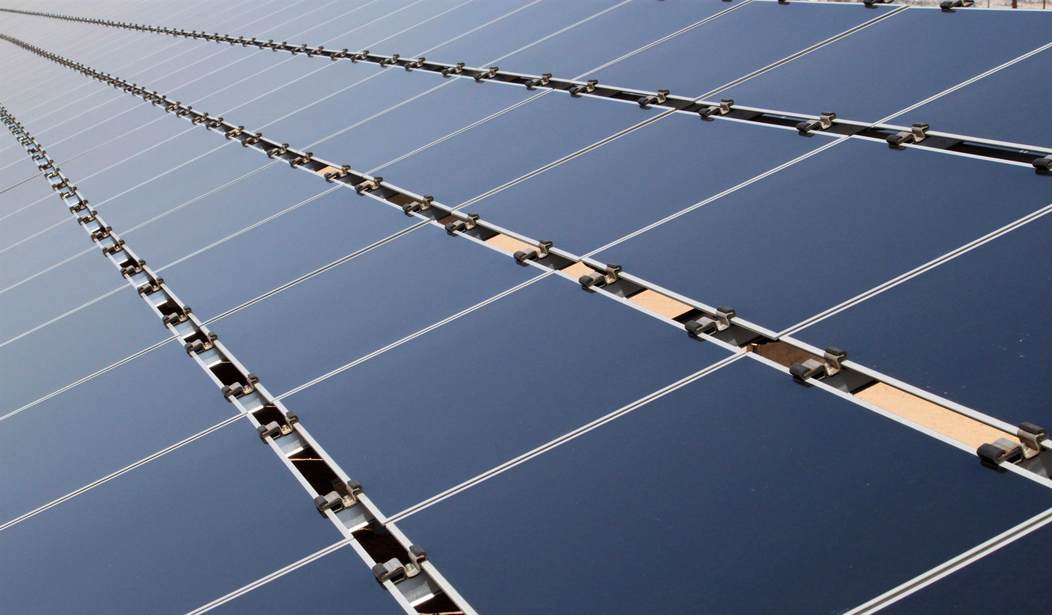
That is already happening in Republican-led states, which are building solar at enormous scale, and GOP voters increasingly support it as part of a broader energy strategy.
That distinction is increasingly visible within the Trump administration itself, which is recognizing the complementary value of battery storage alongside technologies like solar. Recently, while touring a new grid-scale battery plant in Michigan, Interior Secretary Doug Burgum praised the facility’s domestic supply chain and explained that storage steadies the fluctuations in solar generation, capturing power produced during the day and making it available when demand is highest.
Thankfully, the growth in storage extends well beyond the Michigan facility and is accelerating nationwide. The U.S. energy storage industry installed a record 20.2 gigawatt-hours (GWh) of new capacity in Q2, bringing total installations in the first half of 2026 to 30.8 GWh. In other words, batteries are going in fast, helping make growing amounts of solar generation available when the grid needs it most. Energy Secretary Chris Wright made the same point in Lincoln, Maine, alongside Senator Susan Collins, at a battery storage plant that will be built large enough to run for more than four days straight, praising the project as, “energy storage that's matched with the problem.”
Secretaries Burgum and Wright are speaking directly to a longstanding concern about solar and whether it can provide power when the grid needs it most. As storage capacity grows, utilities can increasingly save power generated during peak solar hours and dispatch it later when demand rises, helping make solar available beyond the hours when the sun is shining.
Solar can also be built fast. And increasingly, Republican states are the ones building it.
Solar and storage made up more than 90 percent of all new generating capacity added to the American grid in the first quarter of this year. States President Trump carried in 2024 accounted for nearly three quarters of new solar capacity, led by Texas, Florida, Ohio, Indiana, Michigan, Arizona and Mississippi. Texas alone installed 11 gigawatts of solar generation capacity in 2025, enough to power more than six million homes. Significantly, this is not a one-year anomaly, solar has been the largest source of new power in America for five consecutive years.
That speed matters because many other major sources of new generation cannot arrive as quickly. Large gas turbines are back-ordered more than five years, leaving utilities willing to build gas generation paying more and waiting longer for equipment. Nuclear is finally a part of the conversation again, but the Energy Department doesn't expect its first small modular reactor projects to deliver power until the early 2030s. Meanwhile, utility scale solar projects can be installed in just 16 months.
Energy addition, not subtraction, is the Energy Department's own stated goal, and it should mean what it says. American energy strength comes from adding every viable source capable of meeting growing demand. Oil and gas, advanced nuclear, solar and storage all have roles to play, but solar and storage are among the sources that can add meaningful capacity now.
As candidates make their closing arguments ahead of Election Day, the affordability case on energy should be straightforward. Meeting rising demand and bringing costs down will require more power, more choices and a willingness to use every source that can deliver.
Candidates with a serious strategy on affordability understand the formula really isn’t that complicated. Build more of what works now, and build it as quickly as possible.
Patrick Ruffini is a founding partner at Echelon Insights.
Editor's Note: Do you enjoy Townhall's conservative reporting that takes on the radical Left and woke media? Support our work so that we can continue to bring you the truth.
Join Townhall VIP and use promo code FIGHT to receive 60% off your membership.



Join the Conversation
VIP members get the ability to comment on articles.