




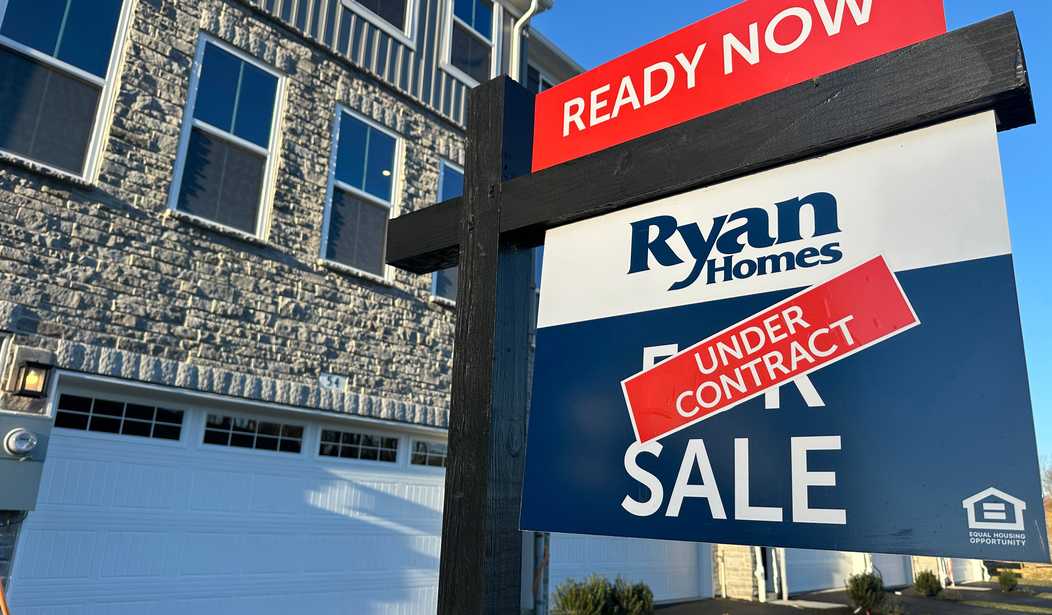
The oldest Baby Boomers turn 80 years old this year. The second-largest generation is set to fuel a generational wealth transfer worth tens of trillions of dollars.
A sweeping housing sell-off is on the horizon as seniors are projected to deliver an average of 1.4 million homes to the market each year between 2026 and 2036. Over time, this will help address the current housing affordability crisis fueled by a supply and demand mismatch. But why should we wait?
Housing supply is constrained by chronic underbuilding of new homes over decades and, more recently, homeowners who are locked into low mortgage interest rates. Younger generations express fears that they will never afford to purchase a home.
Congress has a golden opportunity to accelerate the sale of prime family-sized homes by updating home exclusion levels from capital gains taxes on primary residences and indexing capital gains for inflation. If there is an agenda item for the lame duck, this is it.
Baby Boomers hold about $20 trillion or 41 percent of all U.S. real estate assets. According to Realtor.com’s Generational Housing Succession report, roughly 37 million homes are owned and occupied by Baby Boomers and the Silent Generation. About 38 percent of them will be released to the market as seniors pass away or move into institutional facilities, rental properties, and with relatives.
The coming wave of homes on the market will not be evenly dispersed across home sizes. Unfortunately, seniors are only expected to sell less than half a million starter homes, but they are projected to hand off 9.9 million family-sized homes and 3.6 million large homes. For Millennials and Gen Z homeowners, who seek more square footage to accommodate growing families, the prospect of millions of spacious homes at lower price points could make the socialist promises of affordable government housing sound less appealing.
Waiting for time to correct the market is not a strategy that policymakers have to accept. Americans are understandably impatient. In 2024, 23 million (half of) renter households and 21 million (a quarter of) homeowners were home-burdened, spending more than the recommended 30 percent of their income on housing costs. Elevated inflation and energy prices, alongside high housing costs, leave little for discretionary or quality of life expenses.
A smart policy approach would be to encourage new construction in the long term and existing home sales in the short term. Congress passed bipartisan housing reforms to encourage homebuilding this summer. However, the 21st Century ROAD to Housing Act was only a down payment on the action needed for enduring change. Deregulation at state and local levels that repeals restrictive zoning laws, opaque permitting processes, and environmental laws will bulldoze major impediments to building more homes. Texas, Washington, and Montana illustrate how recent deregulation efforts have successfully brought down housing costs for residents.
The next effort should be to reduce the tax penalty inflation imposes on homeowners. Over the past decades, median home prices skyrocketed over 90 percent despite homes not expanding in square footage. The pandemic and record-low borrowing costs fueled a home-buying frenzy that surged U.S. home prices roughly 43 percent between March 2020 and June 2022. Inflation-driven home value increases should not be confused with increased real wealth.
The equity earned over time from nominal gains can turn into real losses when adjusted for inflation, creating substantial tax burdens. Asset holders are discouraged from selling their property because of the tax bill, known as the lock-in effect.
Currently, homeowners can exclude up to $250,000 of gain for individuals (up to $500,000 for married couples filing jointly) from taxes. However, Bill Clinton was president the last time these exclusion levels were updated, and the average home price was about $154,000 at that time.
Now, roughly 34 percent of single homeowners and 10 percent of married homeowners exceed these caps, according to the National Association of Realtors. It’s time to update exclusion levels and index them for inflation going forward to break the lock-in effect. The More Homes on the Market Act proposes doubling the current exclusion to $500,000 for individuals and $1 million for married couples and adding an annual inflation adjustment.
Indexing for inflation is not a novel idea; Congress regularly adjusts financial, tax, and benefits for rising prices: income tax brackets, Social Security and SSI benefits, Social Security payroll tax income caps, and retirement account contribution limits, for example.
By sparing Baby Boomers a massive tax bill, they would be motivated to sell their family-sized homes sooner, clearing the way for Millennial and Gen Z homebuyers.
Housing will become more affordable only when supply meets the growing demand from younger generations eager to experience the American dream. Common-sense tax policy changes — alongside deregulation — can be the accelerant to boost American housing supply right away.
Patrice Onwuka is the vice president for economic policy and director of the Center for Economic Opportunity at Independent Women.
Editor’s Note: Do you enjoy Townhall’s conservative reporting that takes on the radical Left and woke media? Support our work so that we can continue to bring you the truth.
Join Townhall VIP and use promo code FIGHT to receive 60% off your membership.


Join the Conversation
VIP members get the ability to comment on articles.