





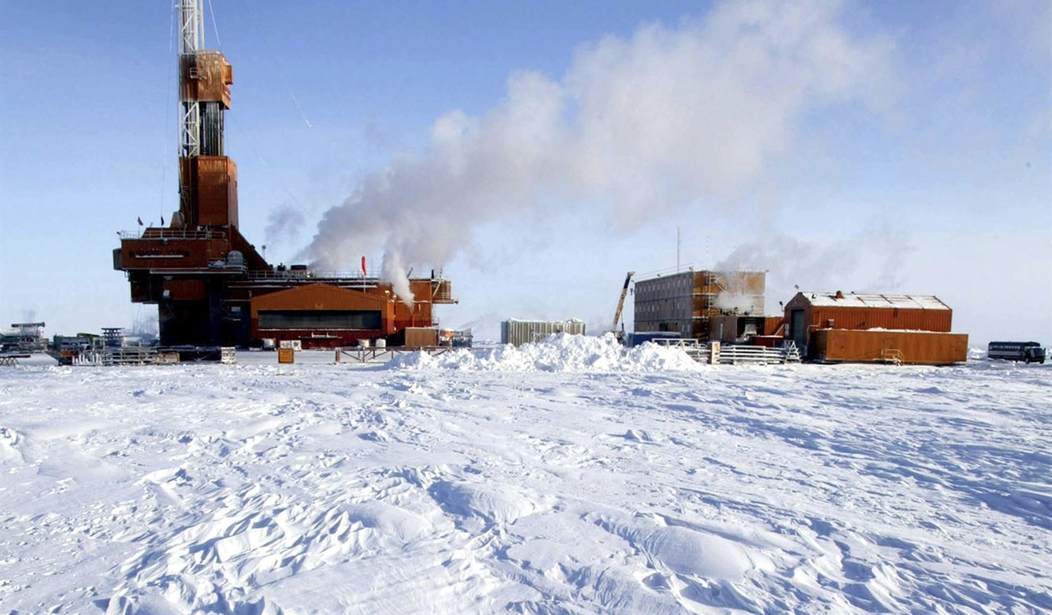
It is no secret that the Biden administration is committed to weening the U.S. off fossil fuels. From pledges of transitioning the American economy to 100 percent renewable energy by 2050 to large investments in green technologies like solar and wind, the Biden administration has gone to great lengths to reduce carbon emissions. However, in its zeal to achieve its climate goals, the administration has often shown open hostility to oil and natural gas development that jeopardizes American energy security. Recent actions in Alaska are a case in point.
In April, President Biden announced over half of the National Petroleum Reserve-Alaska (NPR-A), equal to 13.3 million acres, would be off-limits to oil and gas leasing. The Bureau of Land Management (BLM) rule, which was first published last September, is allegedly designed to “balance extractive activities on public lands” with the need to “conserve important fish and wildlife habitat” and, in Biden’s words, “meet the urgency of the climate crisis.” However, the new rule will only undermine the preserve's purpose and America’s ability to meet its growing energy needs.
Former President Warren Harding established the NPR-A in 1923 as an emergency energy source for the U.S. Navy. While management of the reserve was later transferred to BLM in 1976, as part of the Naval Petroleum Reserves Production Act, the government’s primary role in overseeing the land is to unlock its rich energy potential. Tapping the reserves’ estimated 3.6 billion barrels of oil and 8.9 trillion cubic feet of natural gas should be a no-brainer for the administration, especially since energy development and environmental conservation aren’t mutually exclusive.
By all accounts, America’s energy needs continue to grow as the population increases and new energy-intensive industries such as artificial intelligence, crypto mining, and data centers demand greater amounts of power. The Energy and Information Administration projects that U.S. energy consumption will increase over the next 30 years, with energy demands expected to “outpace energy efficiency gains.” Unfortunately, America’s electrical grid is not currently prepared to handle this level of growth.
Seriously compounding the problem is the endless barrage of strict new environmental regulations that undermine grid capacity and future energy development. For instance, at the end of April, the Environmental Protection Agency finalized its new power plant rule, which will require all existing coal-fired and new natural gas-fired power plants to reduce CO2 emissions by 90 percent and tighten emissions standards for heavy metals, among other changes. Meeting such requirements will be next to impossible for plant operators, likely leading to premature plant closures. Considering coal and natural gas alone still generate 59 percent of U.S. electricity, the new rule appears to fly in the face of economic realities.
America’s largest grid operator, the North American Electric Reliability Corporation, has repeatedly warned that large sections of the U.S. are at risk of energy shortages and rolling blackouts. It does not have to be this way.
Traditional energy sources like coal, oil, and natural gas remain far more reliable than intermittent forms of energy such as solar and wind, and continue to play a critical role in generating power during periods of peak demand. Fossil fuels also power American factories and remain the primary energy source by which America’s transportation infrastructure operates. In addition over 6,000 consumer products rely on petrochemicals as a central ingredient, making continued fossil fuel production indispensable.
None of this has dissuaded Biden from pausing promising new energy projects, nixing large gas pipelines, and canceling drilling leases. Even when the administration appears to do something right, it is often only because it is legally obligated to do so.
Late last year, the administration published its much anticipated offshore oil and gas five-year lease plan, which outlined its intention to host three oil and gas lease sales in the Gulf of Mexico over the next five years. The 1953 Outer Continental Shelf Lands Act already requires the government to propose periodic lease sales and the five-year plan proposes the bare minimum number of federal acres for drilling that is required under the terms of the Inflation Reduction Act of 2022.
Viewed through this lens, the Biden administration’s NPR-A announcement is unsurprising. However, it is still disappointing. Fundamentally, the new rule sharply reduces America’s ability to unlock its full energy potential and ignores Congress’s intent regarding the park’s purpose. The administration would be wise to reconsider its decision and adopt an all-of-the-above approach to energy policy that utilizes both green and conventional energy sources.
Nate Scherer is a policy analyst with the American Consumer Institute, a nonprofit education and research organization. For more information about the Institute, visit us at www.TheAmericanConsumer.Org or follow us on X @ConsumerPal


Join the Conversation
VIP members get the ability to comment on articles.