





We don't care. You can check Pew or Gallup or any other polling company. We are running deficits that ought to make us nauseated with worry -- the federal deficit passed $1 trillion in September -- but we're not interested. Well, a majority of us anyway. About 48% of those polled by Pew in January said that reducing the deficit should be a top priority for the president and Congress. As recently as 2014, 72% of the public agreed with that statement.
Republicans (54%) are in favor of reducing the deficit at higher rates than Democrats (44%), but concern has declined among all voters. And the politicians? Well.
President Donald Trump's 2016 campaign claimed that his policies would produce so much growth that the U.S. would enjoy a federal surplus of trillions of dollars. Trump also told The Washington Post that he would eliminate the $19 trillion federal debt "very quickly ... like within eight years."
But funny thing: You combine $2 trillion in tax cuts over 10 years with about $2 trillion in spending increases over the same period, and whadya know, even with decent economic growth (slowing now), you get federal deficits growing by 40% year over year, and that's with full employment, no recession, low interest rates and no financial crisis. Current debt: $22 trillion.
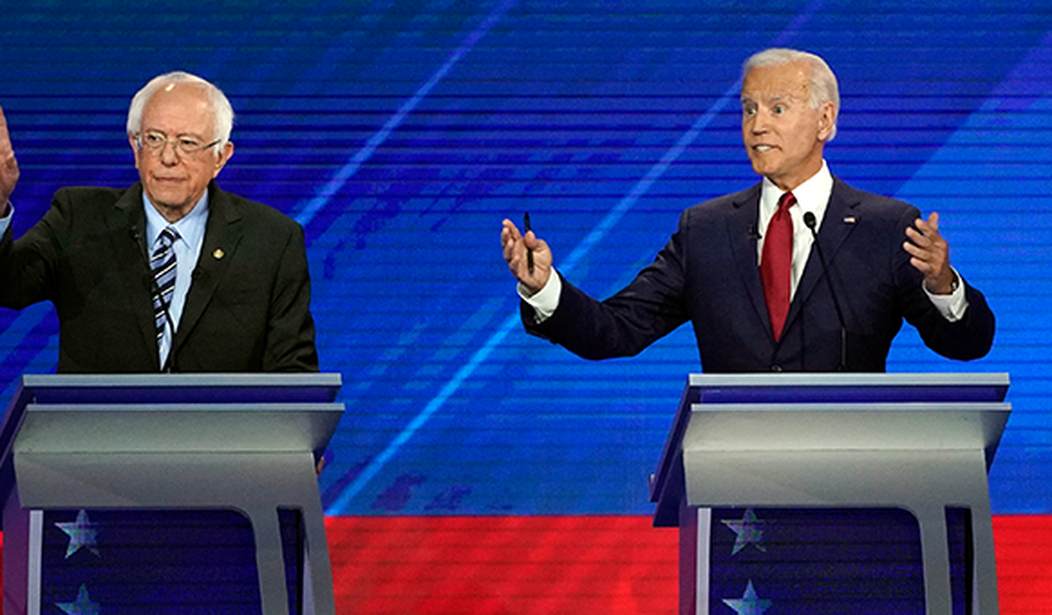
As for the Democratic candidates for president, "Saturday Night Live" captured it pretty well with Kate McKinnon portraying Elizabeth Warren. Asked how she could pay for her $34 trillion "Medicare for All" plan, Warren/McKinnon confides: "We're talking trillions. When the numbers are this big, they're just pretend."
That's precisely how Warren, Bernie Sanders, Kamala Harris and, to an extent, Pete Buttigieg and Joe Biden are treating the budget. They pick numbers out of the ether. Buttigieg would spend $1 trillion on climate policy, and some unknown amount to expand Medicare to "all who want it." Biden is less disconnected from reality than his competitors, but he would increase education spending by adding $30 billion to Title I, and increase the federal minimum wage to $15 per hour. As McKinnon put it, "Want to be red-pilled? Money doesn't exist."
So why are the 48% who prioritize reducing deficits right and the spending gluttons wrong?
One reason is who we owe the money to. China holds about 8% of our debt. That gives them leverage. They'd pay a price if they dumped all of their U.S. bonds at once, but as former Rep. Tom Campbell points out, China is an autocracy, and can impose costs on its people more easily than we can. In a crisis involving Hong Kong or North Korea, they might exercise that option.
Another reason for concern is what we're spending the borrowed funds on. We're not investing primarily in children, infrastructure, scientific research and other things that boost national income. We're spending on elderly people whether they are needy or not -- and most are not. In 2016, just 9% of Americans over age 65 lived below the poverty line. That compares with 18% of children. Yet Social Security, Medicare and Medicaid account for 84% of spending increases over the coming decade.
When so much of our budget goes to debt service, we are misgoverned. The federal government currently spends more to pay interest on the debt than it does on the State Department, transportation, employment, training and social services. And because 40% of our debt is held by foreigners, we are sending money overseas rather than spending it at home.
Interest rates are low, but there is no guarantee that they will remain so -- and history suggests that interest rates fluctuate. Any emergency -- fiscal, political, environmental or military -- could place us in a situation in which lenders will demand much higher returns on bonds. There is simply no excuse for being so heavily indebted when the economy is strong and we are at peace.
The larger the share of the economy that is taken up by government, the less efficient we become as a society and the more slowly the economy grows. A larger government also means more important life choices -- like whether you can get a hip replacement at age 85 -- are decided by politics. More politics translates to less freedom.
Today, the Republicans are the fiscally irresponsible party and the Democrats are the fiscally insane party. But it's not hopeless. Serious people on both sides of the aisle have proposed paths back to sanity. Let's hope more Americans get serious about the need.

Join the Conversation
VIP members get the ability to comment on articles.