





These have been hard times for American institutions. Over the past four to five decades, confidence in nearly every institution of American life has declined. A 2018 Gallup survey found, for example, that trust in Congress stood at 42 percent in 1973 and dropped to 11 percent this year. Only 29 percent of Americans gave high ratings to public schools in 2018, compared with 58 percent in 1973. Newspapers have lost altitude, too, with only 23 percent today expressing "quite a lot" or a "great deal" of trust in them. In 1975, 52 percent had confidence in the presidency, compared with 37 percent today. The data are similar for the medical system, TV news and banks. The only institution showing improvement was the military. (Small business was mostly trusted and held steady over the decades.)
However much some institutions may seem to merit this loss of trust -- and we could throw in the political parties as well -- a generalized cynicism about our system and, in the end, one another, is corrosive for society. We might want to consider whether our curdled opinions are entirely merited.
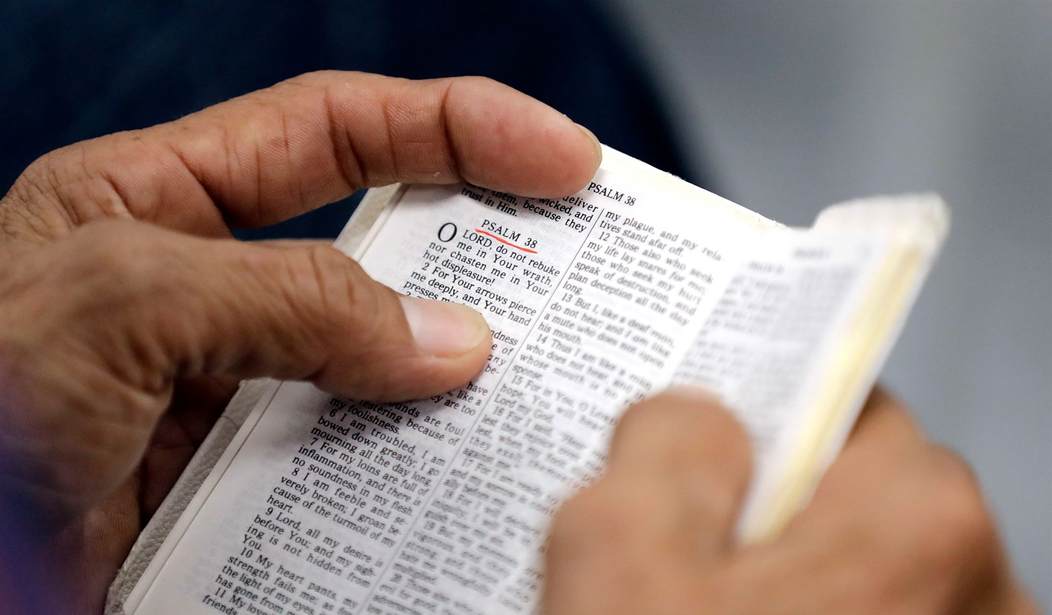
Organized religion has suffered the worst loss of reputation. In 1973, 65 percent of Americans expressed strong trust. That has declined to 38 percent in 2018.
One of the myths that has hardened since the 2016 election is that religious people were particularly stalwart Trump fans. Emily Ekins, who authored a recent survey by the Voter Study Group examining the views of religious versus secular Trump voters, corrects that: "Religious conservatives were less likely to vote for Trump in the early GOP primaries when Republicans had several candidates to choose from. Among the most devout, a plurality (39 percent) voted for Senator Ted Cruz, R-Texas, rather than Donald Trump (34 percent). However, Trump did best among those conservatives who never go to church, garnering fully 69 percent of their votes in the early primaries."
Though most religious Republicans and conservatives eventually voted for Trump in the general election, their attitudes toward issues do not place them in what commentator John Ziegler has dubbed "Cult 45" -- the rally-attending, diehard core of Trump fans.
Ekins has labeled the most Trump-sympathetic group, about 20 percent of his voters, as "American preservationists." Of all Trump supporters, they are the least religious. But other identities have substituted. Fully 67 percent of them say that their race is "extremely or very important" to their identity (compared with a maximum of 39 percent among other Trump voters), and 48 percent expressed authoritarian tendencies, supporting a "strong leader who doesn't have to bother with Congress or elections." Among more than weekly churchgoers, only 9 percent said being white was "extremely important" to their identity.
Among religiously observant Trump voters, strong majorities have favorable views toward blacks, Hispanics and Asians, whereas secular Trump voters are cooler. The most religious Trump voters are also much better disposed toward international trade and more likely to favor a path to citizenship for unauthorized immigrants. The religious are also much less alienated than the secular. They are less likely to report annoyance at having to deal with limited English immigrants, and less likely to say that they "feel like strangers in their own country."
Ekins found the same effects of church attendance that other studies have found -- that the observant are much more likely to volunteer, for example, and not just at their own churches. But the most interesting finding in her work is that nonreligious Trump voters are the ones who seem to have poured their need to belong into politics. Not only does this leave them unmoored from their local communities and open to finding identity in ethnicity, it also substitutes the passions and hatreds of politics for the time-tested wisdom of faith.
Those on the left who reflexively cheer the decline of religion may want to reconsider. And those on the right should reflect on the damage that a too-close association of religion and politics does to both.

Join the Conversation
VIP members get the ability to comment on articles.