
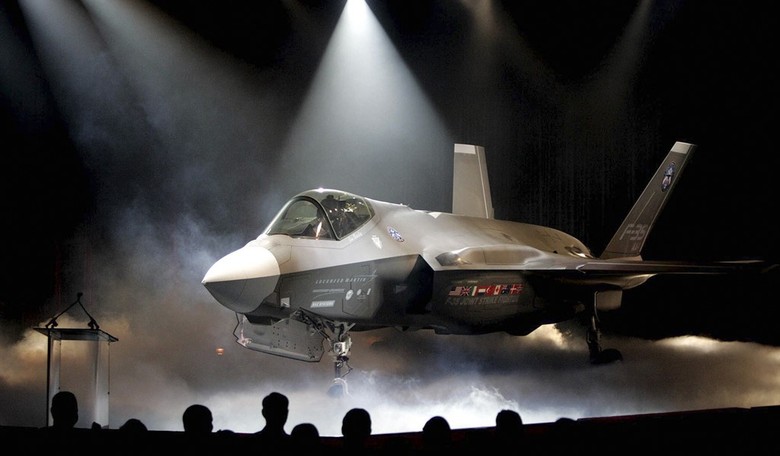
Traditionally, venture capital has been associated with high-growth, innovation-driven sectors or the latest unicorn based in Silicon Valley. Today, the same capital is flowing into defense, offering a new model for building U.S. military power. Even more interesting is what happens when America's allies start adopting the same approach. Does it signal Washington's enduring influence or the emergence of competition within its alliance?
By the middle of 2025, private capital in defense-tech had reached $28.1 billion in the U.S., surpassing 2023's total investment in the sector. Investors are now directly backing the development and manufacturing of UAVs, satellites and hypersonic weapons, essentially combining entrepreneurial talent with advanced industry and government demand.
This has not been limited to a few startups. Investors and entrepreneurs have helped create an entire ecosystem across the American defense landscape to take on challenges that have historically been handled through traditional defense procurement.
Shield Al has shown that a venture-backed startup can compete with some of the long-established U.S. defense conglomerates, such as Lockheed Martin and Northrop Grumman, by successfully developing both software and hardware platforms. Using the same approach of developing first and selling later, Epirus, Apex and Castelion have introduced high-power microwave systems, mass-produced satellites, and hypersonic weapons, respectively. This spirit of experimentation is something that traditional defense contractors may find harder to replicate, as it introduces different incentives around speed and risk.
The manufacturing side of innovation in defense receives considerably less attention, even though the existing capability gap in military procurement has preoccupied policymakers in Washington for months.
Hadrian is a useful example here because it highlights how the production of new military technology cannot stop at prototypes. Interestingly for Hadrian, and the broader American defense financing sector, Hadrian's March 2026 Alabama Factory 4 (F4) announcement described a 2.2 million-square-foot facility tied to U.S. Navy submarine production that is part of a $2.4 billion public-private partnership ($1.5 billion in private capital, $900 million in government funding). It must take place in meaningful, sustainable numbers. Hadrian is building this part of the new defense-tech ecosystem by applying Al-enabled automation and advanced manufacturing to aerospace and defense component production.
America's allies have noticed how Washington is tackling its supply chain bottlenecks through this new model, and similar ventures are emerging in Europe and the Middle East as they adapt to their own local procurement systems and security needs.
Helsing in Germany stands out, having raised $1.8 billion in the continent's largest investment round and embraced the idea of private capital in defense-tech. NATO's Innovation Fund (NIF), which pools €1 billion between 24 members, could add another source of capital for emerging technologies.
In Israel's vastly different defense environment, over 300 private defense-tech companies operate under the ministry's oversight. During its recent war in the Gaza Strip, Jerusalem has leveraged this network to create real-time feedback loops between the frontline and startups.
Ukraine provides yet another iteration of this model. Its defense startups have tested new products directly with Ukrainian military units and in battlefield conditions against Russia, speeding up development, modification, and mass production. European capital and NATO-linked technology are also being brought into a joint defense-tech program under Kyiv's Brave International framework, further internationalizing a model the U.S. pioneered.
In this emerging international model, expertise and production are no longer concentrated among a small number of defense contractors. Venture capital, entrepreneurs, technological innovation, testing, and manufacturing are beginning to form a new supply chain in which governments can become customers as well as investors.
The competition in defense-tech is no longer just about building the best weapons - it is increasingly about the strongest ecosystems capable of producing them. For Washington, the spread of this model need not be solely about competition. Stronger defense industries among America's allies can reduce the burden on the U.S. in line with some of its recent foreign policy priorities while giving the alliance a deeper pool of military innovation and manufacturing capacity. However, as Europe, Israel and Ukraine build their own defense-tech ecosystems, they will also compete for the capital and know-how that have enabled defense innovation in the U.S.
This provides all the more reason for Washington to keep the American ecosystem ahead. The advantage comes from the combination of companies developing autonomous systems and hypersonic weapons, investors willing to finance defense technology, and manufacturers such as Hadrian building the capacity to produce it at scale. America built this model first. Its allies are now adapting it. Keeping the lead will require continuing to build it.