





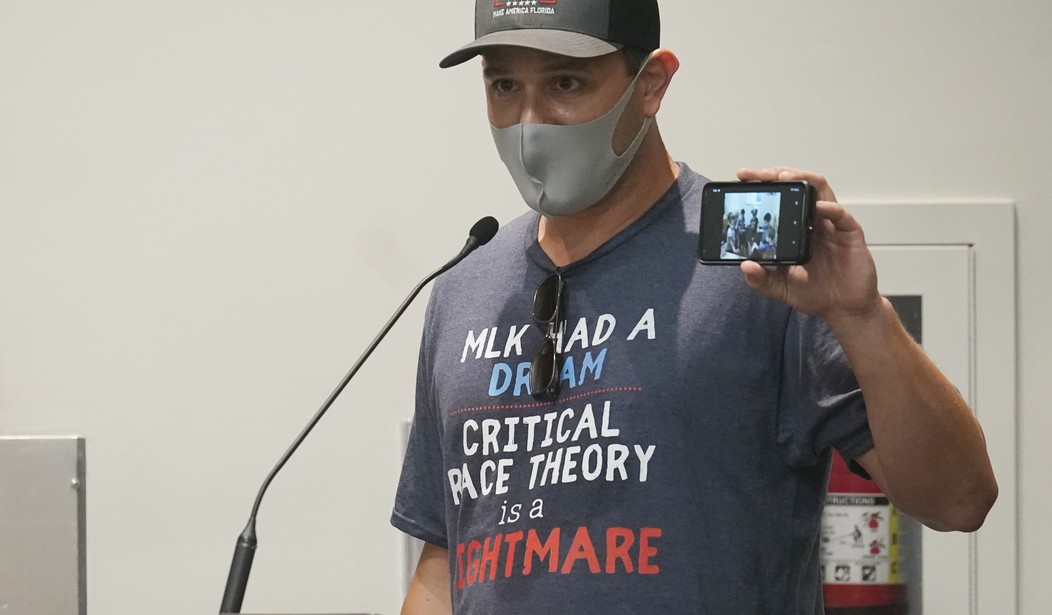
What were the benefits and costs of the COVID-19 restrictions implemented over the last two years? It's a good time to ask that question, especially now that the masks are coming off and the lockdowns are canceled.
One useful scorecard comes from the prestigious National Bureau of Economic Research, in the form of a paper by three market-friendly economists, Casey Mulligan (University of Chicago), Stephen Moore (Heritage Foundation) and Phil Kerpen (Committee to Unleash Prosperity).
They evidently disagree with the nation's most prominent advocate of massive restrictions, Dr. Anthony Fauci, who recently argued, "I don't think we're ever going to be able to determine what the right balance is" between costs and benefits.
The three economists used clear metrics to measure and compare the effects of widely different policies followed in the 50 states and the District of Columbia.
For economic effects, they look at changes in unemployment rates and gross domestic product. For education, noting the poor performance of remote education, they look at the proportion of in-person schooling in the 2020-2021 school year. For health, they look at the number of COVID-19-associated deaths reported to the Centers for Disease Control and Prevention and the excess mortality (number of deaths) over pre-COVID-19 years.
In each case, they make adjustments to account for states' divergence from national demographic averages. This takes into account that Nevada and Hawaii have economies heavily dependent on tourism, and Maine and Florida have the nation's highest percentages of the elderly population.
Economically, Rocky Mountain and Great Plains states with relatively few restrictions come out best -- Montana, South Dakota, Nebraska, Utah, Idaho and Arizona. Note the four mountain states here had the nation's highest percentage of 2020-2021 population growth, according to Census Bureau estimates.
At the bottom were tightly locked-down Hawaii and densely populated and high-lockdown New Jersey, Connecticut, New York and Illinois. Clearly, lockdowns had high economic costs.
Did they have corresponding benefits? Not so much. Ultra-locked-down Hawaii had the best CDC COVID-19 mortality and all-cause mortality numbers. But the numbers for other states tended to be clustered in a narrow range. Among the largest states, North Carolina, California and Florida fared pretty well, while New York and New Jersey, whose governors sent COVID-19-infected patients into senior citizen centers, had high COVID-19 mortality.
Overall, the three economists conclude, "excluding the geographically unusual cases of Hawaii and Alaska to focus on the continental U.S., there is no apparent relationship between reduced economic activity during the pandemic and our composite mortality measure." The disease, easily transmissible and often asymptomatic, spread mostly regardless of restrictions, killing many, three-quarters of them over age 65, before vaccination became near-universal -- and fewer afterward.
As for school closures, Mulligan, Moore and Kerpen write they "did have a moderate correlation with our mortality measure, but based on the literature we do not believe this relationship was causal." Death rates among children have been almost zero, and few teachers and school employees are over 65.
However, evidence beyond the ambit of this report shows a devastating effect on children from lockdowns in unionized public schools. COVID-19 restrictions "have had a devastating effect on learning," according to the Brookings Institution, and children's rates of mental illness and suicide threats have skyrocketed.
Mandatory masking has impeded young children from relating to peers and elders and from learning to sound out words and read. The damage has been concentrated among disadvantaged public school children since almost all private schools have remained open.
All this damage has had no discernible health benefit. Unlike the influenza epidemic of 1918-1920, which killed many young adults and thus deprived society of what their never-born offspring might have contributed, COVID-19 has mainly killed those too old to produce more children; society lost its victims' final years but not their progeny.
COVID-19 may turn out to have blighted the lifelong development of a whole generation. Quite an accomplishment for teacher union leaders like Randi Weingarten, who fought successfully to close down schools and even muscled the CDC to recommend masking.
If there's any consolation, it's that these leaders have fouled their own nests.
Public school enrollment is declining, especially in blue states, and most notably in the No. 1 school closing state of California, while private school enrollment is rising. Polls show two-thirds of voters believe public education is on the wrong track, while school choice is gaining popularity.
The tentative verdict on lockdowns is negative: high economic costs, small mortality benefits. It's even tougher on school closings and mandatory masking: minimal mortality benefits, high costs on society's most vulnerable members. No wonder the public's confidence in credentialed experts and approval of lockdown-loving politicians is low.

Join the Conversation
VIP members get the ability to comment on articles.