





Last week, the U.S. Department of Education hosted negotiated rulemaking through its Accreditation, Innovation, and Modernization (AIM) Committee. The charge was straightforward and overdue: improve the quality of higher education, respond to a rapidly changing economic and intellectual landscape, expand accountability and transparency for students and taxpayers, and rebuild the value proposition of a college degree.
As one of the negotiators in the room, I am proud of what we accomplished. The process embodied the best of American democracy: open and at times spirited debate over hard ideas, careful examination of evidence, more debate, and ultimately consensus, producing a sharper, smarter set of rules.
No issue generated more heat than intellectual diversity: the common-sense principle that universities should expose students to multiple perspectives on the contested issues of our day. In the coming days, expect lawsuits, passionate essays about the supposed death of academic freedom, and the like. But why?
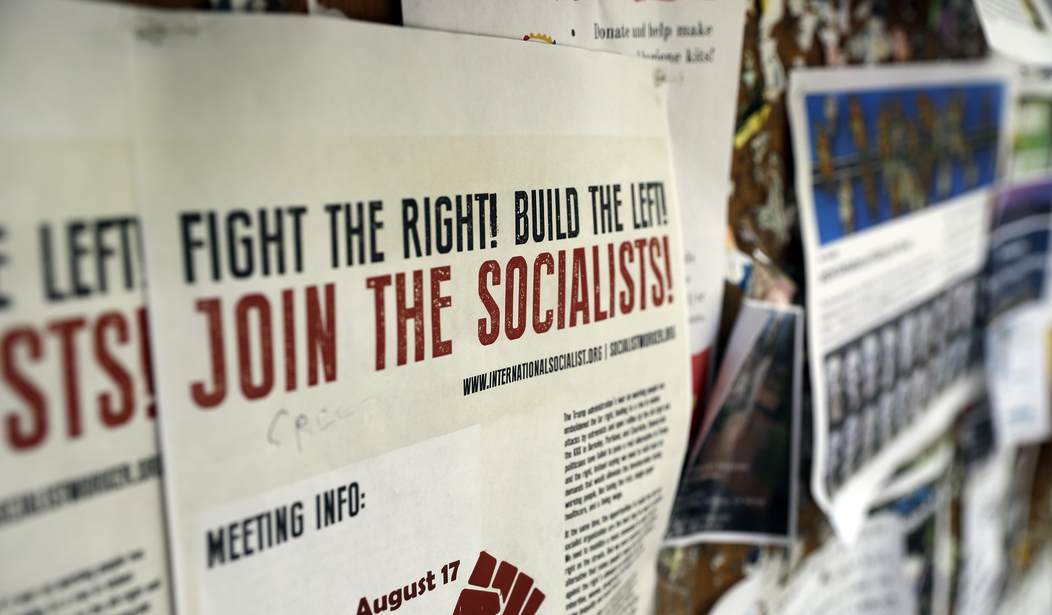
Because it challenges the ideological stranglehold the radical Left has on college campuses. What was once the nexus of open debate and the honest pursuit of truth in American society has unfortunately become the headquarters for Marxist elitism that produces land acknowledgments, the heckler’s veto, and violence against speakers and scholars with whom they disagree.
Our accreditation system has played a major role in this process. Built on the idea that only academics are expert enough to tell other academics how to operate (much like we do with doctors and lawyers), it has been quietly captured by activists who have replaced the common sense that built American higher education with hostile ideologies that actively undermine it. Parents, students, the public, and taxpayers were left out of the conversation entirely.
The new rules from the AIM Committee finally do something about it by demanding institutions ensure dissent and debate continue to happen on campus, so that students graduate equipped to navigate our complicated, fractured world – not be insulated from it.
Done right, this is one of the greatest investments we can make in our future. As someone who helped launch the University of Austin, I have seen the absolute beauty of these forces unleashed: students and faculty energetically engaging in big ideas and everyone, regardless of political stripe, growing in wisdom and mutual respect.
College should be the training ground where students learn how to pursue wisdom before they are called to lead in the real world. That requires access to the full marketplace of ideas. Unfortunately, most institutions have become elitist ecosystems where only one set of approved opinions is tolerated, robbing students of the very education their tuition is supposed to buy and parents are paying for.
We have all seen the consequences of these elitist ideologies in practice: misguided COVID mandates, the embrace of progressive socialism, the violent excesses of Antifa and Black Lives Matter, and the corrosive identity politics that fueled the chaos of recent years. Wherever these ideologies have prevailed, it has resulted in widespread loss of freedom, prosperity, and public safety.
America’s Founders understood the indispensable role of education for our children in learning these civic skills. It motivated George Washington to call for a national university and Thomas Jefferson to build the University of Virginia. It is this quality of education that led the American people to invest so heavily in higher education, and it is precisely this dimension that is most at risk today.
This is why the AIM negotiators chose to restore intellectual diversity as a key focus of accreditation, our primary quality-control mechanism for higher education. If accreditors are going to operate as gatekeepers to billions of dollars in federal student aid, the public has every right to insist they protect free inquiry rather than enforce a single worldview.
What we agreed to is not a “usurpation of academic freedom” or any other dramatic attack on the academic enterprise. It is a restoration of its raison d’être. Ideas on college campuses should not be silenced through policy or aggression, but rather through civil debate, evidence, and persuasion.
For decades, we have demanded accreditors require universities to demonstrate how they are pursuing “diversity” on campus. I have been through six rounds of accreditation and dozens of state authorizations, and in every single one, I was required to address ethnic diversity. In nearly every case, we were formally or informally pressured to “do more” to improve our pursuit of “diversity.” Once, we were forced to produce an interim report to demonstrate we had taken their admonition seriously.
Apparently, clarifying that the public also has an interest in diversity of ideas on campus is a step too far for some in the academy.
In the backward, upside-down moral universe of America’s elite universities, students are judged by the color of their skin and where they were born, but not by what they think, say, or do. This anti-American monoculture must end.
Injecting accountability, transparency, and common sense through the Department of Education’s new rules is exactly what we need to refocus our universities on their proper mission: preparing our next generation of constructive, engaged citizens and leaders. America First Policy Institute has long argued that the long-term answer is to devolve far more authority over education to the states, reform accreditation around quality and outcomes, and ultimately wind down the federal Department of Education itself. But while the Department exists, putting it in service of free expression and student value rather than ideological enforcement is exactly the right call.
Acknowledging that a quality education demands students be able to civilly and nonviolently navigate conflicting ideas and disagreements, seek evidence, and, as a result, develop better solutions is not an attack on higher education. It is its preservation.
So, in the spirit of our nation’s Founders, “huzzah!” to the Department and to the negotiators who stood with me last month to courageously restore intellectual diversity to the heart of the American campus!
Michael Shires, Ph.D., serves as Vice Chair of Education Opportunity and Higher Education Policy at America First Policy Institute.
Editor's Note: Do you enjoy Townhall's conservative reporting that takes on the radical Left and woke media? Support our work so that we can continue to bring you the truth.
Join Townhall VIP and use promo code FIGHT to receive 60% off your membership.



Join the Conversation
VIP members get the ability to comment on articles.