





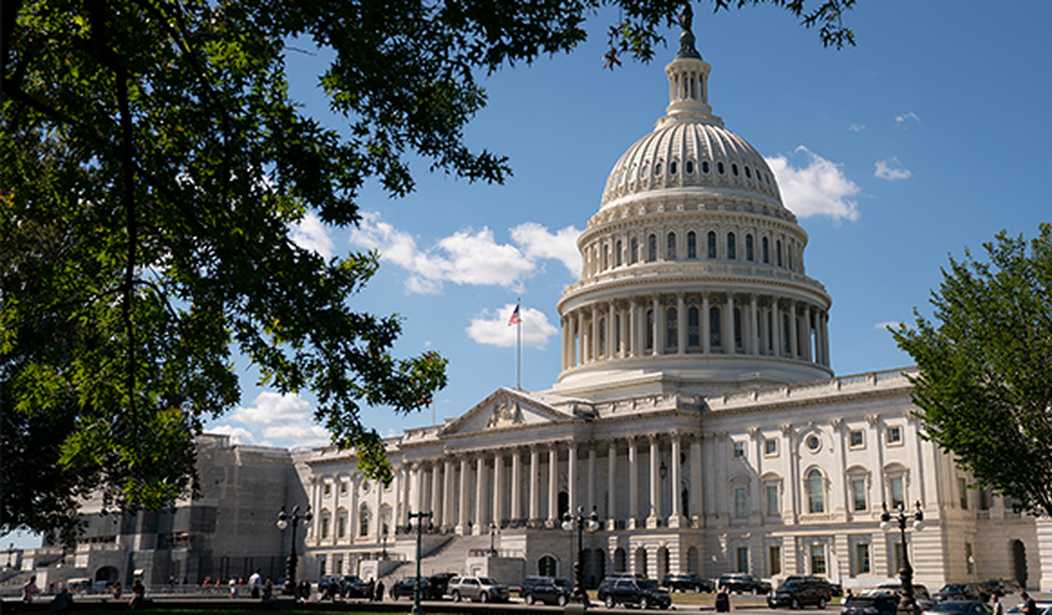
As Congress returns from the Thanksgiving holiday, there are only three weeks left to pass legislation that keeps the government open. Regardless of which political party is in control, it remains the most hallowed of Beltway holiday traditions to leave must-pass legislation until the last minute. As in years past, taxpayers should be concerned that a government funding bill would be weighed down with extraneous and expensive policy riders.
Such riders have routinely snuck into end-of-the-year bills when they would have otherwise been unable to survive scrutiny in the legislative process on their own. The practice allows a coalition of politicians to curry enough favor to carry the legislative package over the finish line, leaving taxpayers to foot the bill. Negotiations over end-of-the-year funding should leave unrelated legislative decisions by the wayside. The spending decisions that set the funding levels for the fiscal year are too important to be bartered away for irrelevant policy changes.
One rider that has rumored to have been a part of an end-of-the-year deal is a so-called fix to “surprise billing.” This refers to the shocking bills patients have received after receiving care from an out-of-network provider, even if that care was delivered at an in-network facility or during an exigent event. The president has rightly called these bills one of the biggest concerns Americans have about healthcare, but proposals under consideration in Congress would undermine efforts to control healthcare costs and further obfuscate patients’ insurance options. Any changes that would profoundly impact patients' healthcare choices should be thoroughly vetted through the appropriate legislative channels, not hidden in a last-minute funding package.
The United States-Mexico-Canada Agreement (USMCA) remains an equally important item of unfinished business for this Congress. House Democrats have made repeated demands that undermine key aspects of the deal, and using the chaotic must-pass resolution window to push through a watered-down trade deal would be a mistake. While the White House has spent the better part of this year negotiating in good faith with House Democrats over its implementation, it should be noted that many changes the agreement makes could be implemented unilaterally by the administration. One of the Democrats’ demands has been a call to pass a bailout of the multi-employer pension fund, which would put taxpayers on the hook for tens of billions of dollars in failing private pension plans. Such a fiscally reckless move has little in common with the massive economic benefit of updating the trade agreement between the U.S. and two of its largest trading partners.
Of course, work done this year reverberates in the next. By rejecting needless policy riders in its big end-of-the-year packages, Congress can signal to the American people it is capable of accomplishing its basic legislative responsibilities. But lawmakers should go beyond the bare minimum by looking to reform our broken budget processes that have made the eleventh hour funding fight commonplace in the modern budget era. Indeed, there are many bipartisan budget reforms that would start to rectify the bias for profligacy that leaves taxpayers worse off in every new year. Those reforms include S. 2765, the Bipartisan Congressional Budget Reform Act of 2019 from Sens. Enzi (R-WY) and Whitehouse (D-RI), which would institute biennial budgeting; S. 1877, the Government Shutdown Accountability Act from Sens. Lankford (R-OK), Hassan (D-NH), Johnson (R-WI), and Braun (R-IN), which would activate an automatic continuing resolution during government funding lapses, and S. 2733, the TRUST Act from Sens. Romney (R-UT) and Manchin (D-WV), which would establish bipartisan, bicameral “rescue committees” for some of the nation’s ailing federal trust funds. Most importantly, Congress should return to the short-lived but effective practice of abiding by statutory budget caps first implemented in the Budget Control Act of 2011 to establish routine budget discipline over a long-term spending window.
There is much work to be done to right the federal government’s failing fiscal ship, but these steps will at least ensure taxpayers are no worse off in the new year. Indeed, if efforts can be made to act prudently in the last month of the year while long-term economic benefits are secured through strengthened trading relationships, the new year can be one for broader reforms and more thoughtful debate on the nation’s fiscal future.



Join the Conversation
VIP members get the ability to comment on articles.