





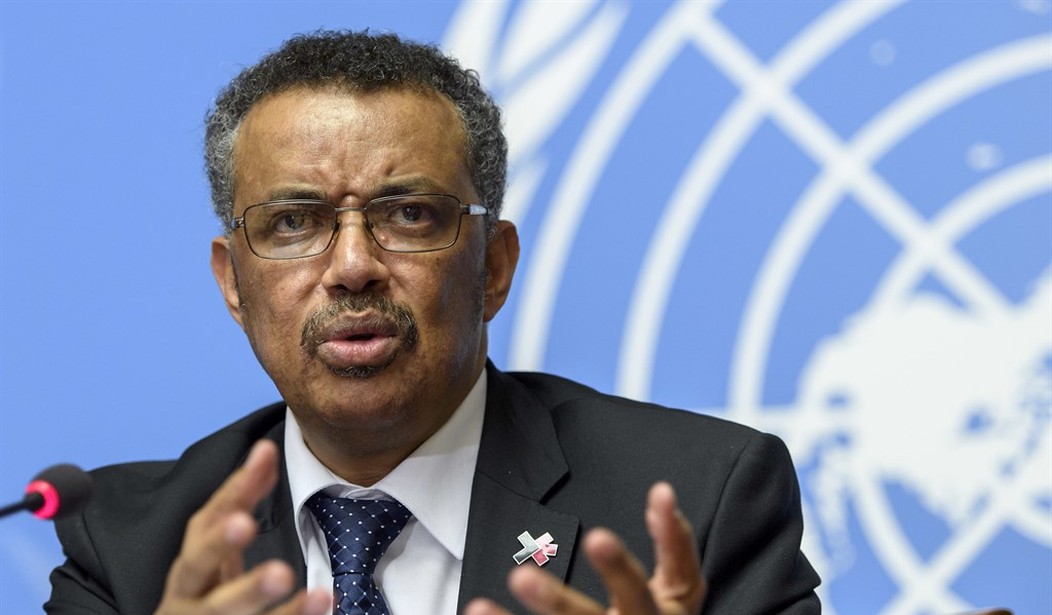
Last month, the World Health Organization (WHO) added its signature to a call for governments to negotiate a legally binding treaty that would phase out fossil fuels, which are framed in the letter as "severe threats to human and planetary health.”
WHO Director-General Dr. Tedros Adhanom Ghebreyesus declared that fossil fuels are “environmental vandalism” and “[f]rom the health perspective … an act of self-sabotage.” The letter cited the WHO’s Framework Convention on Tobacco Control (FCTC) treaty as an example of how a proposed binding obligation on governments might work to reduce the effects of climate change. This would be all well and good if it were not for the fact that the methods employed by the FCTC Secretariat, if mirrored by a similar treaty on climate change, would all but obliterate less harmful fossil fuel options for the planet.
For example, the FCTC treaty specifically states that “harm reduction” – the reduction of the well-known harms of smoking by substituting safer alternatives – is one of the main pillars of global tobacco control. Yet, the WHO refuses to endorse any of the many safer nicotine alternatives to combustible tobacco. Dr Tedros recently claimed on Twitter that “[a]ll forms of nicotine, incl. vaping, are harmful to health” before going on to say that “it's best to use proven cessation tools” which also contain nicotine. The WHO is also a prolific purveyor of misinformation about reduced harm alternatives, including an online Q&A which is full to the brim with cherry-picked science, misleading information and many assertions that are simply not true.
If the FCTC approach to tobacco control was replicated for fossil fuels used for transport, it would be more likely that national governments would be urged to prohibit electric vehicles in favour of there being no automotive transport whatsoever. With the FCTC as a benchmark, fossil fuels would never be eradicated due to ideological objection to alternatives.
Contrary to the idea that the WHO FCTC is somehow to be a guide for other treaties, one could instead replace the words “fossil fuel” in many of the statements contained in the press release announcing the proposed treaty with “combustible tobacco.” Doing so could actually help make the FCTC fit for purpose by embracing alternatives rather than rejecting them.
Far from being a template on which international treaties in other policy areas should be based, the WHO FCTC is not even a success in its own field. A recent study published in the British Medical Journal found “no evidence to indicate that global progress in reducing cigarette consumption has been accelerated by the FCTC treaty mechanism,” while earlier this year two former WHO Directors wrote in The Lancet that “The FCTC is no longer fit for purpose, especially for low-income countries.” When the FCTC was formed in February 2005, there were 1.1 billion smokers in the world, there are now 1.3 billion.
The FCTC is also being cited as the benchmark for the binding treaty currently being negotiated for pandemic prevention and preparedness. It beggars belief that an unelected supranational bureaucracy such as the FCTC, which continually claims that far less harmful nicotine alternatives are unsafe due to lack of 50 years of data, can be held up as an exemplar for a pandemic response which could mean relying on necessarily producing vaccines in a short space of time. Vaccines are far better than allowing people to die yet when it comes to safer nicotine products, the WHO’s FCTC is quite happy delaying their deployment on precautionary grounds when it is clear they are orders of magnitude less harmful than smoking. Instead, the WHO is a major obstacle to many more people switching away from combustible tobacco and continues to allow millions to die across the world rather than acknowledge the vast potential of tobacco harm reduction.
Rather than the FCTC’s incompetent approach guiding the direction of other treaties, if the WHO is happy to embrace alternatives to fossil fuels and understands the importance of quick turnarounds on vaccines to save lives from a virus, it should copy the proposed new treaties by promoting less harmful alternatives to combustible tobacco. The idea that the catastrophic and incompetent mess that is the WHO’s FCTC is somehow a beacon to follow on climate change and pandemic preparedness is risible.
Martin Cullip is International Fellow at The Taxpayers Protection Alliance's Consumer Center and is based in South London, UK.
Join the Conversation
VIP members get the ability to comment on articles.