





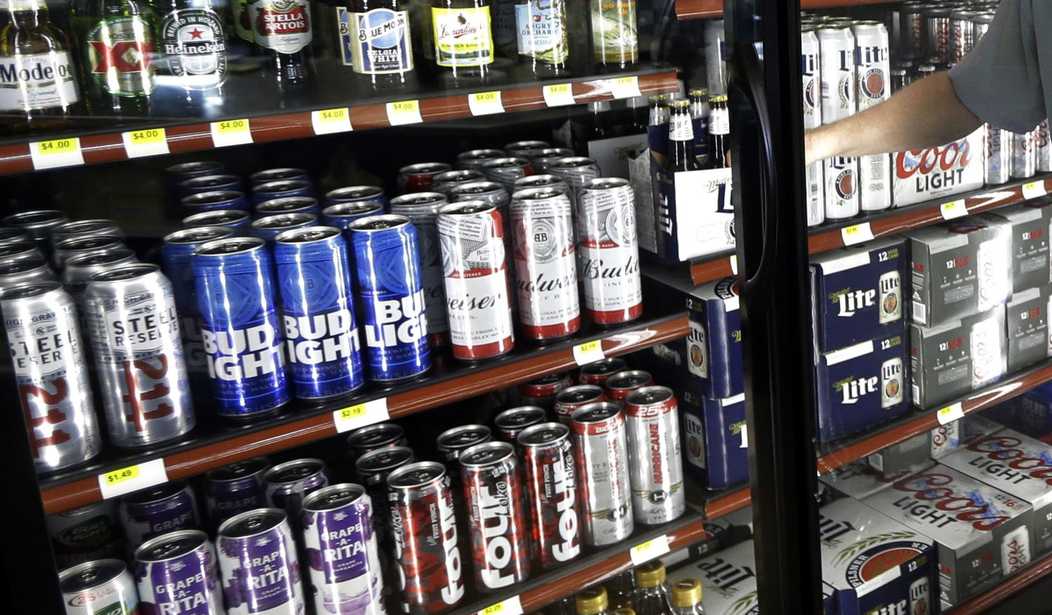
This week, the World Health Organisation (WHO) trumpeted the supposed benefits of its new anti-alcohol initiative.
In a press release on the 23rd February, the taxpayer-funded so-called public health organization announced that “if countries of the WHO European Region were to introduce a minimum level of 15% tax on the retail price per unit of alcohol, regardless of the type of alcoholic beverage, it would save 133,000 lives each year.”
The reduction in deaths from increased taxation comes courtesy of modelling from the WHO’s Non-Communicable Diseases Advisory Council working group. Needless to say, the conclusions are debatable. It is common in the public health community to indulge in “policy-based evidence-making” by committing to a policy and then producing the supporting “evidence” to put in front of lawmakers, but it also comes with a mild rebuke from the WHO to EU Member States for not having increased alcohol taxes sooner.
After stating that high taxation is the WHO’s preferred option for reducing alcohol use, it bemoans the fact that “alcohol taxation remains one of the least implemented measures, largely due to opposition from economic operators and because price increases are generally unpopular with the public.” It is very easy for the WHO to dismiss factors such as the economy and public support since it has never faced an election. It is not required to publish a manifesto, no one is asked to vote in support of its policies, and it does not consult the public before declaring its policy ideas.
For the WHO, the only factor to be considered is health for health’s sake. Indeed, for the WHO, taxation itself should only be seen through the lens of health, with WHO Europe’s Programme Manager for Alcohol and Illicit Drugs declaring that “In the context of alcohol, taxation should be considered as a health measure, and not purely an economic instrument.”
This is part of the WHO’s new Global Alcohol Strategy, a major project beginning this year. The new initiative commits to a target of “at least a 20% relative reduction (in comparison with 2010) in alcohol per capita (among those aged 15 years and older) consumption by 2030.” The aim is not a reduction in consumption by hazardous drinkers, instead the goal is to reduce alcohol use across the board, however moderate the drinker.
To back up their illiberal proposals, the WHO points to consensus on high taxation of tobacco in a transparent attempt to form an equivalence. However, despite the temperance lobby’s reluctance to accept it, there is decades of data to show that moderate alcohol consumption confers health benefits. For example, the US National Institute on Alcohol Abuse and Alcoholism estimates that 26,000 deaths a year are prevented by moderate alcohol consumption thanks to reduced risk from heart disease, diabetes and stroke. And, there is a huge body of evidence globally all pointing in the same direction. There is no such similar evidence on combustible tobacco use, so the comparison is specious.
Temperance campaigners in the WHO would undoubtedly like to lead lawmakers into treating alcohol in the same way as smoking for the simple reason that it may afford them more power. There have been repeated calls for a Framework Convention on Alcohol Control to be set up along the same lines as the Framework Convention on Tobacco Control, a WHO treaty that can make legally-binding demands of elected governments without having the inconvenient obstacle of requiring public votes.
The WHO intends to drive global alcohol policy (not just in Europe) towards temperance without any consideration of economic realities, the public’s free choices and enjoyment or, indeed, long-term data on the real-world effect of alcohol consumption.
In democratic societies, taxes are paid to leaders who are elected based on policies they put forward in order that we vote for them. The unelected and unaccountable WHO is attempting to bypass this peaceful order and gaslight governments into imposing policies for which there is no economic case and no public support. Its connivance and weasel words should be strongly resisted.
Martin Cullip is the International Fellow at The Taxpayers Protection Alliance's Consumer Center and is based in South London, UK.


Join the Conversation
VIP members get the ability to comment on articles.