





Editor's note: This piece was co-authored by Mark Montgomery.
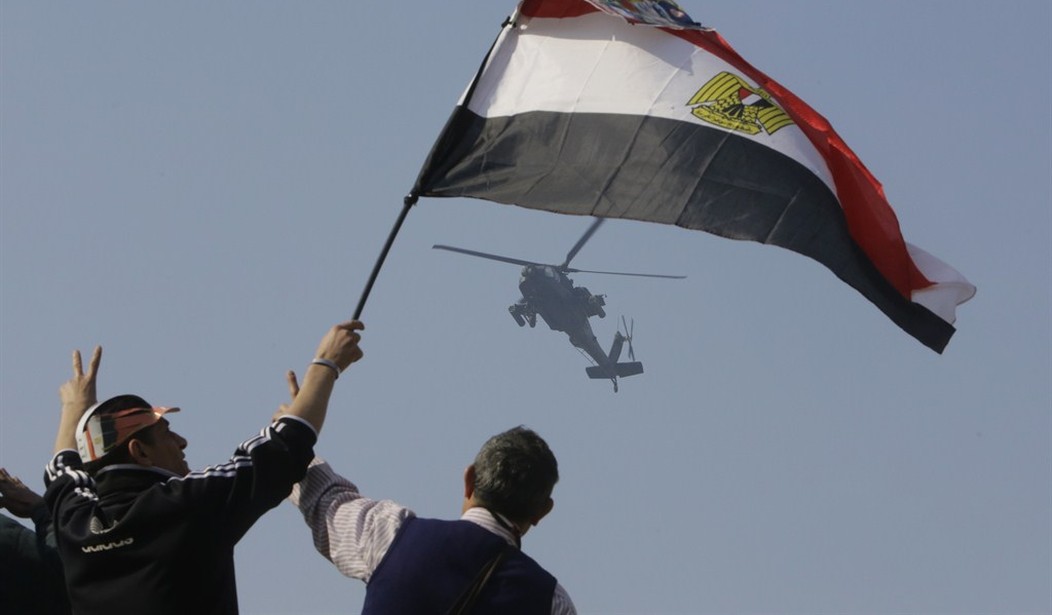
The U.S. decision to grant Egypt its full allotment of $1.3 billion in military aid, despite Egypt’s ongoing human rights abuses, represents a troubling circumvention of U.S. law. Of this sum, $320 million was required to be contingent on Cairo’s efforts to improve its human rights record, yet the administration chose to bypass these congressionally imposed conditions.
Since the signing of the Camp David Accords in 1978, Egypt has received over $50 billion in military aid and $30 billion in economic assistance from the U.S., averaging roughly $1.7 billion annually. In recent years, Congress has withheld portions of this aid to pressure Egypt on issues like political prisoners and repression. In 2023, for instance, the U.S. withheld $85 million due to Cairo’s failure to meet conditions related to treatment of prisoners. Similar amounts were withheld in 2021 and 2022 for human rights abuses.
These figures are set annually by Congress through appropriations law, which withholds portions of Foreign Military Funding (FMF) to recipient countries based on human rights and other conditions. By withholding some, and not all, aid, the U.S can signal disapproval on issues without jeopardizing strategic interests.
However, the decision to release $320 million in aid to Egypt this year required Secretary Blinken to exercise a waiver for the $225 million that has been conditioned on broad human rights conditions. To release the latter $95 million, Secretary Blinken certified to congress that Egypt was “making clear and consistent progress in releasing political prisoners, providing detainees with due process, and preventing the harassment and intimidation of American citizens.” This certification occurred despite overwhelming evidence of the contrary.
The White House defended its foreign aid approval this week by emphasizing Egypt’s role as a key ally in the Middle East. “This decision,” a State Department spokesperson said on Wednesday, “is important to advancing regional peace and Egypt’s specific and ongoing contributions to U.S. national security priorities, particularly to finalize a ceasefire agreement for Gaza, bring the hostages home, surge humanitarian assistance for Palestinians in need, and help bring an enduring end to the Israel-Hamas conflict.”
However, Washington’s reliance on Cairo as a mediator in the Gaza ceasefire and hostage negotiations has produced limited results. In fact, Egypt has sided with Hamas in ongoing negotiations over the Philadelphi Corridor — the stretch of land that separates Egypt and Gaza —by demanding that Israeli forces withdraw from it.
Hamas operates a network of tunnels underneath the corridor that serve as critical supply lines for the group and contributed to the devastating attack on Israel on October 7. Israel’s premature withdrawal from the area would once again leave these smuggling routes open, allowing Hamas to rearm at a critical moment in the war. This underlines the limits of Egypt’s role as an honest and transparent mediator in this conflict.
A reevaluation of the U.S.-Egypt relationship is long overdue. Washington should take at least three steps to hold Cairo accountable.
First, the Biden administration must demand that U.S. military aid is being used in line with both American interests and human rights standards. Although much of the aid goes towards procuring U.S. defense supplies, Washington must improve its efforts to ensure that U.S. resources are not used for internal repression. By strengthening reporting requirements, including detailed breakdowns of how military hardware and technology is used, will help prevent the misuse of American-made supplies. This transparency and accountability should be central to how the U.S. allocates aid.
The U.S. should also insist that other Egyptian defense procurement not be focused on equipment from U.S adversaries such as Russia and China— Egypt’s alleged purchase of Chinese J-10C fighter jets, for example, should have been an unacceptable investment.
Second, the United States should intensify diplomatic efforts to address Cairo’s human rights abuses. While there are USAID programs that work to promote “efficiency, transparency, and accountability of public institutions and the civil service,” these programs fail to adequately protect civil society leaders and organization from the Sisi regime’s ongoing crackdown. The State Department, USAID, and other U.S. agencies should apply diplomatic pressure on Egyptian officials to reform policies that target human rights advocates and civil society leaders. As a starting measure, U.S. officials should condemn Egypt’s blasphemy laws, which are often weaponized to justify pretrial detention and other human rights abuses. Enhanced diplomatic engagement should aim to pressure Egypt to reform these and other oppressive laws and policies.
Third, Congress must strengthen oversight of Egypt’s role as a U.S. ally. Regular hearings and detailed reports from the State Department will ensure that aid aligns with U.S. policy objectives and human rights standards. This should also prevent Cairo from pursuing unacceptable behavior like allegedly offering to sell rockets to Russia to support its illegal invasion of Ukraine. This would keep Cairo accountable and affirm Washington’s commitment to American values.
As the situation in the Middle East evolves, the U.S. must uphold its self-imposed conditions and remain steadfast in defending American values. Abandoning these values may offer short-term gains but will undermine American leadership and authority in the long run.
Rear Adm. (Ret.) Mark Montgomery is a senior director at the Center on Cyber and Technology Innovation (CCTI) at the Foundation for Defense of Democracies. Follow him on X @MarkCMontgomery. Mariam Wahba is a Research Analyst at the FDD. Follow her on X @themariamwahba.

Join the Conversation
VIP members get the ability to comment on articles.