





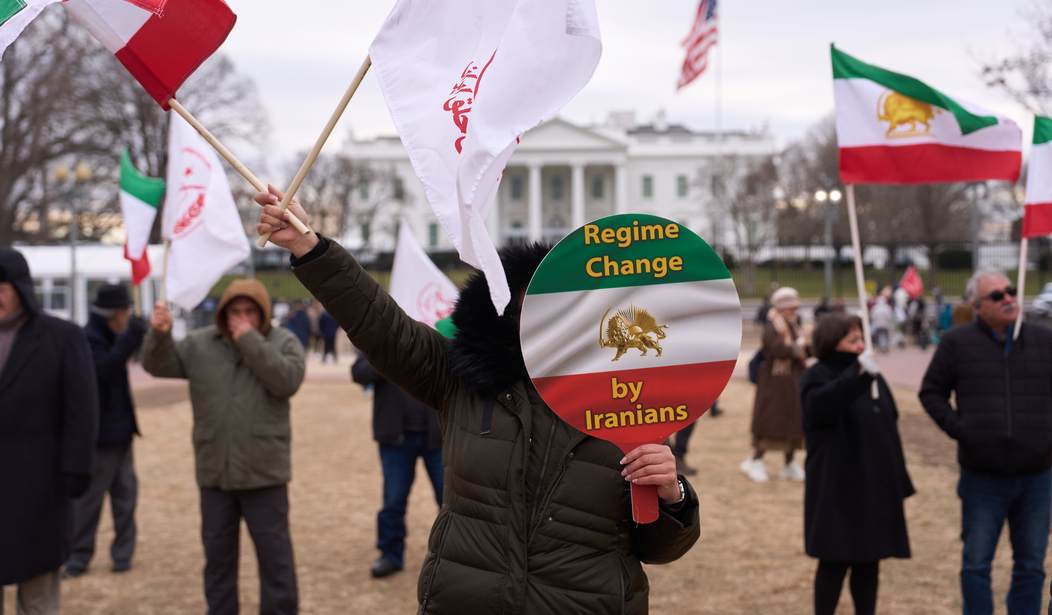
Four nationwide uprisings in seven years. Thousands killed. A regime that insists its opposition “doesn’t exist inside Iran.” And yet each time the clerical establishment crushes one wave of protest, another rises — broader, bolder, and more organized than the last.
This week, as Tehran’s Grand Bazaar shuttered and demonstrations spread to dozens of cities, even state-aligned media began to acknowledge what the regime has spent decades denying: there is an organized resistance at work, and it is growing.
The spark, once again, was economic. Iran’s currency collapsed to a new record — 1.42 million rials to the dollar — and merchants simply refused to open their shops. But economics merely lit the fuse. Political anger is carrying the explosion forward, and the pattern is unmistakable.
If momentum continues, this will mark the fourth major uprising since 2017. That year, worsening living conditions provoked unrest across the country. In November 2019, a sudden gasoline price hike triggered even larger protests — met with unrestrained violence, as security forces and the IRGC fired automatic weapons into crowds, killing an estimated 1,500 people.
Even that massacre failed to secure lasting quiet. Over the next two years, citizens staged sweeping election boycotts, forcing regime officials themselves to concede record-low turnout and deep public disillusionment — not merely with individual leaders, but with the ruling system as a whole.
This unresolved crisis of legitimacy exploded again in September 2022, after the morality police detained 22-year-old Mahsa Amini. Her death in custody turned a funeral into a national rebellion that soon reached hundreds of cities across all 31 provinces. International observers called it the gravest challenge to the theocracy since 1979. Despite another 750 protesters killed, the defiance persisted into 2023, fueling continued civil resistance that has never fully ceased.
Taken together, these uprisings form a single chain — the same flame of resistance passing forward, gathering strength along the way. Their continuity is evident in shared slogans echoed across the country, among them: “Death to the oppressor — be it Shah or Leader.” Long associated with the People’s Mojahedin Organization of Iran (PMOI/MEK), this slogan underscores a broader reality: Iranians reject both dictatorship past and dictatorship present. As Maryam Rajavi, President-elect of the National Council of Resistance of Iran (NCRI), observed: “The continuing uprising by merchants, students, and other sectors of society signals the Iranian people’s determination to be free from religious tyranny. This wretched regime is doomed to be overthrown by the risen populace and rebellious youth. The final word is spoken in the streets by the people and the rebellious youth — those with nothing left to lose. This regime must go.” Her words capture the essence of the moment: this is not a protest movement seeking reform, but a society insisting on fundamental change.
Reports repeatedly tie this continuity to the PMOI’s network of Resistance Units, active nationwide since 2014. Their mission — organizing protest activity, challenging regime propaganda, articulating a democratic alternative, and directly confronting repression — has left Tehran increasingly unable to sustain its central myth: that no organized opposition exists.
The regime’s own media inadvertently exposed the truth after the latest protests. Fars News admitted that resistance leadership had called for “a chain of protests,” and described coordinated cells within crowds steering chants beyond economic grievances — a confession in all but name.
Meanwhile, various factions, some aligned with the regime itself, promote Reza Pahlavi as a supposed alternative. Yet the streets answer plainly: “Neither crown nor turban.” The monarchy narrative is not a solution; it is a diversion designed to fracture movements and blunt their revolutionary direction. Iranians are not trading one tyranny for another.
What unfolds in Iran never stays within its borders. For more than four decades, this regime has exported instability from Lebanon to Yemen, Iraq to Syria. A democratic Iran would transform not only the fate of 90 million citizens — it would reshape the security landscape of an entire region.
Western legislatures increasingly understand this. Their resolutions call for support to the democratic resistance — and the current uprising offers a critical opportunity. Sanctioning regime institutions, designating the IRGC as a terrorist entity, and recognizing the people’s right to resist would not merely demonstrate solidarity. It would be an investment in global security.
The clerical regime has endured through repression and through the myth that there is no alternative. The repression remains. The myth no longer does. The regime’s own narratives have begun to unravel, and the truth is now visible to all.
Join the Conversation
VIP members get the ability to comment on articles.