







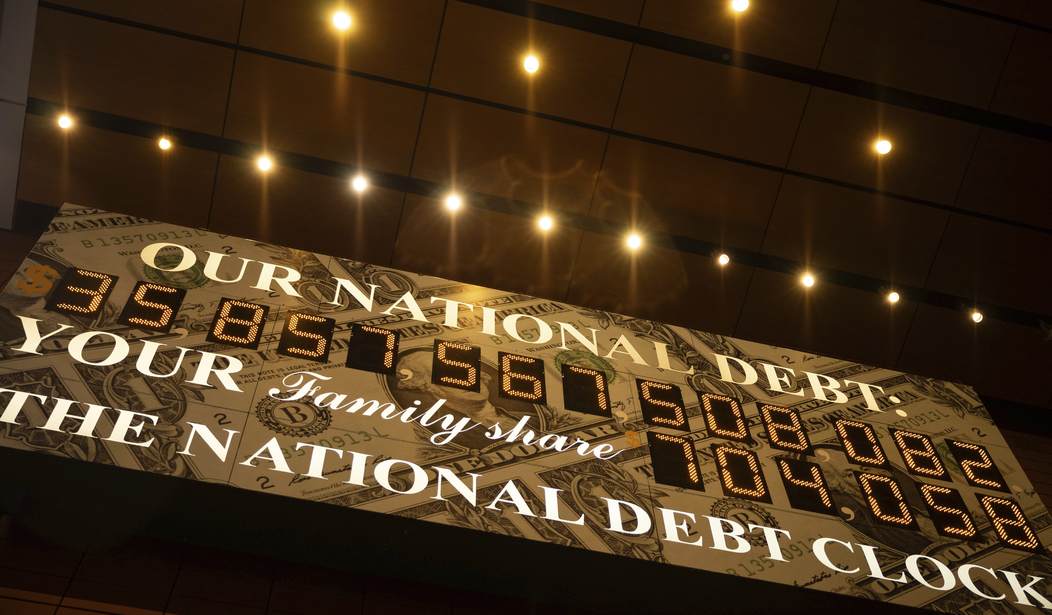
America's mounting national debt is like a speeding train heading straight toward us. While some recognize the danger, most Americans remain unaware of just how serious the situation has become. The question is whether we will wake up and confront the problem while there is still time, wait until a crisis forces our hand, or allow it to grow so large that the consequences become impossible to avoid.
History has demonstrated repeatedly that governments can spend themselves into financial distress, sometimes with devastating consequences for citizens. Greece learned that lesson when its debt spiraled out of control, requiring intervention from the European Union and the International Monetary Fund. With outside help, the country avoided outright financial collapse; its economy suffered enormously, and its citizens experienced years of diminished living standards. Once a government loses control of its finances, restoring economic stability can be extraordinarily painful.
In France, government spending consumes an enormous share of its economy. Taxes and debt are exceptionally high. Its government faces the increasingly difficult challenge of financing existing deficits, while citizens resist both higher taxes and reductions in government benefits. The economy is troubled, and the citizens are rioting, demanding the government do even more. France is facing a dilemma on how to satisfy its citizens and pay its bills. It is on the precipice of a fiscal cliff.
America is not yet in France's position, as our spending on government and tax structure are considerably lower, but we are heading in that direction. America’s national debt has reached approximately 125 percent of GDP, and its annual deficit is around $2 trillion and growing. This causes higher inflation and interest rates, slower economic growth, and vulnerability to unexpected financial shocks. These deficits exist as politicians propose additional spending on new programs or expanded benefits. We cannot pay for the government we already have, yet politicians offer more and bigger programs with no one addressing how to pay for it.
The longer-term obligations are even more troubling. Social Security and Medicare face enormous funding shortfalls, with estimates of their unfunded obligations at $86 trillion and growing.
Are we at the crisis stage? Not yet, but we are headed there.
We have time to change course. It will take public understanding and support, and a willingness to confront some uncomfortable truths about the relationship between government spending, taxation, and economic growth.
We are not simply victims of irresponsible politicians. We are participants in the process that created this problem. We elect our representatives, and those representatives respond to the demands of the people who put them in office. For decades, politicians have discovered that promising additional government benefits is a reliable way to win elections. Voters understandably like the idea of receiving more services and assistance but rarely ask the obvious question of how those promises will be paid for.
The result is a political cycle that rewards spending and ignores how to pay for it. Politicians promise more benefits, voters like this and elect them, and the bills are pushed onto future generations. When the next election arrives, the promises become even larger. Neither party has demonstrated a willingness to confront the underlying problem because doing so requires telling voters something they do not want to hear — you must pay for the benefits.
Ultimately, the responsibility rests with us. We the People are not spectators in this process. We are the employers, and elected officials are the employees. If we demand fiscal responsibility, they will have a political incentive to deliver it. If we continue rewarding politicians for promising more spending without explaining how to pay for it, we should not be surprised when the national debt continues to spiral out of control.
The train is coming. We still have time to change direction, moving to fiscal responsibility, but that window will not remain open forever. Government cannot continue spending money it does not have, making promises it cannot keep, and assuming future generations will somehow absorb the consequences. The solution will not come from Washington. It must begin with an informed and engaged electorate willing to demand something different from those seeking its votes.
We the People must get engaged and understand the problem, then start demanding that their government live within its means. Only we can make that happen.
Remember, there is no free lunch, so stop looking for one.
Les Rubin is the founder and president of Main Street Economics.
Editor's Note: Do you enjoy Townhall's conservative reporting exposing the radical left and woke media? Support our work so we can keep bringing you the truth.
Join Townhall VIP and use promo code FIGHT to receive 60% off your membership.
Join the Conversation
VIP members get the ability to comment on articles.