





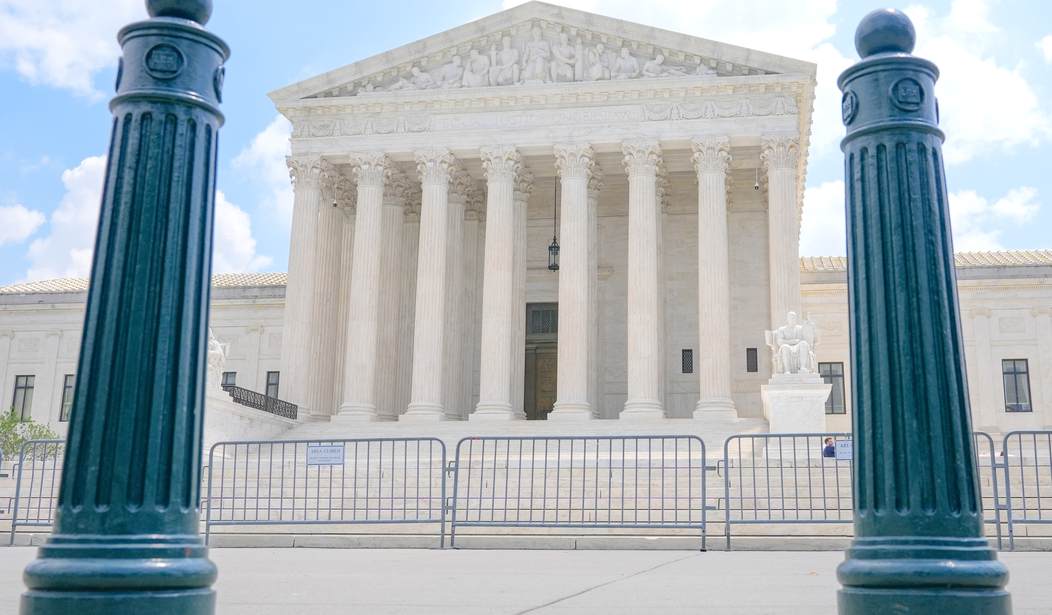
Calm down about today’s birthright citizenship case, Trump v. Barbara. We were always going to lose. That was expected by anyone who understands how the courts work; what wasn’t expected is that this ruling was such a huge step toward eventual victory. You don’t have to be happy, but you don’t have to freak out. We’re winning.
Here’s the deal. Let me give it to you from the perspective of a politically informed lawyer, because I understand a little about how courts think, having been raised in a house with a mother who was a judge and appearing in courts all the way up to the Ninth Circuit for 30 years. It’s important you understand all the context to see where we are really at. It’s also important that you keep your feelings in check and not freak out like an emotionally incontinent teenage girl who catches her mom reading her diary.
Let’s talk about the 14th Amendment, which establishes birthright citizenship in the view of the very narrow majority. That “very narrow” part is key. For about 150 years, the common legal understanding of the 14th Amendment has been that it provides that, with narrow exceptions (such as the children of ambassadors), anyone born in the United States is an American citizen. And the text of the amendment can be read to support that. Now, you don’t have to like that, and you don’t have to agree with that reading—like most of you, I think the stronger argument is the one against birthright citizenship for children of transients and illegal aliens—but whether you agree or disagree, it’s not so legally ridiculous as to be disconnected from reality. And it was the reality until new scholarship, developed over the last couple of decades, began to seriously challenge it.
Let’s understand how the courts work. They don’t like changing things. They revere precedent. It takes a lot to get a new understanding of the Constitution to become the mainstream interpretation. Look at the Second Amendment. For a century, it was understood to allow pretty much any regulation of guns, as long as the regulation was “reasonable,” which it always ended up being in the eyes of the courts. The Heller decision completely changed that, and that decision was based on new scholarship. That’s the same process as we’re going through with birthright citizenship. We’re challenging something that’s been established, and you need to understand that our constitutional system is designed to make that hard.
Yeah, we lost today—barely. And that “barely” part is the good news. This was a 5–4 decision on the constitutional issue. Obviously, the three liberals voted against it because they will always vote the way that they perceive helps leftism. If illegal alien kids were believed to be aspiring Republicans, they would’ve been on the other side. None of these legal arguments that I’m talking about apply to them; they are hacks, and they don’t vote on principle. Chief Justice Roberts and Justice Barrett do vote on principle; their vote was entirely predictable to anyone familiar with how the courts work. It’s just that their principle is wrong, reflecting the old and established view of the 14th Amendment that we are currently challenging with new scholarship. Lots of people are wrong, and it doesn’t make them the antichrist. Yes, I know all the arguments in favor of changing the understanding of birthright citizenship, and we don’t need to relitigate them here. Just understand that in any case, both sides believe in their arguments. What we need to do is make an effort to get folks nominated to SCOTUS who are more open to new challenges to old thinking because we are making a lot of new challenges to old thinking.
Frankly, I expected SCOTUS to punt completely and rule only on the executive order that President Donald Trump issued. There’s a principle in law that you try to resolve things without reaching constitutional issues if you can, and Trump challenged birthright citizenship with an executive order. Did he have the power to issue such an executive order? I expected the Court to rule that he did not and to avoid the constitutional issue entirely. If the Court decided to confront the constitutional issue, I expected a 7–2 ruling with Justice Alito and Justice Thomas in dissent. What we got was Justice Kavanaugh and Justice Gorsuch both stepping in and accepting, at least to some extent, the new thinking on the 14th Amendment citizenship clause.
This is huge, people. It’s enormous, and the dramatic implications in favor of reforming the old idea of birthright citizenship are being swamped by people freaking out over what was an entirely predictable response to anyone who’s vaguely familiar with how courts work.
Here’s the reality—we are one seat away from changing birthright citizenship. We win today, but this decision moves us forward. Frankly, I expected this evolving understanding of birthright citizenship—which I view as inevitable in the face of the reality of illegal alien anchor babies and birth tourism—to take a decade or two. Again, that’s how our Constitution is designed. It’s not designed to be quick, whether we want it to or it needs to be or not. But this was quick.
Note that this was a 194-page decision when you count all the dissents and concurrences, and I haven’t read it in great detail yet. It’s going to get torn apart and assessed word by word over the next few days, and keep an eye on that. Lurking inside, there may be some hints about legislative ways to curb some of the abuses—like Red Chinese tiger moms flying in for a week to give birth to a kid and flying home with an American citizen—that will pass muster with the majority in the future. In other words, by statute or even executive order, we may be able to limit some of the abuses without a constitutional amendment or a change at the Supreme Court. Sadly, the classic illegal alien anchor baby problem is not going to change under this current understanding of the 14th Amendment. It’s going to have to wait until we get a Court that goes our way.
What today shows is that we are closer to that than ever. We are on the verge of winning, and my assessment is that our victory is now inevitable.
Would I have loved Justice Barrett or Chief Justice Roberts to have defied their natural judicial conservatism—in the non-political sense—and embraced the new thinking today? Yeah, that would’ve been great, but it wasn’t in the cards. Instead, we got two votes that I frankly didn’t expect. And those two votes position us for victory. If one of those five majority justices goes away and President Donald Trump appoints the replacement, it’s very likely we will have a 6–3 majority that supports limiting the current idea of effectively unlimited birthright citizenship under the 14th Amendment.
Let me put it in sportsball terms. We didn’t score a touchdown today, but we moved the ball down the field and put ourselves in position for a field goal or maybe even a touchdown in the next couple of plays.
So don’t freak out, don’t cry, don’t scream and yell. There’s no reason to. This result was better than we had any right to expect at this juncture in the process of changing the way the 14th Amendment’s citizenship clause is viewed under the law. And this is why keeping the Senate in 2026 is more important than ever.
Cheer up. Don’t doom. We did better than we had any right to expect, and in the end we’re going to win.
🛳️ Ahoy, join me on the conservative Gulf of America Cruise that isn’t just a bunch of obsolete losers guzzling Zima on the Lido Deck! Larry O’Connor, Scott Jennings, and I are sailing the Caribbean this November on an epic voyage of discovery and owning the libs. All aboard this Salem/Townhall event! Sign up now!
BIG NEWS! Kurt’s next action-packed conservative novel, “American Warlord,” is out for presale now! Read Kurt’s Kelly Turnbull/People’s Republic series, including the latest "Panama Red," and follow Kurt on X @KurtSchlichter!


Join the Conversation
VIP members get the ability to comment on articles.