


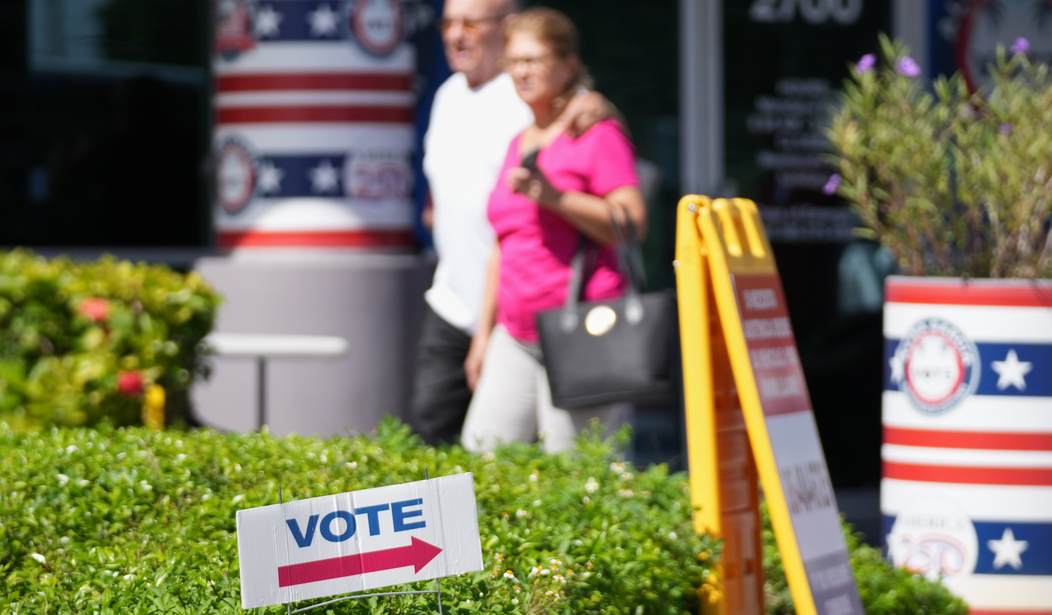
I've been asked repeatedly to predict what happens Tuesday. I've looked at the polls, the historical patterns, the candidates. And I've reached a conclusion: my crystal ball has never been fuzzier.
The conventional math says Republicans should lose ground. Midterms punish whoever holds the White House. That's the pattern. But there's a complication nobody seems able to factor into the equation.
The other side keeps nominating whackjobs.
The real question on the ballot this year was never simply whether voters are unhappy with Washington. It's whether they're unhappy enough to hand power to people whose ideas are even further removed from common sense than the ones currently in charge.
I have a good friend. Decent heart, intelligent in most respects. Let's call him Daren. Daren genuinely believes he's being compassionate every time he embraces an idea that makes no sense on contact. He confuses good intentions with good outcomes. He thinks disagreement is cruelty and skepticism is extremism. And when the policies he supports produce the consequences anyone could have predicted, he concludes we simply haven't tried hard enough yet.
Daren isn't the enemy. He's the illustration. America has an enormous number of good-hearted people who've confused compassion with surrendering their own judgment. You can have a good heart and still have catastrophically bad ideas.
Let's talk about the economy honestly, because nobody struggling to pay their mortgage needs a politician telling them their problem isn't real. Groceries still cost money. Real wages have been essentially flat over the past year — up sharply in the first stretch of this administration, down slightly since, netting out close to even. Unemployment sits around 4.1 percent, historically still low even after ticking up. GDP grew at a real 2.2 percent last quarter. Inflation remains stubbornly above where anyone wants it. None of that is a victory lap. But you don't judge a recovery by pretending the damage never happened. You judge it by whether the repair work is actually underway. It is. Slowly, imperfectly, but it is.
Which brings me to the real question this election is actually asking. Not turnout. Not approval ratings. Something more fundamental: are we, as a nation, boarding the express train to Crazyville, or are we going to insist that reality still matters?
Enforce the laws, or treat enforcement itself as oppression. Produce abundant energy, or restrict the supply while demanding it stay affordable. Reward work, or promise benefits nobody explains how to pay for. Protect public safety, or minimize disorder and its victims. Debate opposing ideas, or declare disagreement itself unacceptable. The ticket to Crazyville looks free. It's the destination that costs you everything.
Suppose Tuesday goes badly. Suppose the headlines scream Trump is finished. What actually changes? The economy still recovers — that momentum doesn't vanish because a committee chairmanship changes hands. The mullahs still don't get a nuclear weapon. The border stays closed. American energy keeps getting produced. Crime keeps trending down. The tax relief already signed into law on tips, overtime, and Social Security benefits stays signed into law — a new Congress can't erase it without passing something to replace it.
What does change is simpler and uglier: impeach, impeach, impeach. Investigations. Subpoenas. Two more years of cable-news spectacle, another attempt to make the presidency itself the story instead of the country's actual problems. Washington will spend two years trying to impeach a man who has already survived every political weapon they know how to throw at him.
Trump doesn't need to win another election. He'll keep governing through the authority he already has. But 2028 becomes the real battlefield, and that's where Marco Rubio enters the picture — foreign policy command, national security credibility, the clearest heir to this coalition currently standing. The Democrats may think they're writing Trump's final chapter. They may be writing Rubio's first.
And while we argue about one election, look at what happens when a civilization stops enforcing its own standards. Paris is burning right now, literally. Dearborn wrestles with cultural integration. Minneapolis fights to rebuild basic public trust. San Francisco lives with the wreckage of failed homelessness policy. New York asks whether affordability, safety, and competent governance can coexist at all anymore. Different cities, different problems. Same warning: a civilization doesn't collapse because people disagree. It collapses when people decide standards and shared responsibility no longer matter.
I don't know who wins Tuesday. I don't know if the pollsters get it right or spend Wednesday morning explaining what they missed.
But I know this. America has survived bad elections, bad politicians, terrible ideas dressed up as noble intentions. What we cannot survive indefinitely is losing the ability to tell the difference between what sounds compassionate and what actually works.
I can't tell you who wins Tuesday. I can tell you which train I refuse to board.
Editor’s Note: The 2026 Midterms will determine the fate of President Trump’s America First agenda. Republicans must maintain control of both chambers of Congress.
Help Townhall continue to report on the Democrats’ radicalism and inform voters as our nation faces a crossroads. Join Townhall VIP and use promo code FIGHT to receive 60% off your membership.
Join the Conversation
VIP members get the ability to comment on articles.