





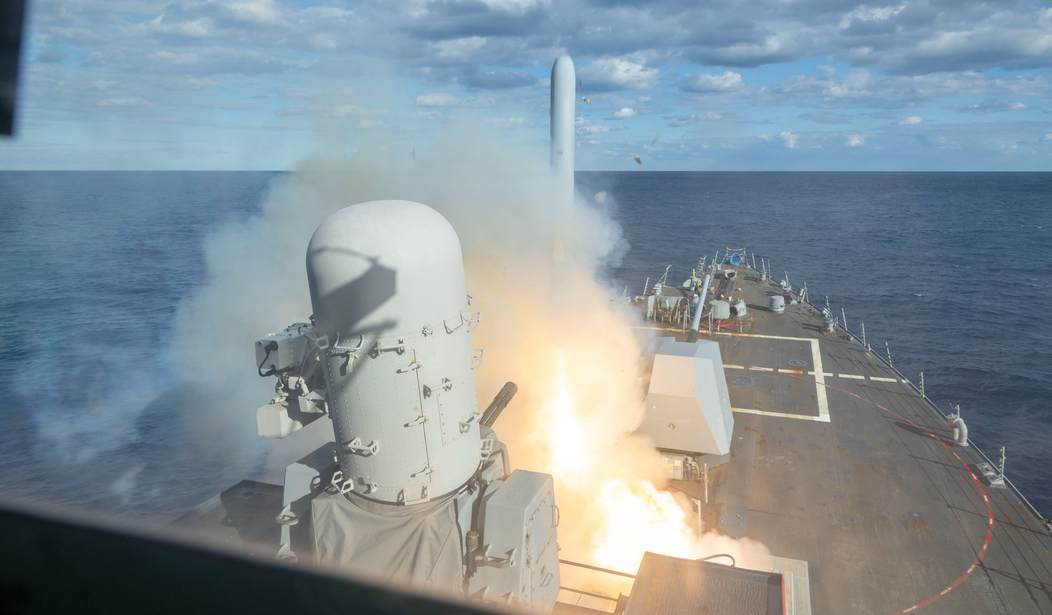
If you had written the script a year ago, even seasoned geopolitical analysts would have laughed.
The Iranian regime collapsing from within. The terror apparatus decapitated. The Arab street not burning American flags but quietly acknowledging that Israel and the United States were right. Russia and China scrambling to protect a weakened ally. The Iranian diaspora celebrating in the streets from Los Angeles to London.
And Democrats in Washington, somehow, managing to defend the wrong side of history.
Yet here we are.
Call them the “impossibles.” The things the foreign policy priesthood said could not happen. The things we were warned would ignite World War III. The things that were supposedly too risky, too destabilizing, too bold.
President Trump didn’t listen.
And now the regime in Tehran is wobbling.
Let’s start with the most obvious fact: the head of the snake is gone.
For decades, Iran’s terror regime operated through proxies — Hezbollah, Hamas, Islamic Jihad, Shiite militias in Iraq and Syria — exporting violence from Beirut to Buenos Aires. The clerical dictatorship funneled billions into destabilizing the Middle East while crushing dissent at home.
The removal of the regime’s most notorious architect of terror was not symbolic. It was strategic. It dismantled command structures. It shattered mythologies of invincibility. It sent a message to Tehran’s ayatollahs: your reach is not unlimited.
Critics warned that eliminating the regime’s top terror mastermind would ignite regional war. Instead, what followed was containment — and clarity.
Second “impossible”: the Arab street.
For decades, the narrative insisted that confronting Iran would unite the Muslim world against the West. Instead, many Sunni Arab governments — and large swaths of their populations — have long viewed Iran’s revolutionary regime as a destabilizing force. Tehran funds militias that undermine Arab sovereignty. It props up dictators and fuels sectarian conflict.
When pressure mounted on Tehran, the predicted firestorm did not materialize. Quiet cooperation between Israel and Gulf states expanded. The Abraham Accords proved durable. And in many corners of the Middle East, Iran’s weakening was not mourned — it was welcomed.
Third: Russia and China.
Iran has been a critical node in the anti-Western axis — supplying drones to Russia for use in Ukraine, signing long-term energy and military cooperation deals with Beijing, and acting as a geopolitical spoiler from the Strait of Hormuz to the Mediterranean.
A destabilized Iranian regime weakens that axis. It constrains Russia’s military supply chain. It complicates China’s Belt and Road investments. It removes a strategic energy lever from two adversaries who count on Iran’s hostility toward the West.
The foreign policy establishment said confronting Iran would isolate America.
Instead, it isolated Iran’s patrons.
Fourth: the diaspora.
You don’t need polling to see it. You can see it in the streets.
Iranians abroad — many of whom fled the 1979 revolution and the brutality that followed — have been openly celebrating the regime’s unraveling. From Berlin to Toronto to Southern California, exiled communities have waved the pre-revolutionary lion-and-sun flag and called for a free Iran.
These are not radicals. These are families who lost homes, businesses, and loved ones to a theocratic dictatorship.
Their joy is not bloodlust. It is relief.
For 45 years, the regime in Tehran imprisoned dissidents, executed protesters, suppressed women, and crushed free speech. The 2022 “Woman, Life, Freedom” uprising revealed just how fragile the regime’s domestic legitimacy truly was. The current unraveling builds on that foundation.
Fifth: the nuclear nightmare.
For years, Tehran inched closer to nuclear breakout capability. The 2015 nuclear deal slowed parts of the program but left key pathways intact and sunset provisions looming. Since then, Iran has enriched uranium to levels approaching weapons-grade, according to International Atomic Energy Agency reports.
Preventing a terror-sponsoring regime from acquiring a nuclear weapon is not hawkish fantasy. It is common sense.
A nuclear Iran would trigger a regional arms race. Saudi Arabia has already indicated it would pursue its own deterrent if Tehran crosses the threshold. Israel has made clear it will not tolerate such an outcome.
Neutralizing that threat before it matures is not warmongering. It is risk management.
And then there’s the sixth “impossible”: watching American Democrats tie themselves in knots defending — or minimizing — the fall of a regime whose slogan has literally been “Death to America.”
Instead of celebrating the weakening of a government that funds terrorism and brutalizes women, some on the Left immediately pivoted to criticizing the method, the timing, the optics. A few even suggested that destabilizing Tehran risks empowering something worse.
That argument collapses under its own weight.
What is worse than a regime that hangs dissidents from cranes, funds suicide bombers, and chants for America’s destruction?
History teaches us something uncomfortable: tyrannies do not reform themselves into liberal democracies. They either harden — or they fall.
When the Berlin Wall crumbled, there were those who warned of chaos. When the Soviet Union dissolved, experts predicted instability and loss of control. Both events were messy. Both were uncertain.
Both were necessary.
The Iranian regime is not the Soviet Union. But it is another chapter in the long story of authoritarianism overreaching and collapsing under its own contradictions.
President Trump’s role in this moment will be debated for years. But what cannot be denied is that bold action shattered assumptions. The so-called “impossibles” are no longer theoretical.
The terror mastermind is gone.
The Arab street did not ignite.
Russia and China are recalculating.
The diaspora is celebrating.
A nuclear threshold has been forestalled.
And the American Left is scrambling to explain why this is somehow a problem.
History rarely moves in straight lines. But when it does pivot, it tends to reward those who act decisively and punish those who cling to failed orthodoxies.
If this is the beginning of the end for Tehran’s terror regime, future generations will not remember the cable news panels warning of disaster.
They will remember that, at a critical moment, someone refused to accept the “impossibles.”
And that is how history changes.
Editor’s Note: Do you enjoy Townhall’s conservative reporting that takes on the radical Left and woke media? Support our work so that we can continue to bring you the truth.
Join Townhall VIP and use promo code FIGHT to receive 60% off your membership.


Join the Conversation
VIP members get the ability to comment on articles.