





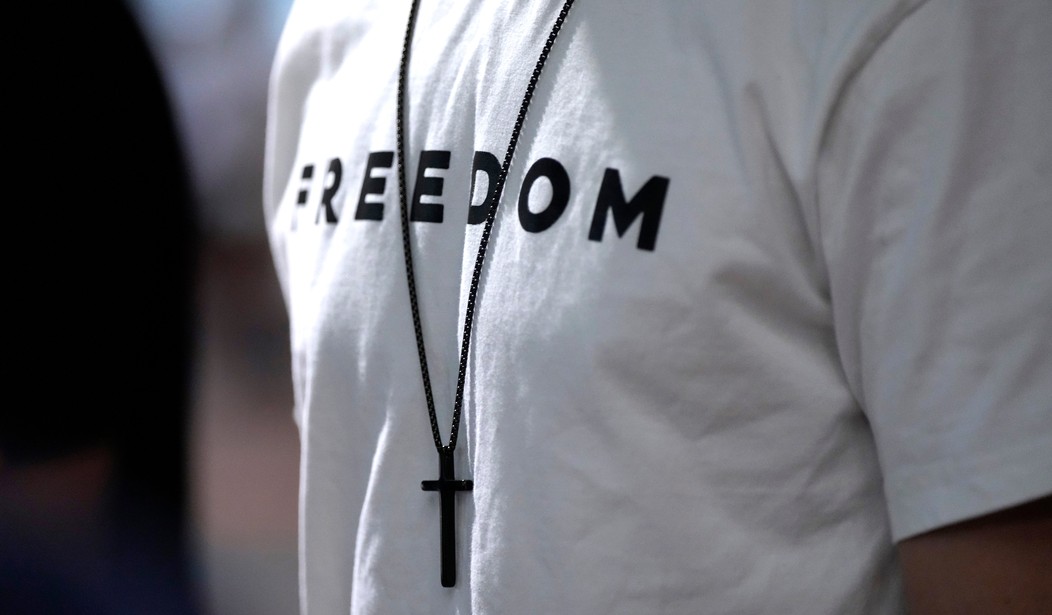
Vanguard University recently decided that Christian students who care enough about America to advocate for its founding principles must now do so “underground.” They banned official student groups tied to “political advocacy initiatives,” which just happened to remove Turning Point USA’s recognized status on campus. Read that carefully: a school that calls itself Christian has determined that young believers applying their faith to civic engagement is now unwelcome. And that begs the obvious question: at what point does a Christian college stop being one?
Because if a university abandons biblical conviction simply to avoid public controversy, it has forfeited the right to call itself Christian. That may sound blunt, but Christianity has never been declawed, domesticated, or made safe for university marketing departments. From Genesis to Revelation, Scripture calls followers of Christ into the public square, into challenging the culture around them, into shining light where darkness prefers to sit quietly unbothered.
Yet at Vanguard, that calling is now a problem. The students who led Turning Point at Vanguard are not anarchists trying to tear down America. They’re young Christian adults who believe biblical truth applies to public life, to law, to policy, to the national future they will inherit. They’re the type of students a Christian institution should champion. Instead, Vanguard has pushed them to the edge of campus — literally. They may still gather, but only informally, without resources, without recognition, and without the ability to participate in the same opportunities all other student groups enjoy. Shut out of student fairs. Shut out of meeting spaces. Shut out of the same financial support that other organizations receive.
When Christians are forced outside for being too Christian, the decline is already well underway.
This is deeper than campus politics. If Vanguard will not allow its own students to engage their faith in the arena where morality meets reality — in governance, justice, and civic responsibility — then its “Christian identity” has become nothing more than branding. Light is not meant to be hidden under a bushel. Jesus didn’t call His people to be neutral. He called them to be salt and to be light. Salt preserves. Light exposes. Neutrality does neither.
Scripture is nowhere apolitical. God calls believers to pray for leaders (1 Timothy 2), to seek the welfare of the nation in which they live (Jeremiah 29), and to confront wickedness wherever it is found, whether in palaces or public squares. John the Baptist lost his head because he dared to speak to a political figure’s sin. The prophets were constantly in conflict with kings. And our Lord was crucified by a government terrified that His truth would disrupt the status quo. So, since when did Christian universities become places where “avoiding disruption” is the highest virtue?
The truth is, Christian institutions that once fought to form courageous disciples now increasingly swap conviction for compliance with secular expectations. They want the tuition of believing families, the reputation of a faith tradition, and the protection of never offending anyone who might criticize them online. They want the benefits of Christianity without the cross that comes with it.
And I confess: I’ve seen this drift personally. A professor connected to Vanguard — a distant cousin by marriage — has become so deranged by his hatred of a certain political figure that he and his entire branch of the family cut off communication with us altogether. Not a debate. Not a disagreement. Total exile. It is the kind of ideological purging that destroys families, friendships, and now, apparently, the witness of a Christian university. When fear and rage replace faith and reason, we end up with institutions terrified of truth itself.
The irony is that Turning Point USA’s mission on campus was not to politicize Christianity, but to challenge students to think, to engage, to consider how biblical truth shapes civic life. In other words, to be educated Christianly. Vanguard could have been proud of these students. Instead, it chose appeasement. It chose to silence them to make powerful critics happy. And in the process, it chose the cowardice of the age over the courage of the Gospel.
There is a simple measure for what qualifies a school as a Christian university. Do they hold Jesus Christ as Lord not only in name but in practice, in policy, in academic freedom, and in the formation of their students’ public faith? If not, they should drop the name. Full stop. Call yourselves a private school with some Bible electives and nice worship services. Call yourselves “spiritually adjacent.” But do not drape yourselves in the banner of Christ while silencing those who dare to live out His command to be ambassadors in every domain of life.
Vanguard has a decision to make. It can reclaim courage, embrace its heritage, stand with students who apply their beliefs beyond Sunday mornings, and honor the Christ it claims. Or it can continue hollowing itself out until the label “Christian” is nothing more than a nostalgic memory.
If a university refuses to stand with Christians as they live their faith in the public square, then let’s be honest: it isn’t a Christian university anymore.
Let Vanguard be what it has chosen to become — and let’s call it by its true name.

Join the Conversation
VIP members get the ability to comment on articles.