





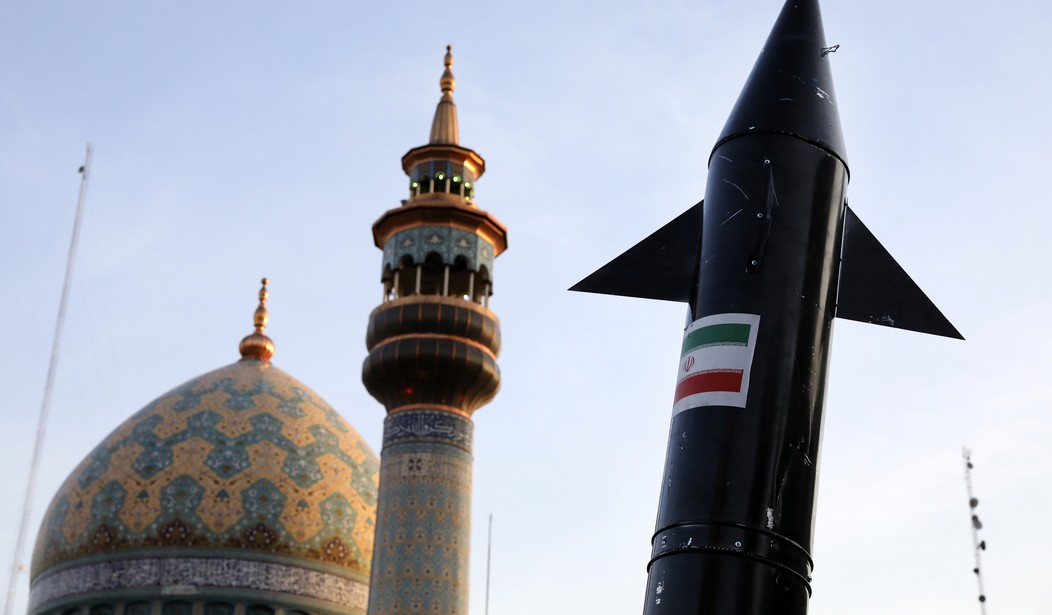
Recently, reports emerged that Olivier Grondeau, a French citizen, had been liberated from captivity in Iran, having endured nearly half of a five-year sentence levied on him by the Iranian regime ’s-controlled judiciary.
While Grondeau's release is a welcome event in its own right, it casts light on a persistent and troubling pattern of hostage-taking by the clerical regime. This practice shows no signs of abating or nearing a genuine resolution.
The issue is more significant than a mere humanitarian concern since it is intertwined with the policy on Iran in general and the attitude towards the opposition in particular.
Two other French nationals remain in detention in Iran. Credible sources suggest that as many as twenty Western nationals could currently be languishing in captivity within the Islamic Republic, held as pawns to be leveraged in diplomatic negotiations with their respective governments.
The Iranian regime has a long and ignominious history of adeptly exploiting hostages to achieve its ends. Prisoner exchanges frequently emerge as the culmination of these underlying negotiations, and they are almost invariably skewed in Iran's favor. It is deplorable enough that the regime manages to secure the release of individuals guilty of grave offenses, including acts of terrorism, in return for individuals targeted solely for their Western citizenship.
In certain instances—such as when the United States, ahead of implementing the 2015 Iran nuclear deal, freed seven Iranians from custody and dropped charges against fourteen others to secure the release of just four Americans—these exchanges have even been accompanied by ransom payments. This does not account for the more clandestine and inventive arrangements Iran is believed to have brokered with its ostensible adversaries over decades of methodical hostage-taking.
Regarding this round of hostage release, the question is, what did the mullahs get in return? The notion that it relinquished a hostage purely as a gesture of goodwill stretches the bounds of believability.
It is very plausible that the hostage release is tied to the publication of a demonizing article in the French weekly Le Canard Enchaîné targeting the National Council of Resistance of Iran (NCRI), a France-based coalition of pro-democracy opposition groups, and particularly its President-elect, Maryam Rajavi. The timing of the piece, appearing just before the French hostage’s release, raises immediate suspicions of a connection. Adding to the skepticism, the article references reports submitted to the Prosecutor’s Office alleging potential financial misconduct by the NCRI. Yet it conspicuously omits that these claims echo accusations made against the organization two decades ago—charges that sparked a lengthy investigation, spanning over ten years and costing millions of Euros in public funds, only to yield no evidence of impropriety. Very tellingly, the origins of those allegations were only the clerical regime. This pattern suggests an orchestrated effort to discredit the NCRI as part of the deal linked to Grondeau’s freedom.
Ironically, Le Canard Enchaîné, the very outlet now airing these allegations, published a report in June 2024 that seemed to recognize the pernicious role of Iranian hostage diplomacy in a police raid targeting a company linked to the NCRI. That earlier piece highlighted how Iranian officials and state media could provide real-time commentary on the raid as it unfolded, prompting speculation about whether Iran’s judiciary chief was somehow privy to the French police’s every move—perhaps even “plugged into their body cameras.”
Like the more recent operation, that raid yielded no evidence of criminality. Yet its timing aligned precisely with the sudden release of another French hostage, pointing to an inescapable conclusion: the incident was likely orchestrated at the behest of the Iranian regime to sustain pressure on the NCRI, the most formidable threat to its grip on power.
Tellingly, six French dignitaries expressed alarm over “what appears to be a bargaining aimed at demanding deliberate aggression and demonization of Iran's democratic opposition, the National Council of Resistance of Iran (NCRI), and its President-elect, Maryam Rajavi, in exchange for the release of the European hostages.”
A bipartisan dozen prominent US former senior officials and politicians unequivocally condemned the mullahs blackmailing and giving concessions to the mullahs, particularly by tarnishing the image of the Iranian Resistance. They explicitly expressed their support for Mrs. Rajavi and her unmatched role in the resistance to establish democracy and freedom in Iran. More than two dozen cross-party British lawmakers echoed a similar concern.
The pattern pursued by the French raises a pressing question: Are we witnessing history repeat itself? The Tehran regime remains an international menace and must be treated as such. Yielding to its tactics by targeting its adversaries does little to secure the freedom of Western nationals, including French citizens, or bolster Europe’s broader safety. The time has come to recognize the mullahs in Iran for what they truly are and to hold them accountable. Experience has demonstrated, time and again, that they respond unequivocally to firmness and strength. We should stand on the side of the Iranian people and their Resistance and their aspirations for a free, democratic, secular republic of Iran.
Ken Blackwell is the former United States Ambassador to the United Nations Human Rights Commission and a thought leader at the America First Policy Institute and the Family Research Council.

Join the Conversation
VIP members get the ability to comment on articles.