





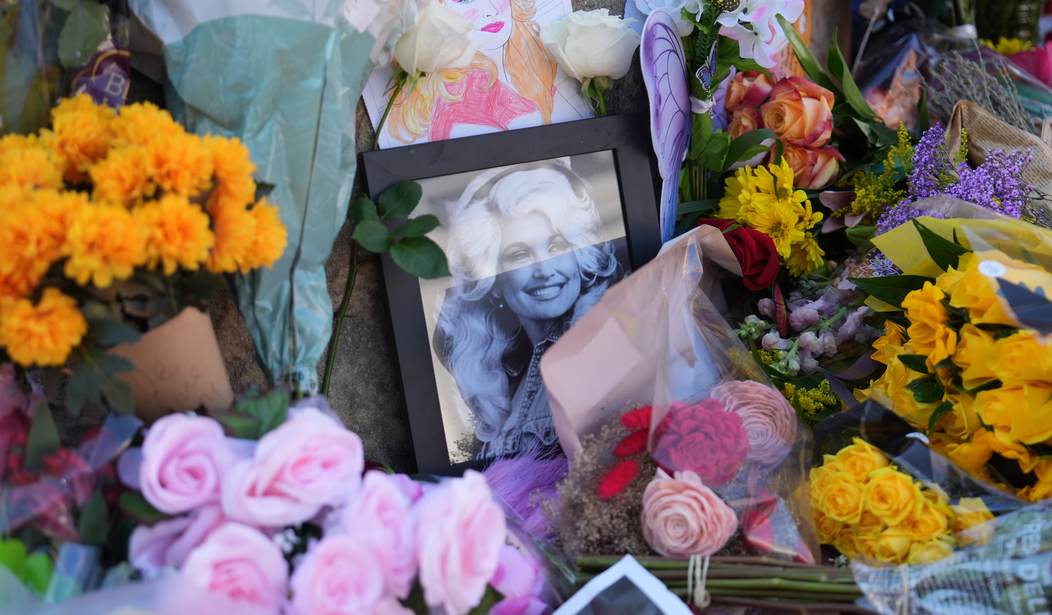
"In a world of Jolenes, be a Dolly" is a phrase you can buy on a plaque for your wall, a sticker for your water bottle, or a mini-sandwich board sign I bought at a Cracker Barrel in Nashville, Tennessee, last fall.
We're a nation mourning the death of Dolly Parton. She was such a hopeful, joyful presence in American culture. I'm determined to wear a little more pink and rhinestones for at least the next month, possibly longer, just as an act of gratitude and an invitation to strike up conversations about a woman who united us in a way that very few people or things seem to have the power to do anymore. The love for her expressed after her death is an indication that we have not actually lost all sense of sharing a common culture.
To be a Dolly instead of a Jolene means a lot more, of course, than not going around stealing other women's men. It means noticing the good in the world, even in our enemies. Dolly Parton could have written a bitter song. She could have been promised to exact revenge on Jolene if she didn't back off. But Dolly didn't do that. Instead, she appealed to Jolene's sense of decency, while acknowledging her greater physical allure. In some ways, "Jolene" presents us with a remarkable display of empathy.
"It's God spark," Dolly said in a Vogue interview 10 years ago, when she was asked what people saw in her. She said: "I really do ask God every single day to let me do something, say something, be something that matters to somebody else. To make somebody feel good. To let people see a spark of love. God is love, that's the scripture."
She went on to say: "All those good Christian people who have something to say about everybody, I think: Well, where's your religion? You're taught not to judge, and you're supposed to love your neighbor like yourself. I want to be loved, and so I try to love everybody."
She tried to love even Jolene.
Over the years, we came to learn that the inspiration for Jolene arose from a few people. There was a bank teller with red hair who was paying a little extra attention to her husband, Carl, and he clearly enjoyed it. And there was a fan named Jolene, and the name was tucked away for poetic use. But the vulnerability Parton expresses in the song could be in the heart of any woman — the fear that the good thing could all fall apart so easily, leaving her heart in ruins.
Dolly Parton was no wallflower, though, needless to say. When Barbara Walters was downright rude in a 1977 interview, asking: "Dolly, where I come from, would I have called you a hillbilly?" Dolly responded unflinchingly, gracefully, and firmly: "If you had, it would have been something very natural, but I would have probably kicked your shins or something." Dolly wasn't going to lower herself to insulting Walters. But she also wasn't going to invite Walters to continue disparaging her upbringing.
We can stand our ground without being cruel, rotten, or dismissive. We can practice virtue, display the spark of God in our lives, and create beautiful things and experiences that encourage others to listen to their better angels, too.
Kathryn Jean Lopez is senior fellow at the National Review Institute, editor-at-large of National Review magazine, and author of the new book "A Year With the Mystics: Visionary Wisdom for Daily Living." She is also chair of Cardinal Dolan's pro-life commission in New York and is on the board of the University of Mary. She can be contacted at klopez@nationalreview.com.
Editor's Note: Do you enjoy Townhall's conservative reporting exposing the radical Left and woke media? Support our work so we can keep bringing you the truth.
Join Townhall VIP and use promo code FIGHT to receive 60% off your membership.

Join the Conversation
VIP members get the ability to comment on articles.