





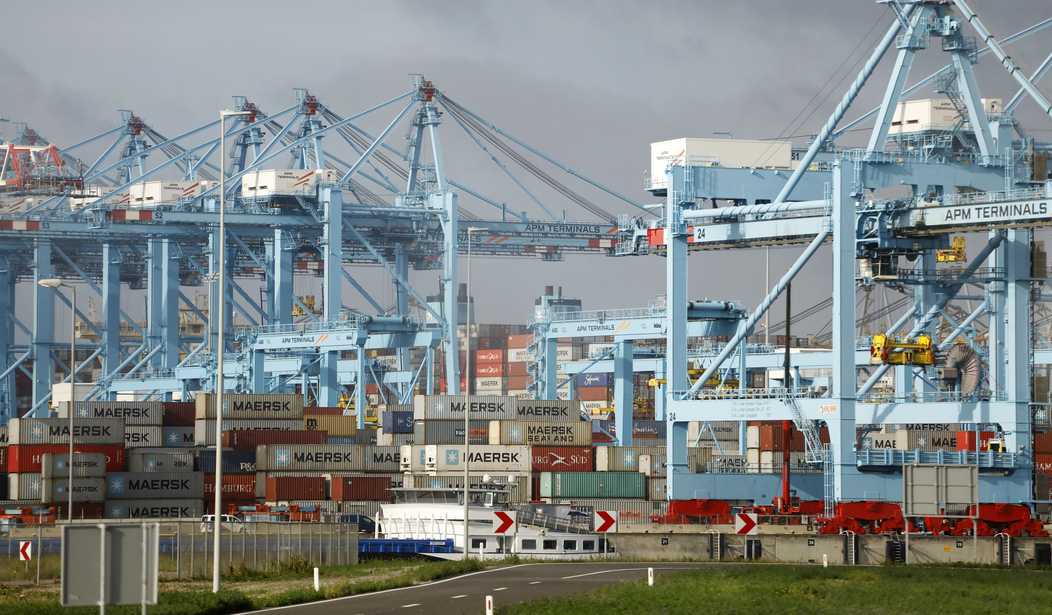
Israel’s attack on Hezbollah militants’ wireless devices last month has generated a lot of discussion about how the attack was planned and executed and what this will mean moving forward as warfare strategies continue to evolve from the traditional boots on the ground approach. Everything from cyber warfare to bio warfare has been at the forefront of discussions about preparing for emerging enemies and combating global threats, but Israel’s successful multi-pronged operation has experts considering an entirely new possibility: supply chain warfare.
Supply chains have long been a consideration in national security forums and it is widely understood that conflicts which threaten to weaken or disrupt global supply chains create economic instability and prompt questions about reliance on foreign countries for essential goods. We saw this during the Covid pandemic when there were concerns about US access to essential goods imported from China such as personal protective equipment and even pharmaceuticals. However, Israel’s vast operation has brought renewed attention on supply chains and refocused the conversation on the importance of supply chain integrity. Valid questions are being asked such as where is the source of the goods? Who made them? What was the chain of custody before they arrived in the United States? and how can we ensure they are safe?
In the days following the attack Politico reported, “Security experts and supply chain analysts said the attacks serve as a model for future adversaries on how to weaponize the complex and often-opaque supply chains for everyday items, which go through a bevy of forms and countries before arriving in stores.”
At the forefront here is Temu, and its parent company Pindoudou, PDD. I have been a fierce critic of Temu for their highly questionable data security practices, with their privacy violations, data harvesting operation on behalf of the CCP and even malware incidents with PDD. The Temu app was downloaded more than any other last year by American consumers. But even more troubling is the complete lack of transparency shrouding their supply chain and the millions of packages being sent to American consumers containing cheap and potentially dangerous electronics. Their website features dozens of items such as pagers, adult walkie -talkies or two-way radios. These should now be considered high risk items. To be clear, Israel’s operation was well executed, righteous and justified, but we must be on guard for what the adversary can achieve.
Global supply chain integrity plays an important role in America’s national security interests and will become increasingly important as global tensions rise over economic disputes and trade imbalances creating even more grave national security concerns. We already know Temu has flagrantly violated the Uyghur Forced Labor Prevention Act (UFLPA).
Congress and state officials should encourage companies to work alongside US agencies to ensure safety for American consumers here at home. Partnering with DHS, Customs and Border Patrol can help create greater transparency at our ports of entry, America’s nexus for importation.
Not only is Temu’s supply chain shrouded in mystery, so are its finances. The Chinese ecommerce group behind Temu, whose stock plunged in recent months, has accumulated the largest cash pile of any listed company that does not pay a dividend or buy back shares. This alone demonstrates the security concern with Temu’s massive stake in multiple state pension funds, which stage AG’s must examine. Temu’s public disputes with suppliers, and news that its parent company, US-listed PDD Holdings is sitting on a $38bn net cash position while refusing to pay dividends to investors should generate a lot more scrutiny. The Financial Times reported that this “hoarding of cash is regarded as a “red flag” by some investors, who say its financial statements are opaque and its communications sparse.”
Questions surrounding their data security practices, company leadership, which is affiliated with the CCP, financial red flags and their mysterious supply chain all deserve answers.
There are some categories of goods that are more susceptible than others, electronics being one of the most concerning. Israel’s successful attacks on Iran funded Hezbollah terrorists was a triumphant display by one of America’s most important allies, but we should be concerned about how America’s enemies could deploy similar tactics. Taking simple precautions like knowing where electronic products are made, how and by whom is a good start.
Kash Patel has served as the Deputy Director of National Intelligence, Chief of Staff for the Department of Defense and National Security Advisor to House Permanent Select Committee on Intelligence.


Join the Conversation
VIP members get the ability to comment on articles.