





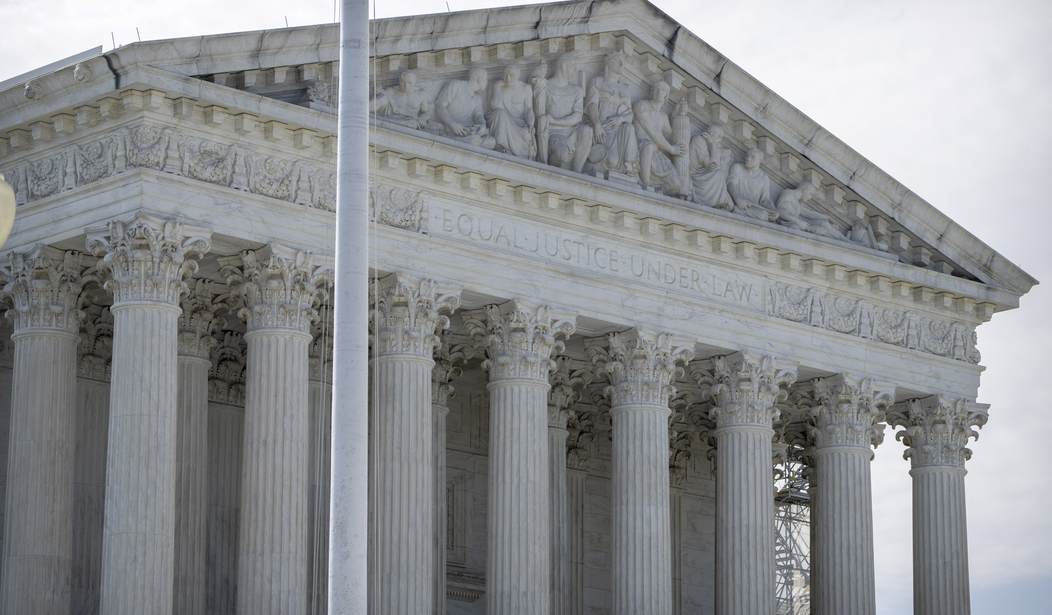
Courts have the luxury of time. Election officials do not.
Earlier this week, “the Supreme Court allowed Alabama to move forward with its new congressional map in a decision issued Tuesday evening, pausing a lower-court ruling that the map was likely unconstitutional.”
In doing so, the Court reiterated a principle that often gets overlooked in redistricting debates. As The Hill reported, the justices wrote that "federal courts should not impose changes close to an election" and that states are "free to decide for themselves whether last-minute changes to an election are in their best interests."
Days earlier, Louisiana lawmakers approved a new congressional map following the Supreme Court’s decision in Louisiana v. Callais. The state had already redrawn its congressional districts after years of litigation, only to find itself revisiting the map once again after the Court’s latest ruling.
The details of those cases differ. The lesson does not.
Election calendars continue regardless of whether litigation is finished or not.
The Constitution places election administration primarily in the hands of the states. Article I, Section 4 gives state legislatures primary authority over the "Times, Places and Manner" of congressional elections.
Courts review maps and resolve disputes. States administer elections. Both responsibilities matter, but they are not the same.
The Voting Rights Act requires a fair opportunity for voters to elect candidates of their choice, while the Constitution limits how heavily race can be used in drawing districts. Courts have made clear that race cannot be the predominant factor without triggering strict scrutiny.
Navigating these legal obligations is difficult. Resolving them before election deadlines become a problem is even more important.
What should not be controversial is the need for finality.
Voters deserve certainty. Candidates need certainty. Election officials need certainty.
Redistricting disputes do not stay confined to courtrooms. Candidates are already on the campaign trail, raising money, and making their case to voters. Election officials are preparing filing deadlines, ballots, and the work required to administer upcoming elections. When maps remain unsettled deep into an election cycle, campaigns are forced to adjust, election officials must revise plans, and voters are left navigating changes they did not create and cannot control.
That reality often gets lost in debates over redistricting. Most attention is focused on court decisions, legal theories, and political outcomes. Far less attention is paid to the practical challenge of administering elections while the rules remain unsettled.
Recent election cycles have already shown what happens when redistricting litigation collides with election timelines. After litigation that began in 2021, North Carolina delayed its 2022 statewide primaries by nearly two months while courts reviewed challenges to newly drawn maps.
That experience should serve as a warning.
The longer redistricting disputes remain unresolved, the more difficult it becomes for states to prepare for the elections they are ultimately responsible for conducting. Election administration does not halt while litigation continues.
The lesson from Alabama and Louisiana is not that courts should stop hearing redistricting cases. Judicial review remains an essential part of our constitutional system.
Courts play an important role in resolving election disputes and enforcing constitutional protections. However, courts do not bear responsibility for conducting elections. States do.
The Constitution assigns states the responsibility to govern, not wait indefinitely for courts to decide when that can begin.
The challenge facing states is not simply political. It is legal.
Redistricting will always have disagreements. Litigation will always play a role. However, neither should become a permanent fixture hanging over every election cycle.
States have a responsibility to administer elections.
Courts have the responsibility to resolve disputes.
No matter how long litigation continues, Election Day eventually arrives.
Josh Findlay serves as Director of the Texas Public Policy Foundation’s National Election Protection Project and hosts TPPF’s Election Protection Project Podcast.
Join the Conversation
VIP members get the ability to comment on articles.