





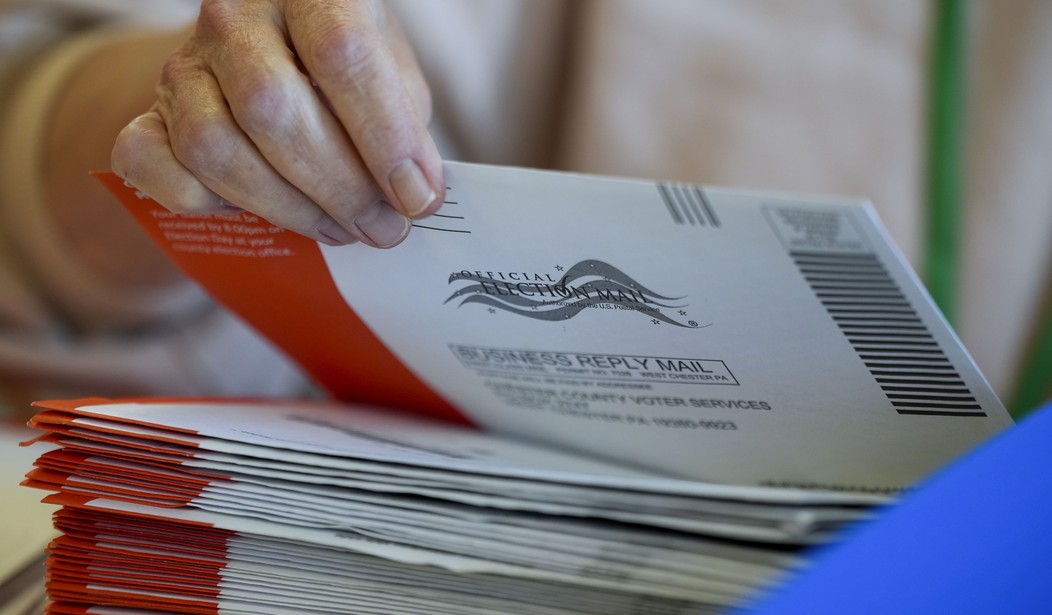
Recently the United States Supreme Court heard oral arguments in one of the most consequential election integrity cases in years – Watson v. Republican National Committee. The core question: Does federal law require that mail-in ballots be received by Election Day, or can states extend that deadline by days – or longer – after the election has concluded?
This is a case the ACLJ has been fighting. As we reported earlier this year, we filed an amicus brief at the Supreme Court on behalf of 29 Members of Congress – urging the Court to hold that Election Day means exactly what it says: one day. The arguments we put before the Court echoed throughout the chamber.
Mississippi passed a law allowing absentee ballots postmarked by Election Day to be counted if received up to five business days after the election. Mississippi is one of 14 states with such a grace period. The Republican National Committee sued, arguing the practice is preempted by the federal statutes that Congress enacted in 1845 and 1872 establishing a single, uniform Election Day for federal elections.
Take action with the ACLJ. Add your name to our petition: Defend Election Integrity.
The ACLJ’s Arguments Took Center Stage
Election Day means a single day. The central pillar of our brief was that Congress exercised its explicit constitutional authority to establish Election Day as one specific day – not a window, not a period. Justice Alito made this exact argument from the bench, noting that Labor Day, Memorial Day, and Independence Day are all particular days, not extended periods – and Election Day should be no different. That is the ACLJ’s argument, made on behalf of 29 Members of Congress, now voiced by Justice Alito.
No limiting principle. Our brief warned that allowing post-Election Day ballot receipt creates no logical stopping point – opening the door to indefinitely rolling election periods. Justice Alito again spoke up, surfacing this identical concern, lamenting that “We don’t have Election Day anymore. We have election month,” noting that early voting can start a month before and ballots can be received a month after. This is the slippery slope our brief presented in our filing before the Court.
It is clear from the oral argument that the Court will be closely divided, and the case could fall either way. At least three Justices appeared to agree with the challengers that the law requires ballots to be received on Election Day. Justices Alito, Thomas, and Gorsuch all raised serious skepticism of Mississippi’s position, and they emphasized the importance of Election Day actually functioning as Election Day.
As we wrote in our brief on behalf of those 29 Members of Congress, allowing ballots to trickle in after Election Day undermines the very foundation of our electoral system. Allowing ballots to be received and counted after Election Day creates no limiting principle, opening the door to inconsistent rules, extended litigation, and uncertainty in election outcomes.
The ACLJ stands with members of Congress in affirming their constitutional authority to determine a federal Election Day and ensure it cannot be extended for weeks after. The Fifth Circuit correctly held that counting ballots received after Election Day violated the statute Congress enacted to protect the integrity of federal elections. We urged the Supreme Court to uphold this essential principle and safeguard our vote. We will continue to monitor this case closely as it moves toward a final decision.
If you believe Election Day should mean one day, stand with us. Add your name to our petition: Defend Election Integrity.
Editor's Note: Do you enjoy Townhall's conservative reporting that takes on the radical left and woke media? Support our work so that we can continue to bring you the truth.
Join Townhall VIP and use promo code FIGHT to receive 60% off your membership.

Join the Conversation
VIP members get the ability to comment on articles.