





Editor's note: This column was co-authored by Christine Smith.
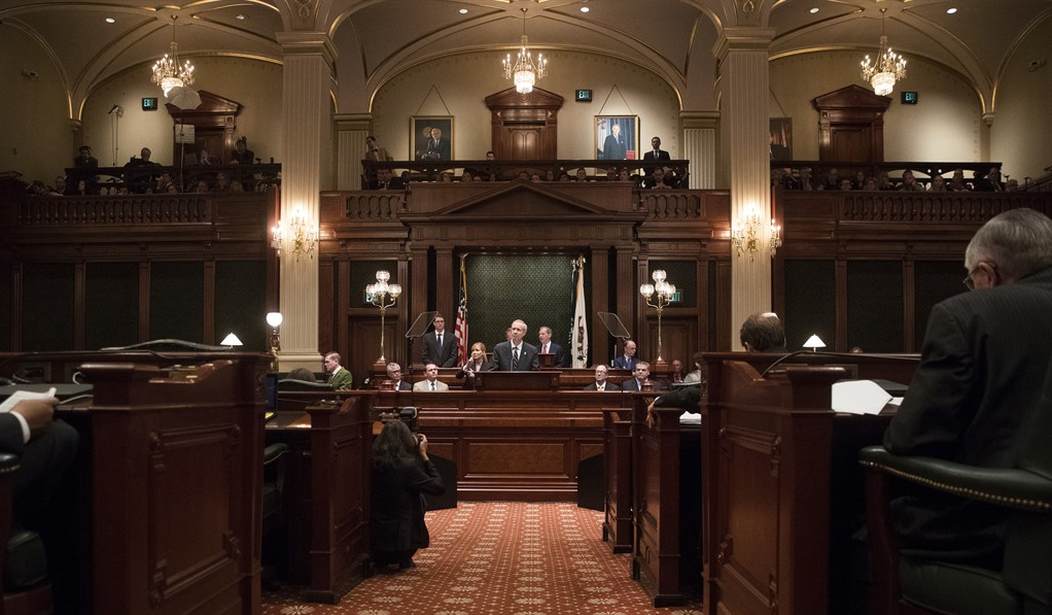
Finger-pointing is rampant in Illinois as the state’s credit rating has been downgraded by S&P and Moody’s to near junk status, the lowest ever for a state. Without a significant policy shift in the direction of fiscal responsibility, don’t be surprised when worldwide headlines announce that Illinois is the first state in America to fall into the junk bond category. As the state approaches an unprecedented two years of operating without a budget, rather than blame political squabbling, the focus should be on fixing the state’s big-government policy prescriptions that are killing economic growth and opportunity. It should come as no surprise that businesses and citizens continue to leave the Land of Lincoln in droves. The credit rating agencies are right to question Illinois’ ability to pay its bills, as the tax base flees to other states. A change of direction, one in which government lives within its means, is necessary if Illinois ever plans to dig itself out of this fiscal ditch.
It is not news that Illinois is in a compromising position when it comes to public pension obligations. As one of the biggest line-items in the state budget at more than 20 percent, the cost cannot be ignored any longer. Over time, the state’s revenue will be further funneled into paying pension benefits at the expense of other budgetary items, such as education, health care and infrastructure. According to Unaccountable and Unaffordable 2016, the situation is worse than previously believed. Illinois reports its liabilities based off the expected rate of return on investments, and unfortunately this number has been vastly overestimated. When the rosy accounting assumptions are stripped away, Illinois has a dismal 23.77 percent funding ratio, $362.6 billion in total amount of unfunded liabilities. That staggering number represents an unfunded pension liability of $28,200 for every man, woman and child in Illinois.
Considering the enormous budget issues the state is facing, with pensions being a key driver, one might assume the state government is not bringing in enough revenue and merely needs to raise taxes. This is simply false. According to Tax Foundation’s analysis, Illinois’ taxpayers pay the 5th highest combined state-local tax burden in America. Though the state has components of its tax structure that are competitive, such as a flat 3.75 percent top marginal personal income tax rate, those who would like to expand the size and scope of Illinois’ state government threaten a massive income tax increase.
It should come as no surprise, then, that nearly 700,000 Illinois residents left from 2006-2015, according to the annual report Rich States, Poor States: ALEC-Laffer State Economic Competitiveness Index. Only New York and California experienced higher levels of domestic out-migration during the same period. Due to uncompetitive and unsustainable policies, Rich States, Poor States consistently ranks Illinois’ economic outlook ranking in the bottom 10 nationally. Illinois Policy Institute points out it is nearly three times more expensive to rent a U-Haul from Chicago to Houston than from Houston back to Chicago. This is simple supply and demand, as many more citizens are looking to escape Illinois than move there.
Ironically, the Illinois Senate and House both recently passed a bill that will raise the minimum wage to $15 over the next five years if enacted into law. Citizens might not need such a high “living wage” to get by if Illinois ridded itself of harmful high taxes, overregulation and other big-government policies. Illinois lawmakers would be prudent to imitate states who more readily embrace the free market and pro-growth fiscal policy, such as Utah, Indiana, Florida and North Carolina. It is no surprise these states all have the highest possible AAA credit ratings, not to mention taxpayers who are happily holding on to more of their hard-earned money.
Christine Smith is a Coordinator for the Center for State Fiscal Reform at the American Legislative Exchange Council (ALEC). Jonathan Williams is the ALEC Chief Economist and Vice President of the Center for State Fiscal Reform.

Join the Conversation
VIP members get the ability to comment on articles.