





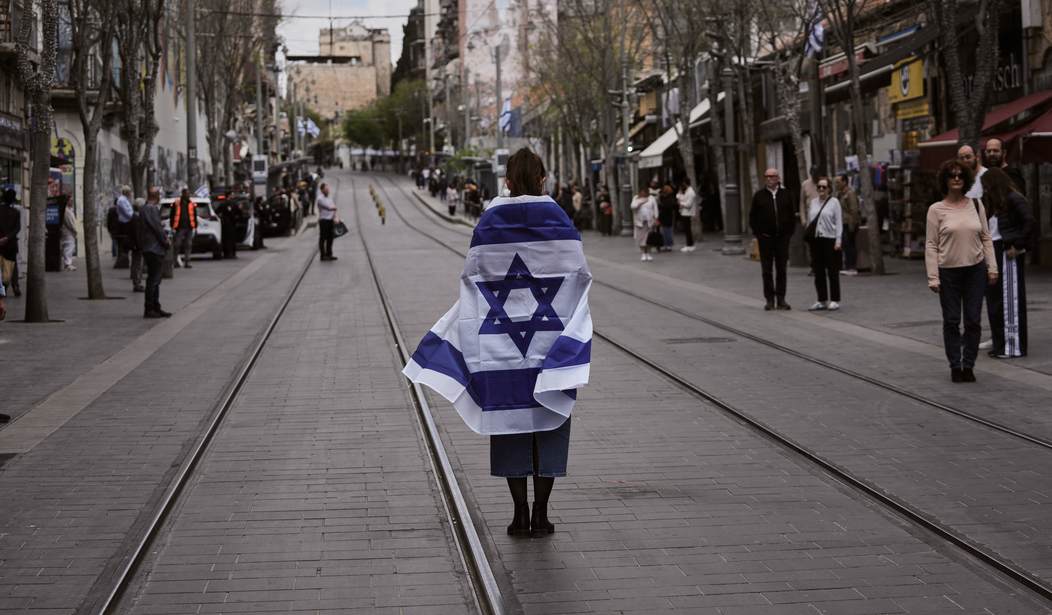
This week, we mark the anniversary of Israel’s hasty withdrawal from Lebanon in 2000, and with it, brought thousands of Lebanese Christians to Israel. This is the story of a young man who was a child then.
“G” was born into a Maronite Christian family in South Lebanon, part of a community that traces its roots to the ancient Phoenicians. His early childhood unfolded in a quiet Christian village just 15 kilometers from the Israeli border, surrounded by rolling hills, farmland, and deeply rooted family traditions. Like many Lebanese Christians in southern Lebanon, his family lived modestly, valuing faith, community, and inner peace in a region increasingly consumed by conflict.
While Lebanon was embroiled in a civil war from 1975 to 1990, and the Israeli invasion of Lebanon in 1982 to drive out the PLO had left its scars, “G” remembers a childhood centered around family. There were visits to grandparents, swimming in the Litani River, and helping his grandfather work the land. His memories are not political at first; they are human. Lebanon, in his mind, was once a place of warmth and beauty — a country his family deeply loved and considered worth fighting for.
But South Lebanon during “G’s” childhood was also shaped by external forces far beyond village life from before he was born. Lebanon’s descent into chaos began after the arrival of Palestinian Arab terrorists expelled from Jordan following Black September in 1970. The country, once celebrated as the “Paris of the Middle East,” increasingly became a battleground. Militias formed, sectarian tensions exploded, and civil war engulfed Lebanon from 1975 onward.
For many Christians in South Lebanon, the war was not ideological but existential. Their villages became trapped between PLO terrorists, regional powers, and the growing influence of armed Islamist groups. “G’s” community viewed itself as caught in a struggle it never chose. Eventually, local Christian militias aligned with Israel in what became the South Lebanon Army (SLA), fighting alongside the Israeli military against militant organizations operating in the south.
Then came Hezbollah.
Founded in the early 1980s with Iranian backing, Hezbollah emerged as one of the dominant armed forces in Lebanon. To many Lebanese Christians in the south, Hezbollah represented not liberation but another wave of control and intimidation. “G” grew up hearing how SLA fighters and Christian families became targets. Hezbollah’s rise fundamentally altered life in southern Lebanon, creating fear among those who opposed its ideology or cooperation with Israel.
On May 24, 2000, when Israel abruptly withdrew from the Security Zone in South Lebanon, everything changed overnight for “G’s” family.
He was only six years old when his father entered the house and told the family to pack immediately. Within moments, “G,” his four brothers, and his parents were in a car heading south with only a few bags and mattresses strapped to the roof. Confused and frightened, they joined thousands fleeing toward the border fence as Hezbollah forces rapidly advanced into former SLA-controlled areas.
The scene at the border remains etched in “G’s” memory: panic, uncertainty, and a feeling of abandonment. Despite SLA fighting alongside Israel, the hasty evacuation felt ill-planned and mired in bureaucracy that initially left the SLA families stuck between the advancing Shiite terrorists and the Israeli border they sought to cross. Given the years of fighting terrorists side by side, it was not Israel’s finest moment. It's SLA allies, who fought risking their lives for their country, feared for their lives by staying in the country. As Hezbollah pursued retreating families toward the border, many waited for two days before Israel finally allowed them entry under international pressure. In a single moment, they became refugees. But they were alive.
Arrival in Israel did not bring immediate belonging.
“G’s” family, like thousands of others connected to the SLA, was first housed in military bases before being relocated to northern Israel. Their status was complicated. In Lebanon, they were labeled traitors for collaborating with Israel. Among some Israeli Arabs, they were viewed with suspicion. Among many Israeli Jews, they were simply seen as Arabs with no awareness of being allies.
For a six-year-old child, those labels became wounds.
“G” entered second grade in a Jewish school without understanding Hebrew. He sat through lessons staring silently at the walls, unable to follow the teacher. At recess, he hid his Lebanese identity. He was ashamed to take out the laffa with labneh his mother packed for lunch because he feared ridicule. His struggle to fit in was more complicated than merely being an immigrant. Instead, he threw the sandwiches away.
Children in the neighborhood bullied him and called him “Arab,” a term he had come to associate with accusation and hostility. The irony was painful: his family had fled Lebanon, because of Hezbollah and militant violence, yet in Israel, he often felt reduced to the same stereotypes associated with the enemies his family had fought against.
The psychological toll ran deep. “G” remembers being embarrassed when his parents spoke Arabic in public. He felt caught between worlds - neither fully Lebanese anymore nor fully Israeli. Even as a child, he carried the burden of explaining a story nobody around him seemed to understand.
Yet over time, survival transformed into adaptation.
Social integration came slowly. “G” eventually connected with other marginalized children and learned how to build friendships despite cultural barriers. That ability to connect with people, he says, became one of the defining traits of his life. Gradually, he embraced both his Lebanese heritage and his new Israeli reality.
Religion presented another challenge. As a Christian in a predominantly Jewish environment, maintaining faith required effort and improvisation. There were few churches nearby and no stable clergy for the displaced community at first. Religious milestones were delayed, traditions fragmented. “G” underwent an important Christian coming-of-age ceremony years later than expected because there was no organized community structure initially in place.
Despite the hardships, “G’s” story is ultimately not one of victimhood but transformation. He slowly reclaimed pride in his identity. The food he once hid became a symbol of acceptance. He began researching the history of Lebanese Christians, the SLA, and the complex relationship between Lebanon and Israel. The shame he once carried evolved into purpose. Pride.
At the center of his journey lies a deeper understanding of displacement. Hezbollah’s rise had uprooted his family from Lebanon, but the shadow of that conflict followed them into Israel as well. Rockets from Lebanon, border tensions, and recurring wars constantly reminded northern Israeli communities - including displaced Lebanese Christians - that the conflict was never truly over.
“G” grew up living on both sides of that trauma: first as a child fleeing Hezbollah’s dominance in Lebanon, and later as a resident of northern Israel living under the continuing threat emanating from the Lebanese border.
Yet instead of embracing bitterness, he chose dialogue, resilience, and bridge-building. His childhood became a lesson in identity, perseverance, and the painful complexity of belonging between two nations still divided by war.
[Editor's note: This is part one of a two-part series]
Editor’s Note: Do you enjoy Townhall’s conservative reporting that takes on the radical Left and woke media? Support our work so that we can continue to bring you the truth.
Join Townhall VIP and use promo code FIGHT to receive 60% off your membership.


Join the Conversation
VIP members get the ability to comment on articles.