







I want to put in a good word for partisanship.
This might sound strange to some readers. I've written a lot about our problem with tribalism, including hyper-partisanship and political polarization. It was a major theme of my cheerily titled book "Suicide of the West. So I'm happy to concede that too much partisanship -- or partisanship of the wrong kind -- can be very bad.
But unity can be bad too. Excessive unity cultivates groupthink and breeds contempt for dissent. It tends to ride roughshod over minorities, and not just in the sense of racial, religious or sexual groups. Ideological minorities -- including the smallest minority, the individual -- can get trampled by the unity stampede (as my friend Kevin Williamson masterfully elucidates in his new book, "The Smallest Minority").
Self-described nationalists insist the country needs more unity -- around their ideas. Self-described socialists also crave unity, but only around their agenda. At various times and places, Catholics, Protestants, Muslims and Hindus have all strived for unity, but only on their terms. In any large society, the demand for unity is usually the demand for power in a winner-take-all contest between different groups.
Our Constitution is set up around the idea that unity is scarier than disunity. The founders designed a system that prevented any one group, or "faction," from imposing its one-size-fits-all unity on everybody.
Ironically, the founders never envisioned political parties as a major component of this system. James Madison eventually embraced parties, but most of the founders were closer to Thomas Jefferson's view that if the only way he could get into heaven was by joining a party, he wouldn't go.
It was Martin Van Buren, the eighth president and true architect of the two-party system, who understood how crucial parties were. He studied the so-called Era of Good Feelings after the War of 1812, when the country was supposedly united under a single party. But, as political scientist Joseph Postell writes, "The problem with the Era of Good Feelings is that it was actually an era of bitter feelings and bitter conflict." It's just that the conflicts were between factions within the government.
"Party unity was premised on having another party, a common enemy, to oppose," Postell notes in a brilliant paper published by the Heritage Foundation. "Without that opposition, political conflict occurred within the party and the Administration."
Think of it this way: Courtrooms are partisan battlefields. The defense attorney is a zealous advocate for acquittal. The prosecutor is equally passionate about conviction. Both sides must deal honestly, but it is the competition between the two sides, the questioning of evidence, the inquiry into motives and methods, that produces a just outcome. Of course, sometimes it goes wrong. But it's the best system we've got.
This is how the good kind of partisanship is supposed to work. Partisans have all manner of incentives to poke holes in the opposition's arguments and proposals -- some patriotic and principled, some more base and selfish. But the process of political combat, which is supposed to take place in Congress, not on cable TV or Twitter, should get us closer to both the truth and a consensus about the way forward. The public is supposed to be the jury. Unfortunately, too many jurors only want to hear arguments from either the defense or the prosecution.
It's a cliche to note that the party out of power only cares about deficits and debt when it is out of power. This hypocrisy is annoying and at times dishonorable. But it's better than the alternative. If it's true that unlimited borrowing, mostly from China, to pay for things we can't afford is bad, better to have someone saying so, even if they're doing it for cynical purposes. Such complaints at least serve to check runaway deficit spending.
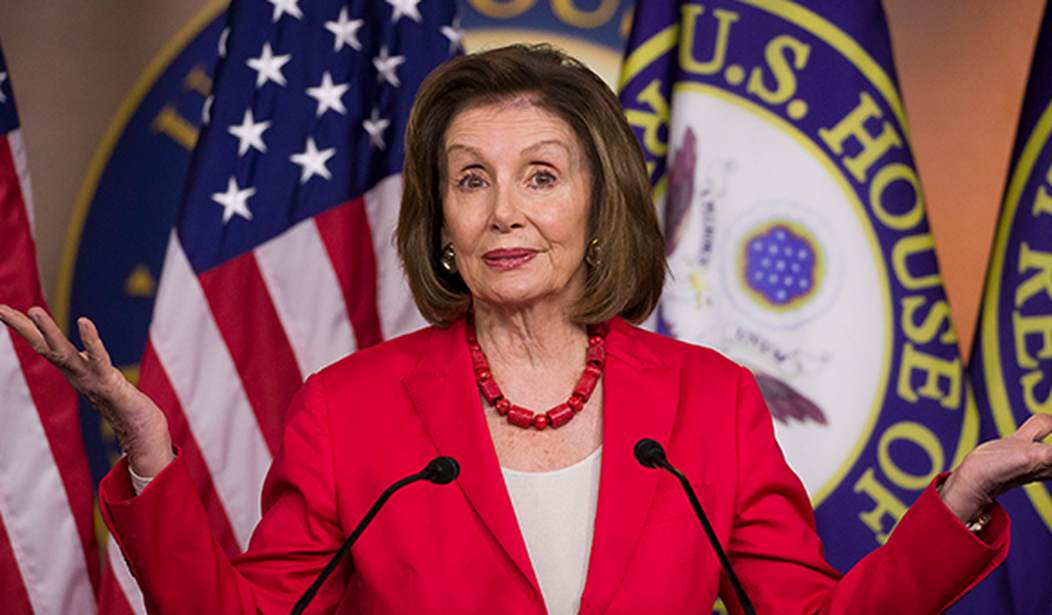
This week we crossed a Rubicon with the new bipartisan budget deal proposed by President Donald Trump and House Speaker Nancy Pelosi. It marks the end of either party even pretending to care about such things. It's a victory of the sort of bipartisanship and unity so many claim this country needs. And it is a perfect example of how unity around a bad thing is worse than disunity over what constitutes a good thing.


Join the Conversation
VIP members get the ability to comment on articles.